Cylindrical Locks

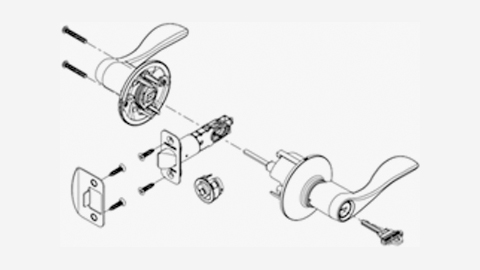
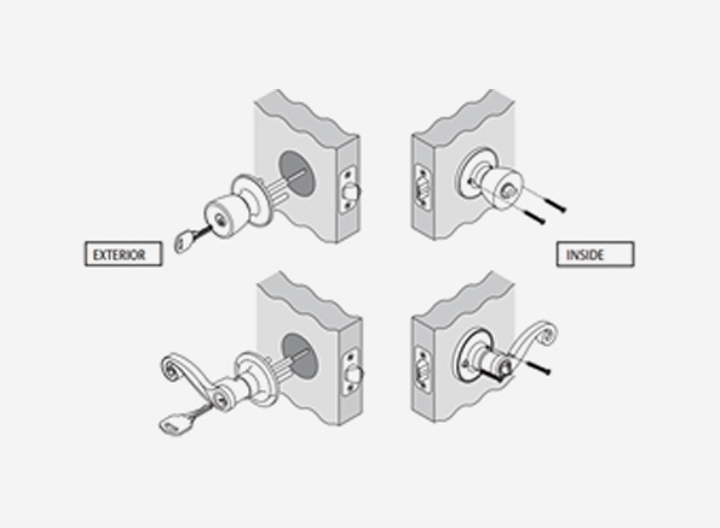
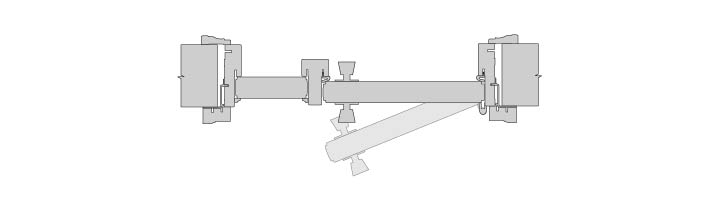
Cylindrical locks are the most common lock type available typically used in a single or double bore application. These locks are installed into a hole, or bore, that is cut in the face of the door while a latch bolt is installed into a bore on the edge of the door, commonly referred to as the edge prep of the door. This type of lock has a quick and easy installation process.


Parts and Pieces of Cylindrical Lockset

A Knob and Lever Cylindrical Lockset in a Door


Cylindrical locks can be used for exterior or interior doors. They are available with either a knob or lever to open and close the door. At times, lever handlesets will be handed so it is important to ensure the lever handing is correct.


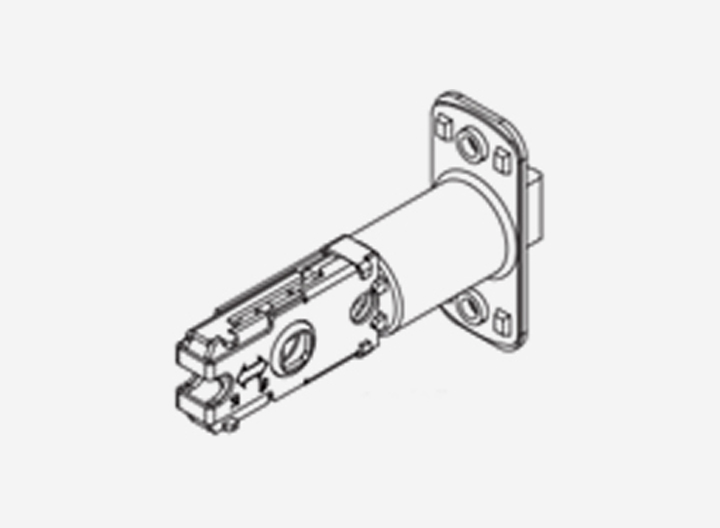
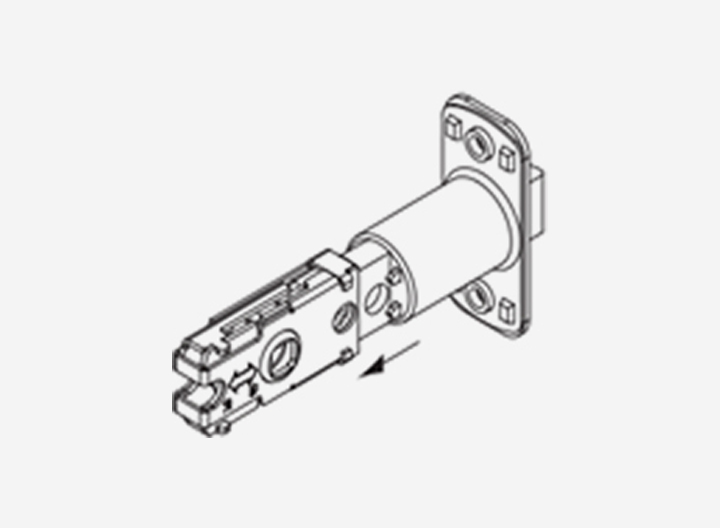
Some of the locks have the ability to be used for both 2-3/8” and 2-3/4” backsets depending on how the door was machined.

2 3/8″ (60mm)

2 3/4″ (70mm)

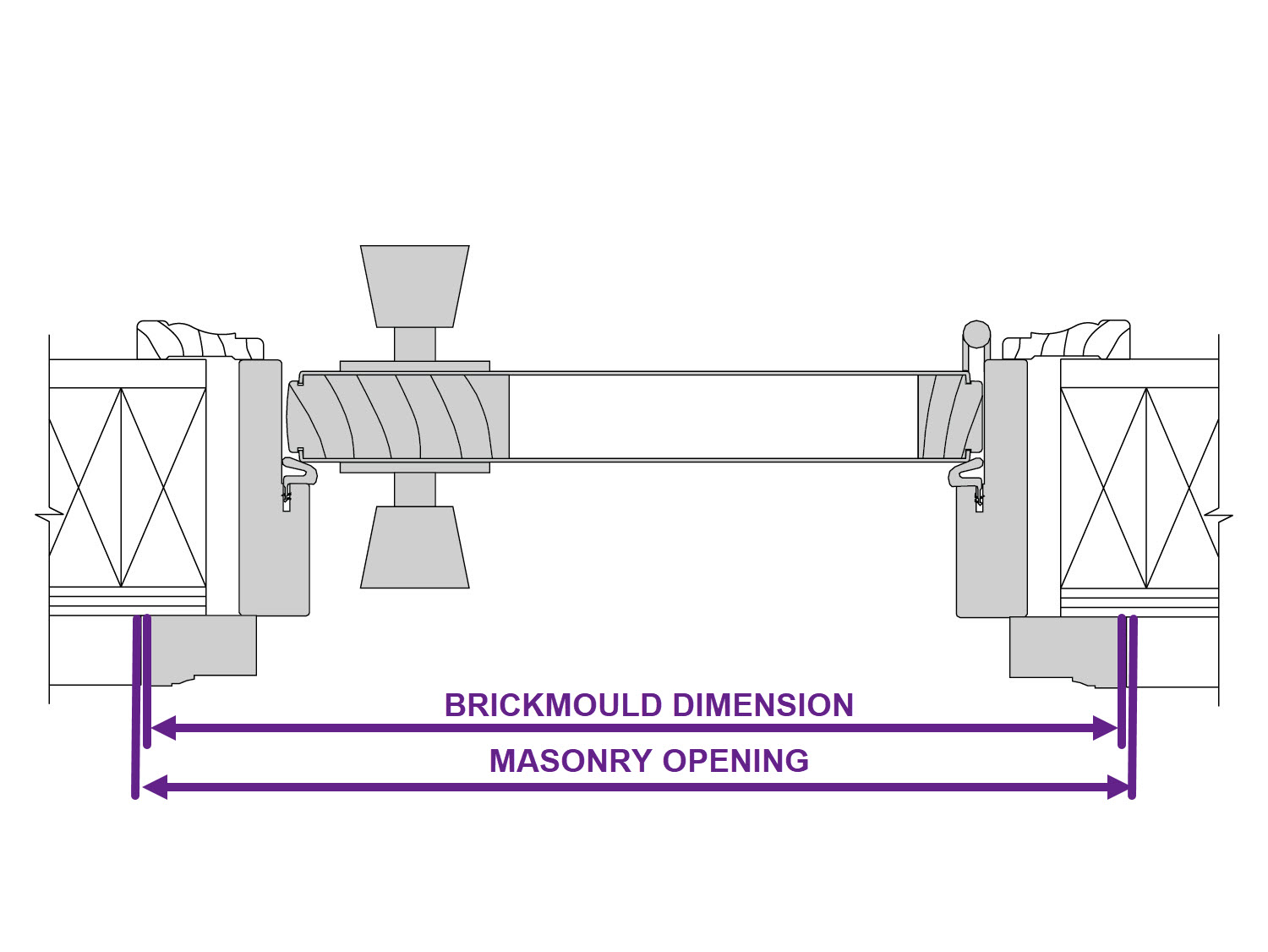
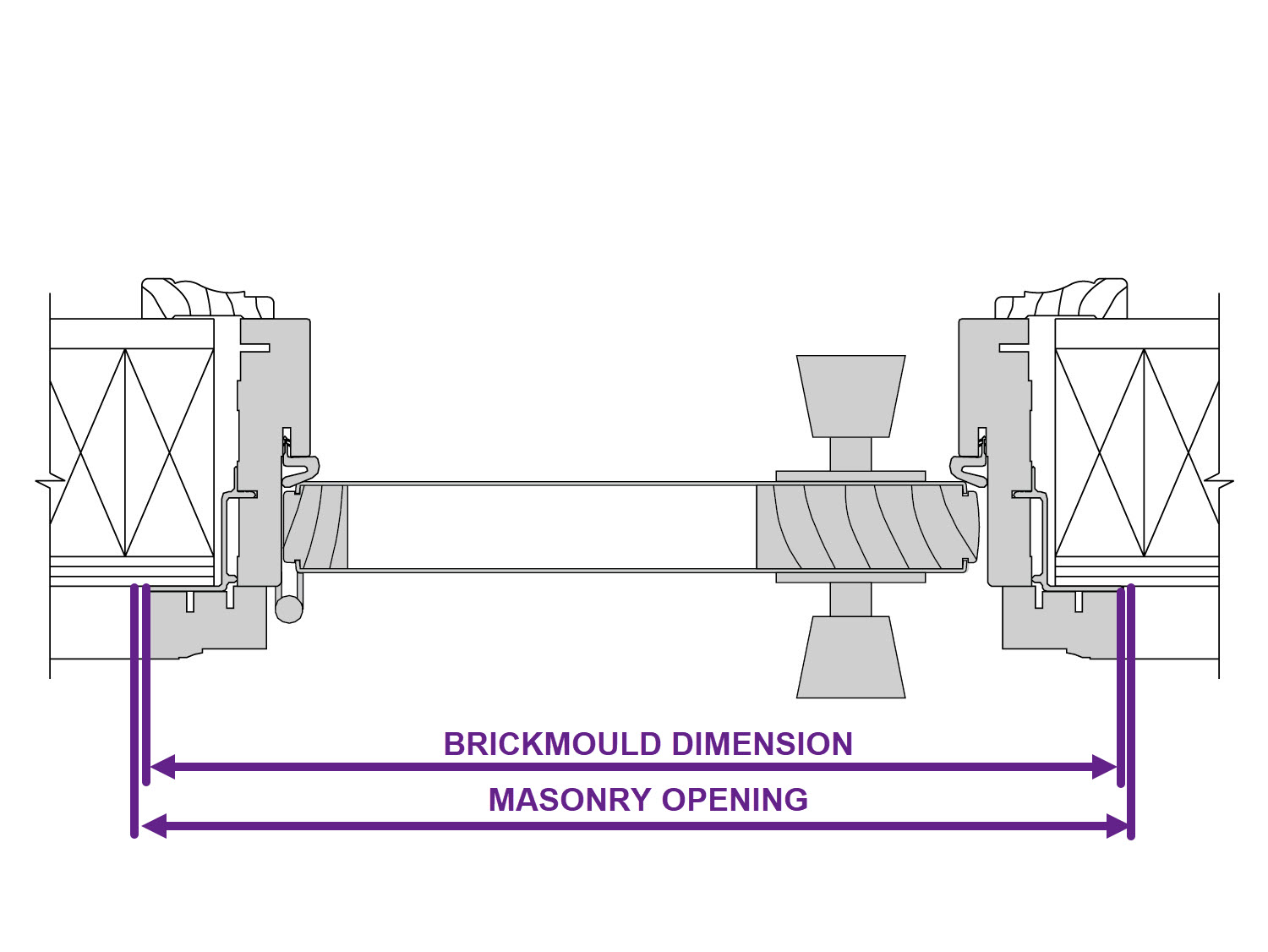
Brickmould Dimension (BD)

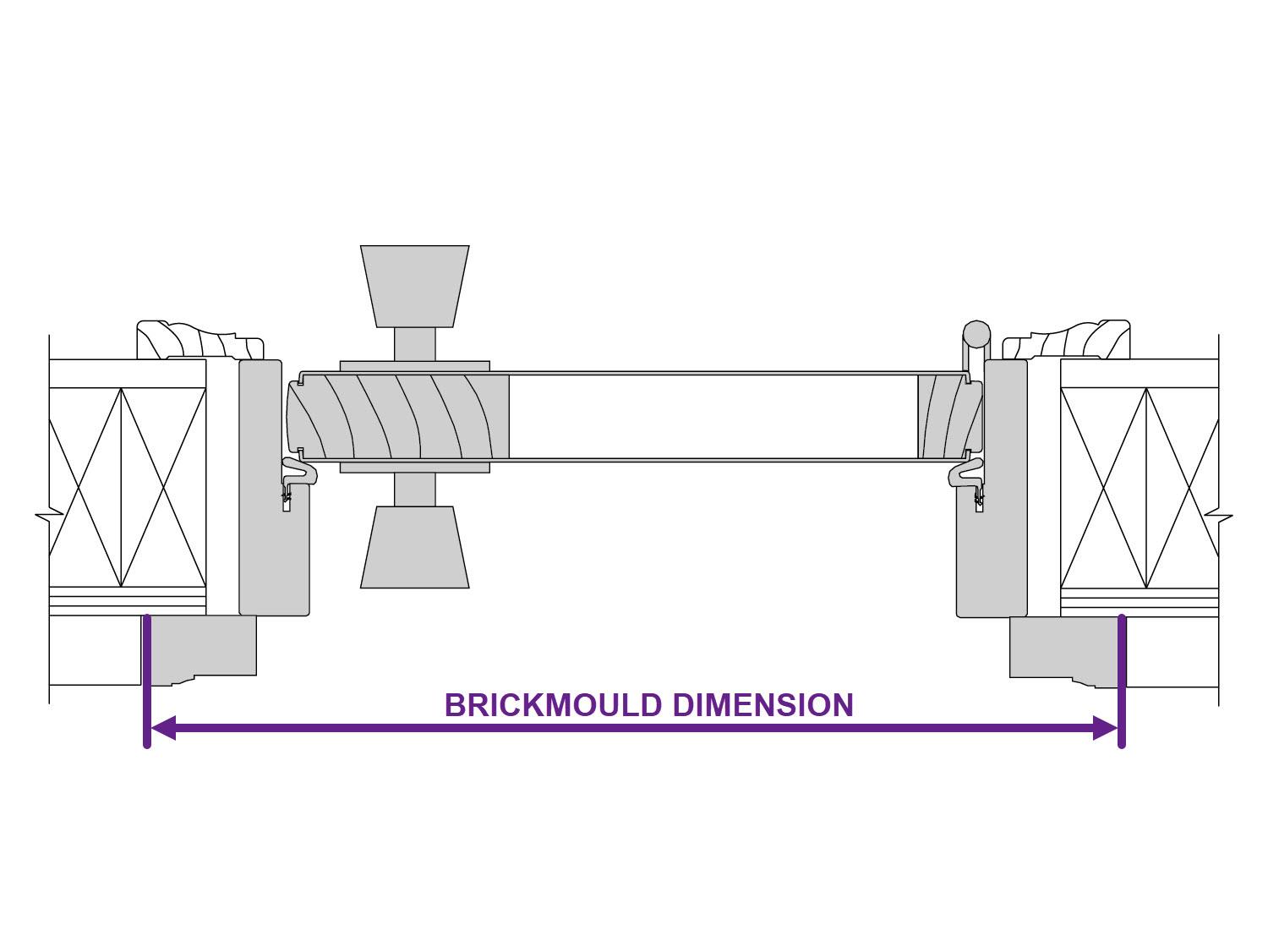
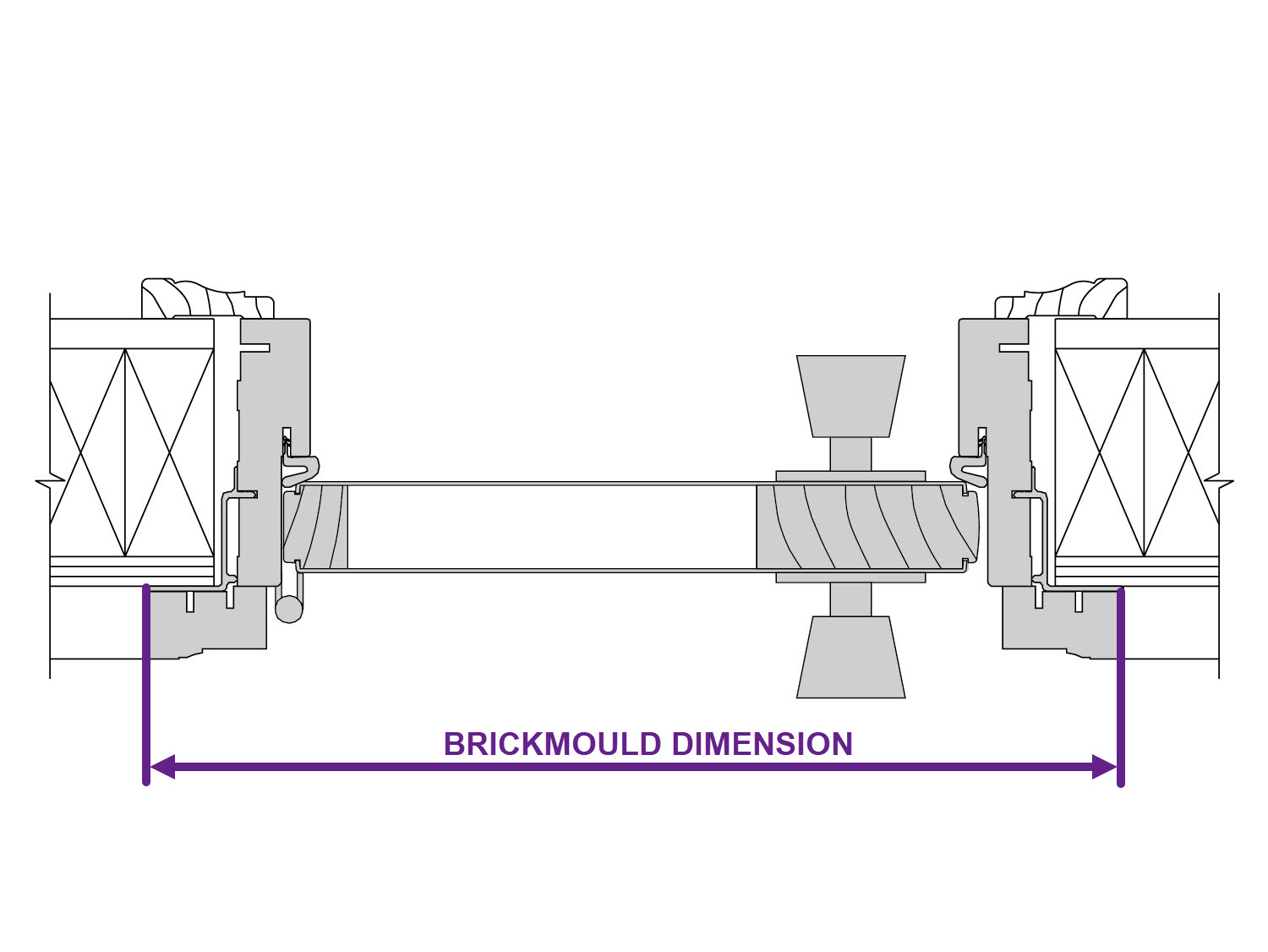
Brickmould Dimension Width

The BD width is the measurement of a unit from the outside of the left brickmould to the outside of the right brickmould.

Inswing

Outswing


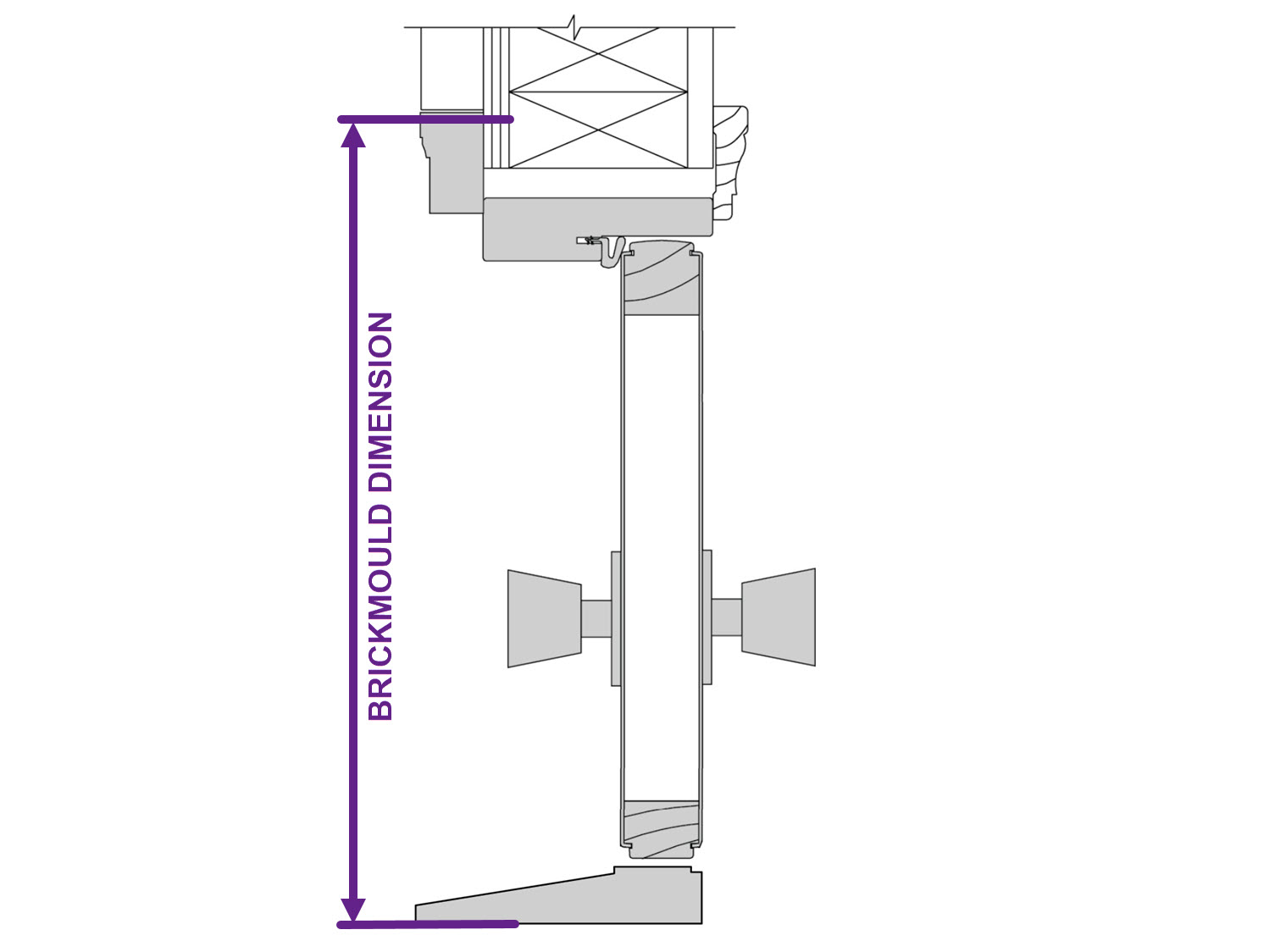
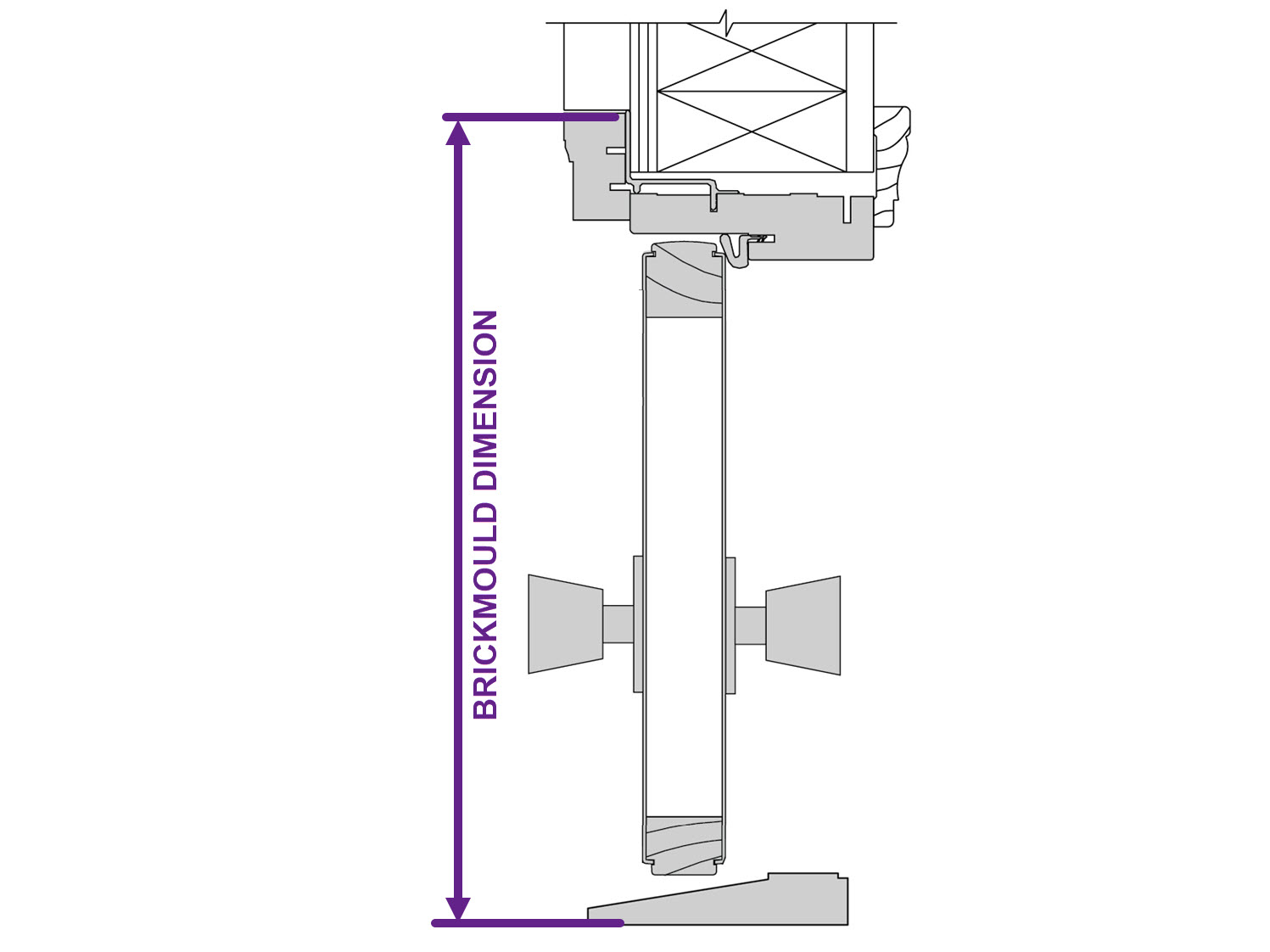
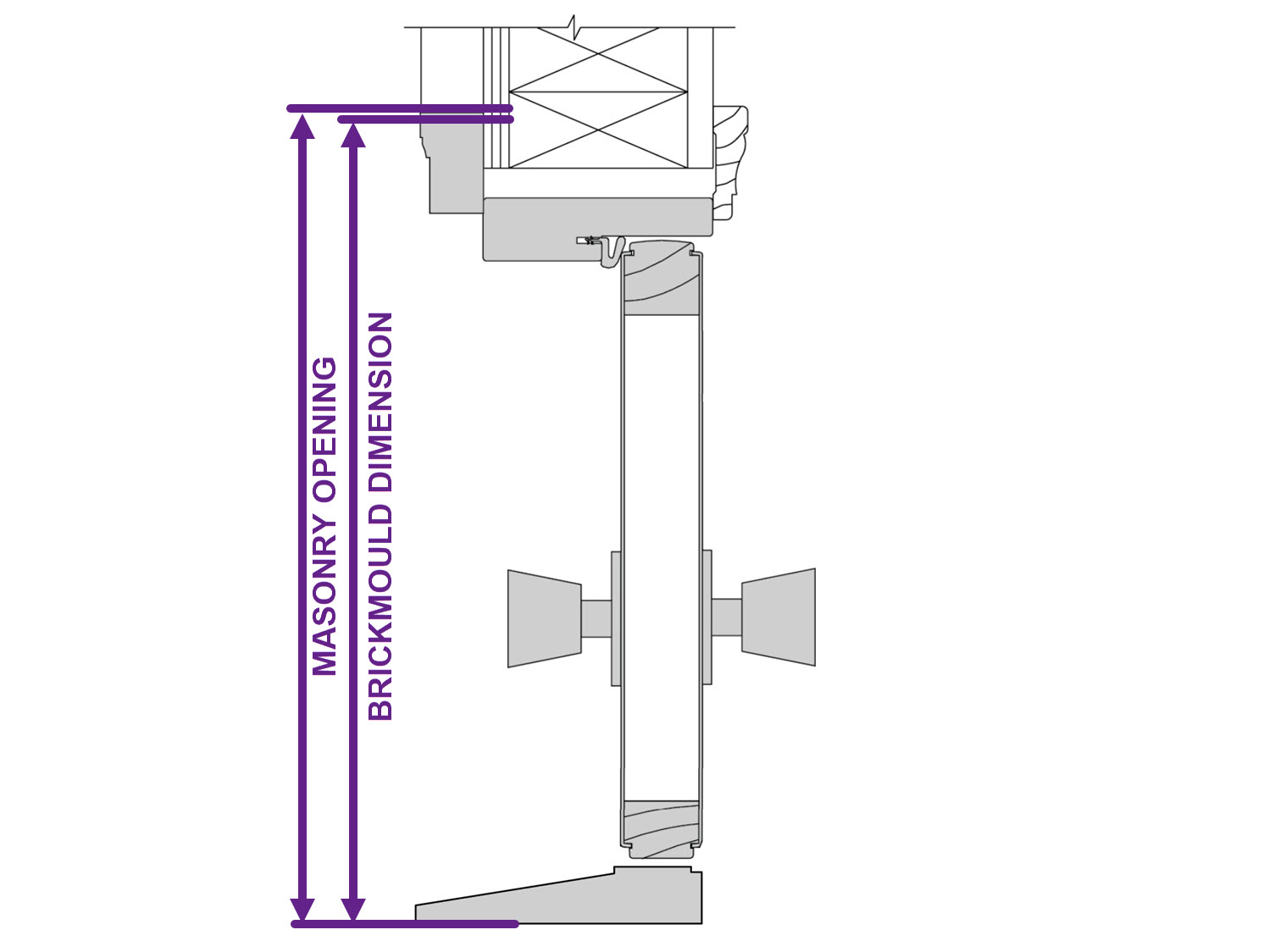
Brickmould Dimension Height

The BD height is the measurement of a unit from the outside of the head brickmould to the bottom of the sill.

Inswing

Outswing


Standard Brickmould is 2” in width, but to determine the brickmould dimension, we cannot add 2” to the unit dimension. The brickmould overlaps the jamb when it is applied to the unit. The overlap differs from inswing to outswing as well so the adder to determine the brickmould dimension is dependent on the swing of the unit.

For an Inswing Unit, the brickmould overlaps the jamb by 3/4″. This means that for each jamb, there is a 1-1/4” adder. The width of the unit has 2 jambs so in order to go from a unit to brickmould dimensions you must add 2-1/2”. The height of the unit only has 1 jamb so to go from a unit to brickmould dimension, you must add 1-1/4”

For an Outswing Unit, the brickmould overlaps the jamb by 1/2″. This means that for each jamb, there is a 1-1/2” adder. The width of the unit has 2 jambs so in order to go from a unit to brickmould dimension, you must add 3”. The height of the unit only has 1 jamb so to go from a unit to brickmould dimension, you must add 1-1/2”

If a larger brickmould or a casing is used, the same overlap will occur, but the adder will change. For example, if a 3” piece of brickmould is used, the adders are as follows:

  • Inswing Unit Dimension Width – 4-1/2”
  • Inswing Unit Dimension Height – 2-1/4”
  • Outswing Unit Dimension Width – 5”
  • Outswing Unit Dimension Height – 2-1/2”

  • The unit sits in the Masonry Opening. Therefore the Brickmould Dimension and the Masonry Opening are related. If you are able to determine one, you are able to determine the other.

    Inswing

    Outswing

    Inswing

    Outswing

Outswing Width Measurements

The width of an exterior door unit is dependent on three things: configuration, unit construction, and door swing.

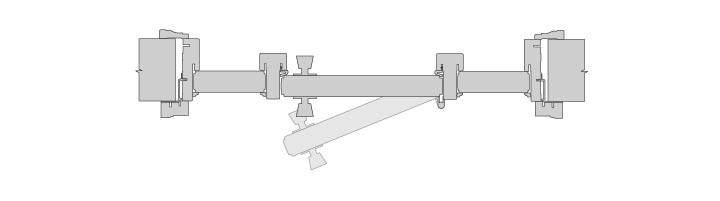
The configuration of the unit corresponds to pieces and parts of the unit. If a unit is a single entry door, the width will be much smaller than a triple patio door. The more components used to create a unit will result in a wider unit.

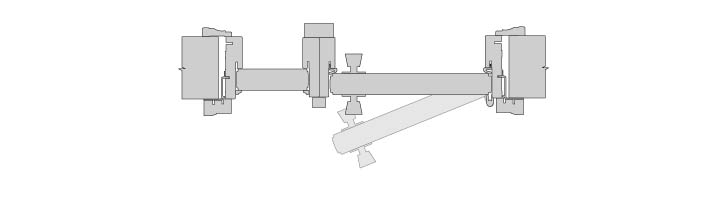
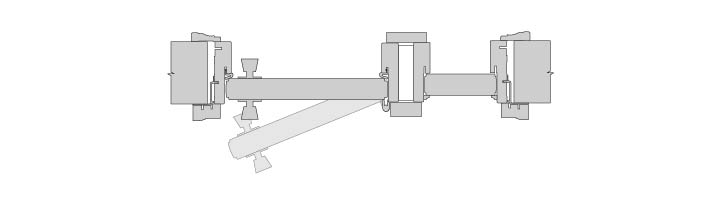
Construction relates to a continuous or boxed unit when referring to doors with sidelites. Most units are continuous, meaning they utilize a single head jamb and a single sill. A boxed until will be constructed of separate units coming together. One of the benefits of a boxed unit is the ability to include mull pockets which makes the unit even wider in the scenario that a standard unit will not fit in the rough opening of the building.

The swing of the unit is the final factor of the unit width as the brickmould sits different on an outswing unit than it does on a inswing unit, resulting in different dimensions.


Component Sizes

While every unit type needs different components, the size of the components are typically the same.
  • An exterior jamb measure 3/4″ (in the rabbet).
  • An astragal measures 7/8″.
  • A standard mullpost measures 1″.
  • A fat boy mullpost which is used in venting sidelite units measures 1-1/2″.
  • Standard brickmould is 2″.
  • Most units also require clearance on the hinge and strike side of a door and this will range by construction type.

Measurement Types

There are four measurement types associated with units.

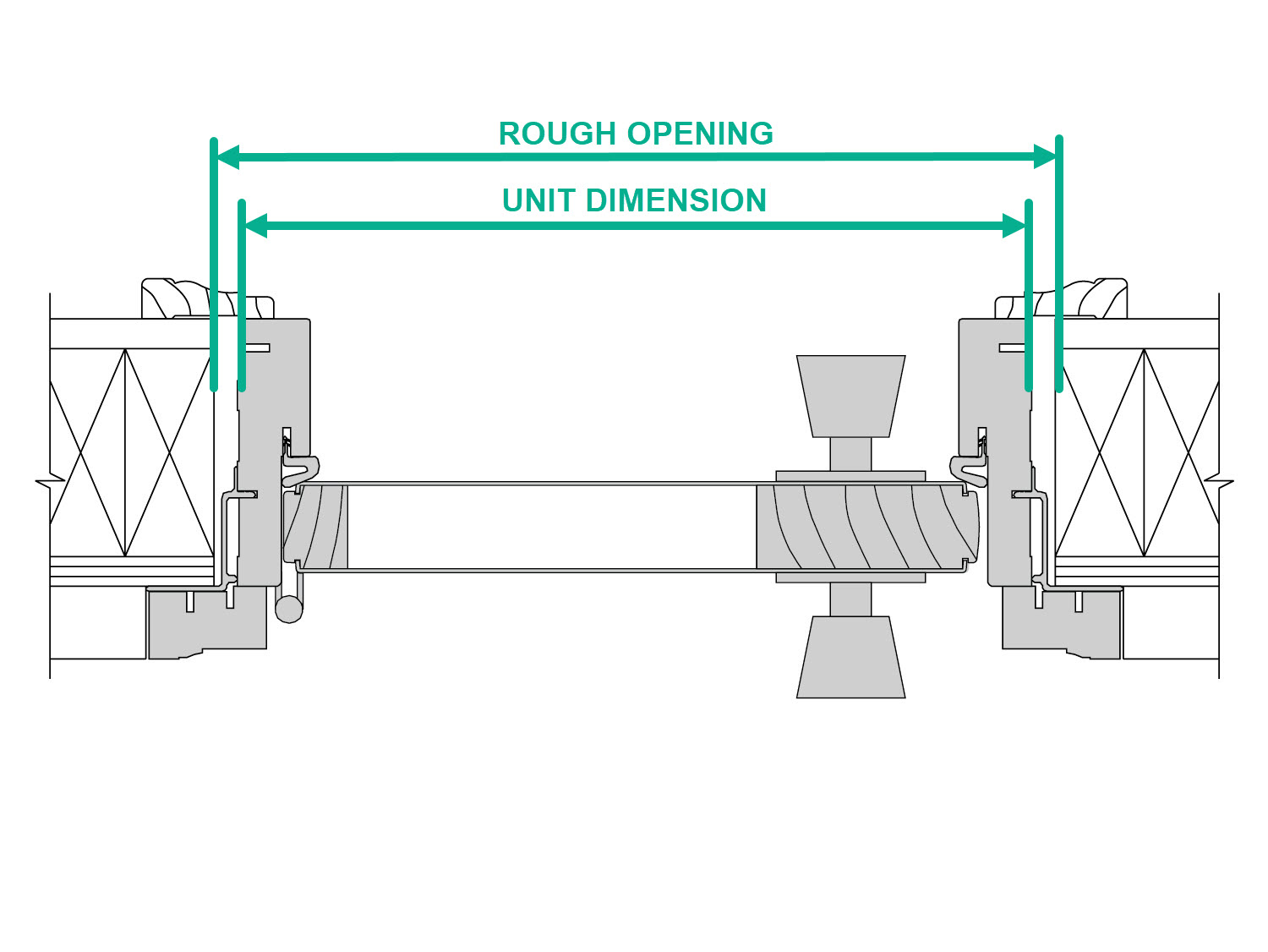
Unit Dimension (UD) is the measurement of the unit from the outside of the left jamb to the outside of the right jamb.

Brickmould Dimension (BD) is the measurement of the unit including the brickmould from the outside of the left brickmould to the outside of the right brickmould.

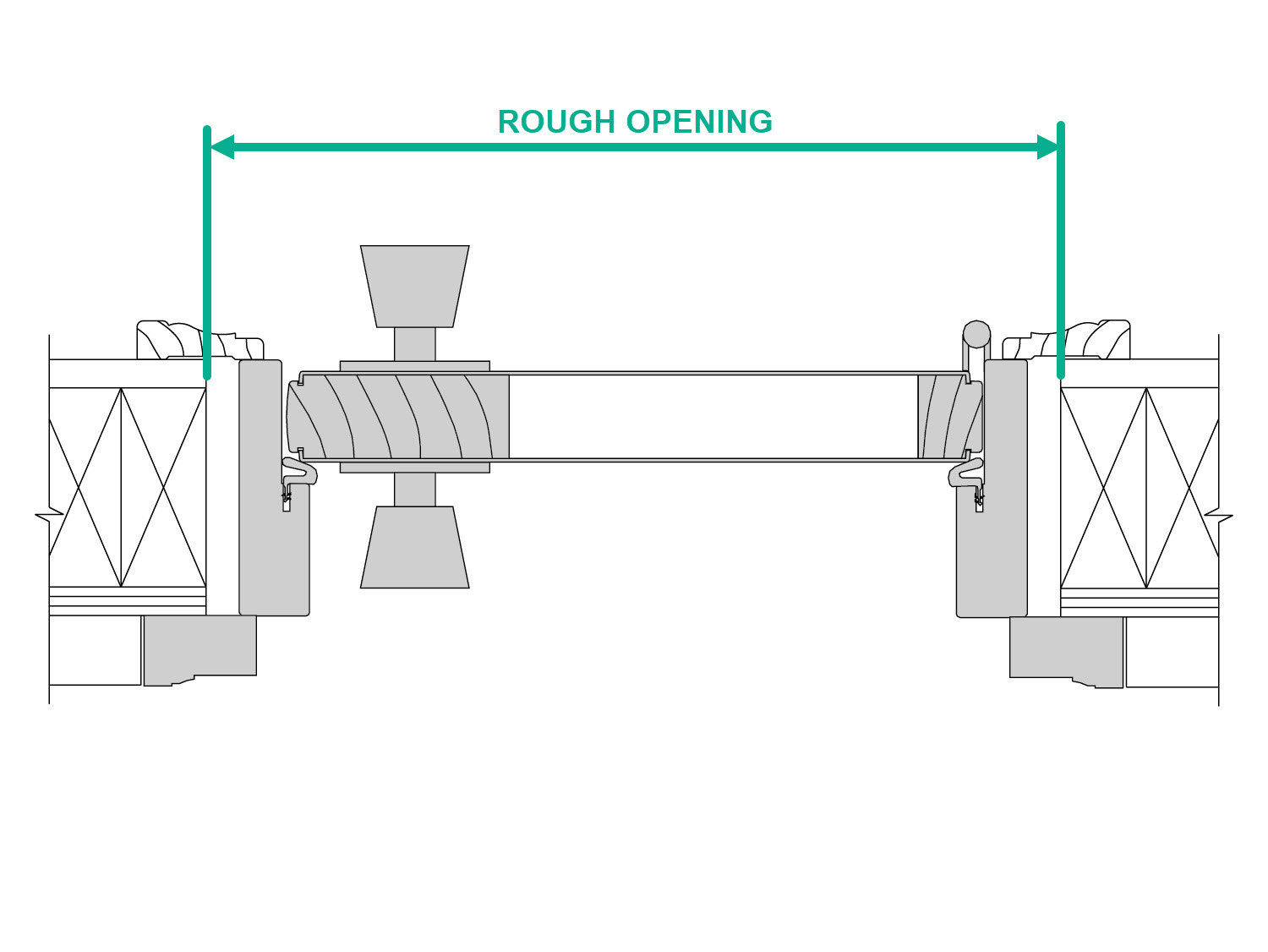
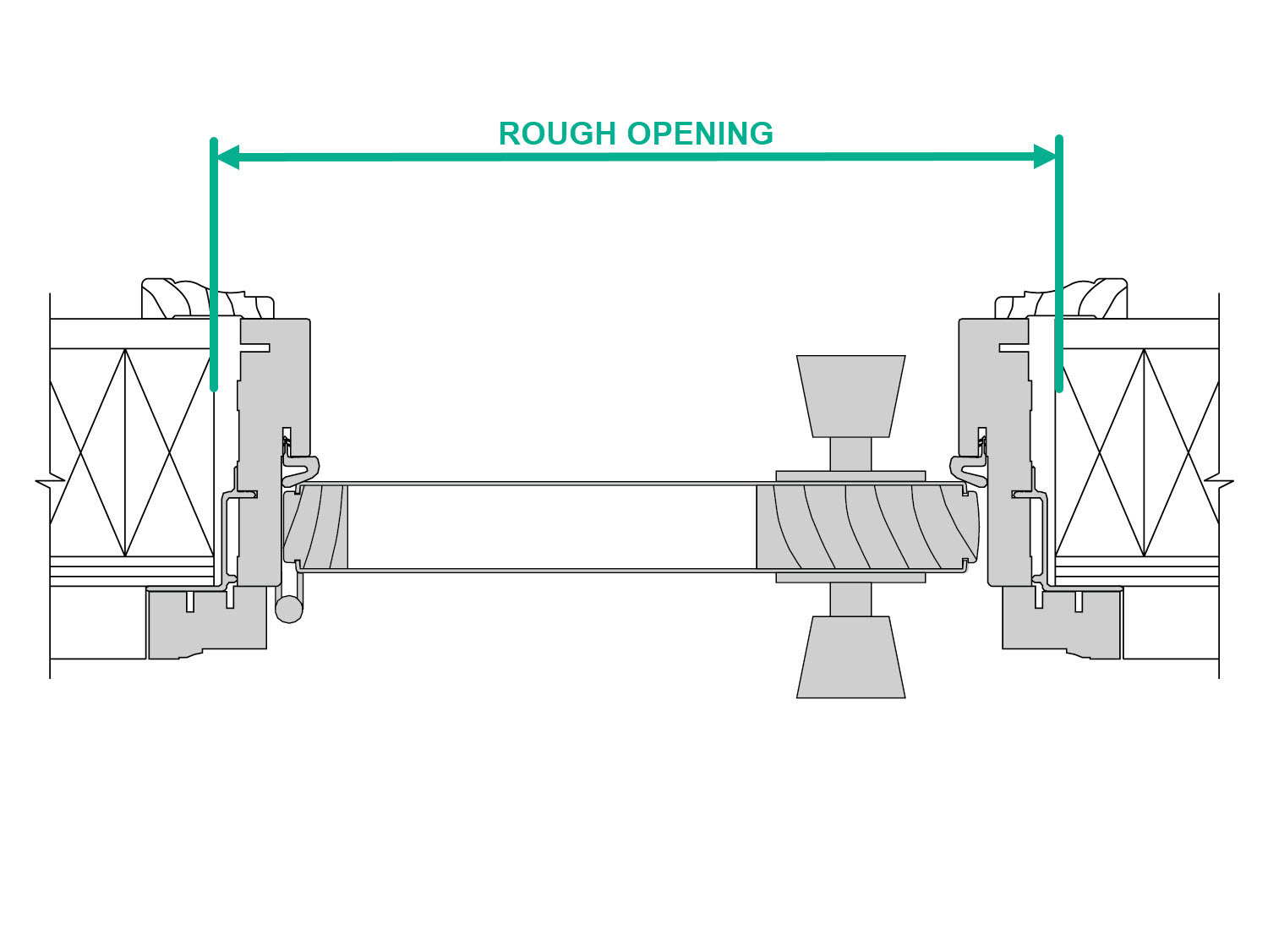
Rough Opening (RO) is the unit width dimension plus 3/4″ to account for installation of a unit into a building’s rough opening.

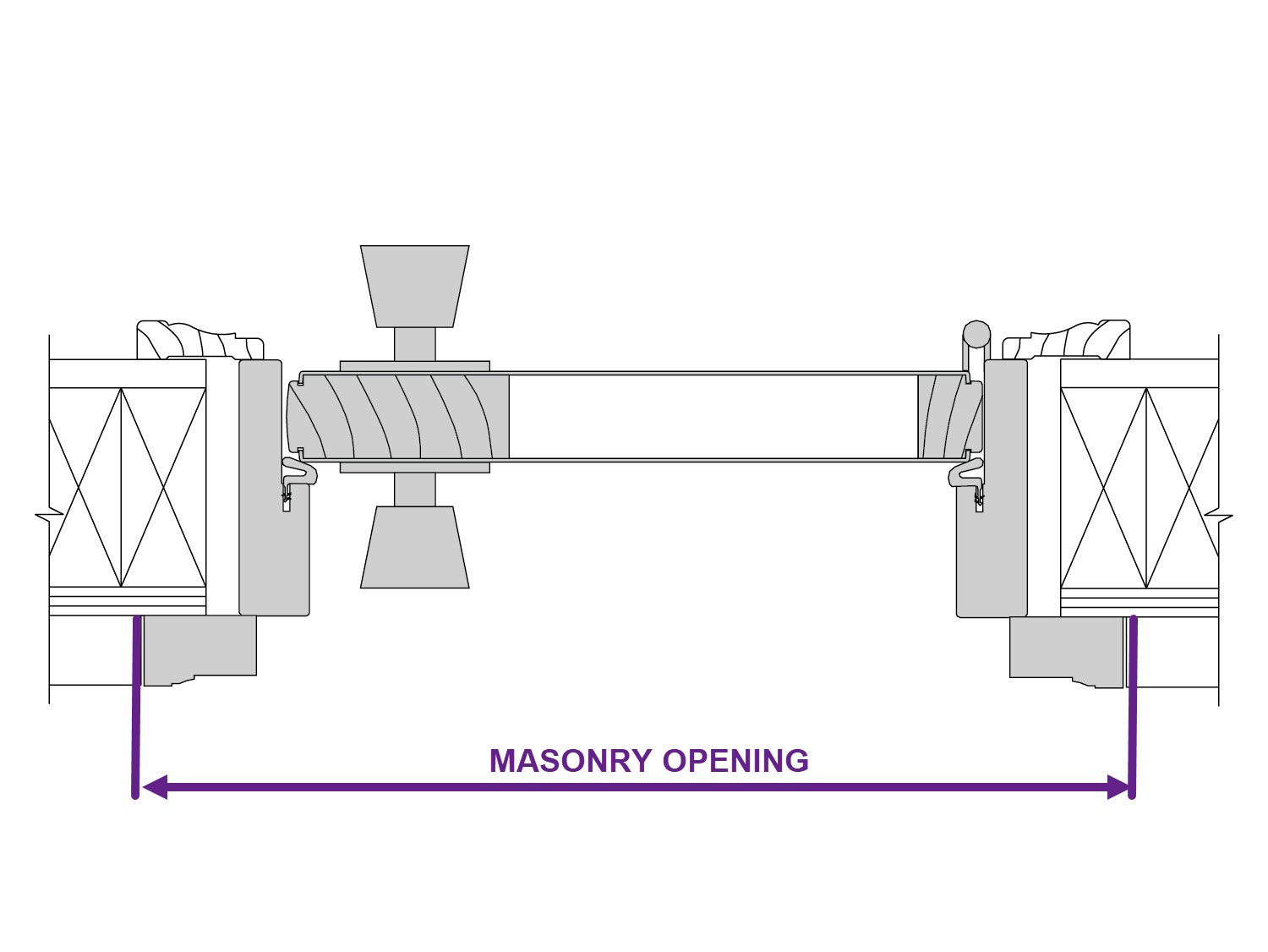
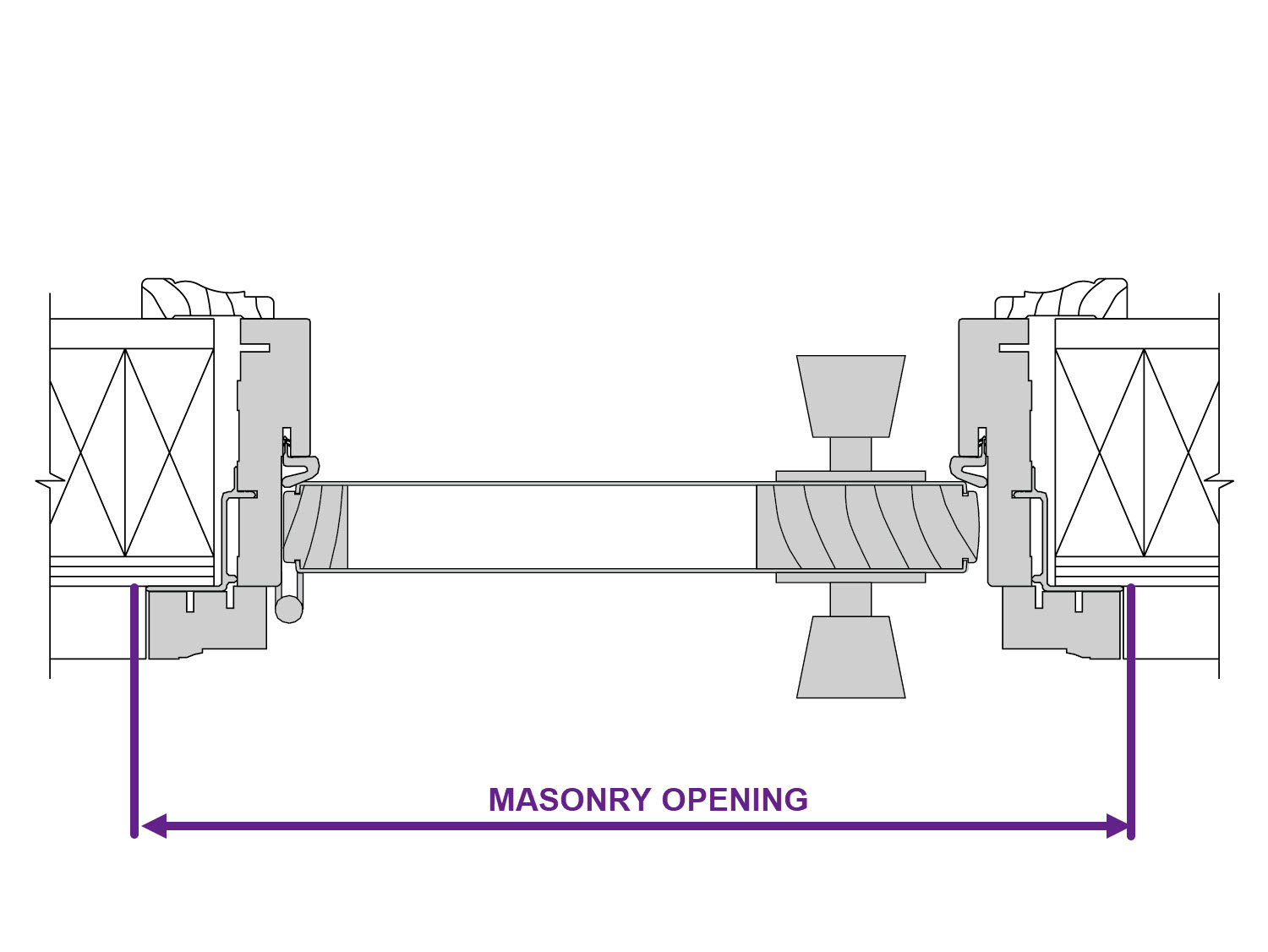
Masonry Opening (MO) is the brickmould width dimensions plus 1/2″ to account for the installation of a unit into a building’s masonry opening.


Continuous Unit Measurements

Single Door

Components:
1 Door
2 Jambs
Clearance

Based on a 36” Door slab, the width measurements are as follows:
UD RO BD MO
37-5/8″ 38-3/8″ 40-5/8″ 41-1/8″

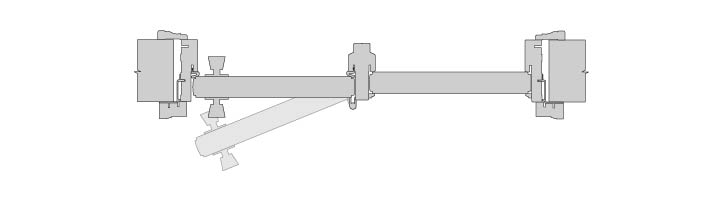
Single Door, One Sidelite with Standard Mullpost

Components:
1 Door, 1 Sidelite
2 Jambs, 1 Mullpost
Clearance

Based on a 36” Door slab and a 12” sidelite, the width measurements are as follows:
UD RO BD MO
50-5/8″ 51-3/8″ 53-5/8″ 54-1/8″

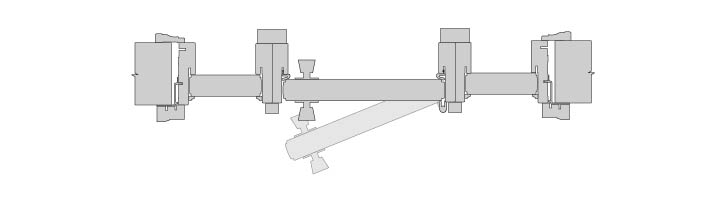
Single Door, Two Sidelites with Standard Mullposts

Components:
1 Door, 2 Sidelites
2 Jambs, 2 Mullposts
Clearance

Based on a 36” Door slab and two 12” sidelites, the width measurements are as follows:
UD RO BD MO
63-5/8″ 64-3/8″ 66-5/8″ 67-1/8″

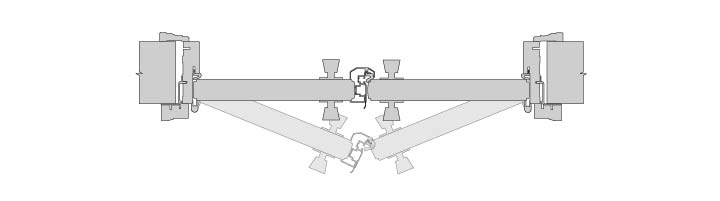
Double Door with Astragal

Components:
2 Doors
2 Jambs, 1 Astragal
Clearance

Based on a two 36” Door slab, the width measurements are as follows:
UD RO BD MO
74-9/16″ 75-5/16″ 77-9/16″ 78-1/16″

Patio Door with Patio Mullpost

Components:
2 Doors
2 Jambs, 1 Mullpost
Clearance

Based on a two 36” Door slab, the width measurements are as follows:
UD RO BD MO
74-11/16″ 75-7/16″ 77-11/16″ 78-3/16″

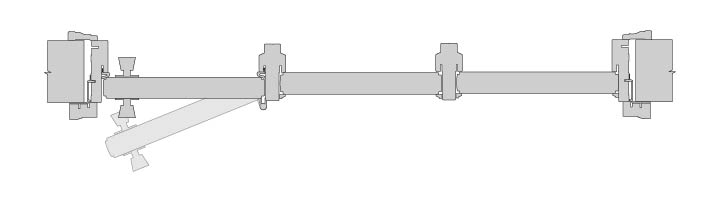
Triple Door with Patio Mullposts

Components:
3 Doors
2 Jambs, 2 Mullposts
Clearance

Based on a three 36” Door slab, the width measurements are as follows:
UD RO BD MO
111-11/16″ 112-7/16″ 114-11/16″ 115-3/16″

Boxed Units

Below are the components used in each unit configuration as well as the UD, RO, BD, MO.

Single Door, One Sidelite

Components:
1 Door, 1 Sidelite
4 Jambs
Clearance

Based on a 36” Door slab and a 12” sidelite, the width measurements are as follows:
UD RO BD MO
51-1/8″ 51-7/8″ 54-1/18″ 54-5/8″

Single Door, One Sidelite, Mull Pocket

Components:
1 Door
4 Jambs, 1 Mull Pocket
Clearance

Based on a 36” Door slab, a 12” sidelite, and a 1-1/2” mull pocket, the width measurements are as follows:
UD RO BD MO
52-5/8″ 53-3/8″ 55-5/8″ 56-1/8″

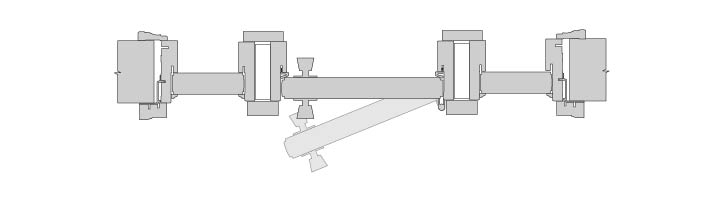
Single Door, Two Sidelites

Components:
1 Door, 2 Sidelites
6 Jambs
Clearance

Based on a 36” Door slab and two 12” sidelites, the width measurements are as follows:
UD RO BD MO
64-5/8″ 65-3/8″ 67-5/8″ 68-1/8″

Single Door, Two Sidelites, Mull Pockets

Components:
1 Door, 2 Sidelites
6 Jambs, 2 Mull Pockets
Clearance

Based on a 36” Door slab, two 12” sidelites, and two 1-1/2” mull pockets, the width measurements are as follows:
UD RO BD MO
66-1/8″ 66-7/8″ 69-1/8″ 69-5/8″

Double Door with Astragal, Two Sidelites

Components:
2 Doors, 2 Sidelites
6 Jambs, 1 Astragal
Clearance

Based on two 36” Door slabs and two 12” sidelites, the width measurements are as follows:
UD RO BD MO
101-1/2″ 102-1/4″ 104-1/2″ 106″

EzyJamb Classic Adjust Door Frame

Note: EzyJamb is no longer offered. This article will remain available as a reference.

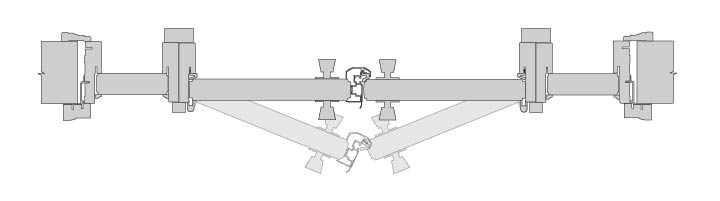
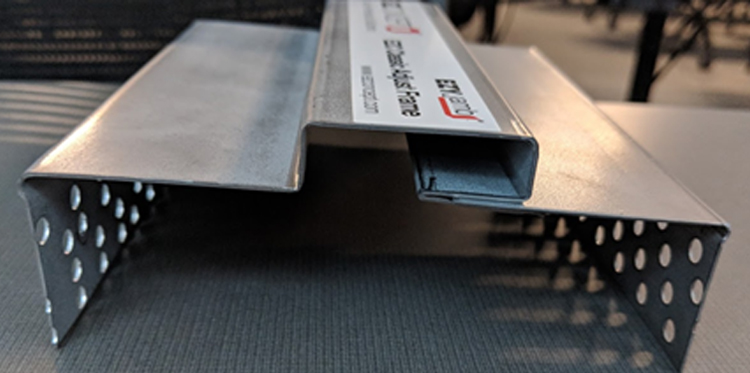
The Classic Adjust Door Frame, also known as EZC, is a two piece jamb system, which has the hinge/strike jambs as well as a closure or reveal. This two piece construction allows for a 3/8” adjustment between the two parts. The hinge/strike portion is construction with a built in stop, similar to a flat jamb with a stop attached. The standard prep on the strike will work with a standard t-strike from any hardware box, but EZY Jamb manufactures their own with a lower profile as the frame itself does not require casing. A standard t-strike utilizes casing in the field.

Jamb Sizes

A typical jamb is for a 4-5/8” wall thickness, giving a 7/8” reveal. With the 3/8” adjustment possible, this frame can accommodate a 4-1/4” – 4-5/8” wall thickness as a base version. An additional closure package can accommodate up to an 8-1/2” wall thickness.


Hinge Options

There are two different type of hinge options. The first option is an architectural 4” x 4” hinges. For these, either Bommer or Emtek hinges will need to be included in the order. For architectural hinges, 6/8 and 7/0 will have 3 hinges while the 8/0 will have 4 hinges. The second option is concealed hinges, utilizing RocYork hinges. For the concealed hinges, all doors, 6/8, 7/0, 8/0, will have 3 hinges.


Door Options

All doors must be 1-3/4” thick and the door must be beveled, 1 side or 2 sides, with a high side of the bevel 3/16” undersized from the full width of the door. The architectural hinges can be used with any type of door except for HC doors. The concealed RocYork hinges can be used with Stave Core/Wood Core doors and anything Stile and Rail. PC doors are not available for Roc-York Hinges because the PC core is not dense enough for screw holding power.


Shipping

The frame and door will be separate items. The frame back will have the strike leg, hinge leg, and the header as well as the closure. If a larger wall thickness is needed, another package will be necessary which contains the larger closure.

The door will ship depending on the hinges used. For architectural hinges, the hinges will be installed on the door and wrapped together for safe transit. For the concealed hinges, the door will be prepped by a machine, but will not be applied and instead shipped lose as a loose item.


Additional Items

In addition to the frame and door, the following items can be ordered and will be shipped loose:

  • T-Strike (Latch Plate)
    • The strike prepped on the door is slightly shorter in depth than a standard one because the frame components that would standardly wrap around the frame are omitted. The strike plate in a handleset box may not fit, so this latch plate can be ordered separately to fix that issue.
  • Dust Box (Latch Plate Insert)
    • The dust box will be installed behind the strike to catch dust preventing it from going between the frame and studded wall.

Primed Contemporary Doors

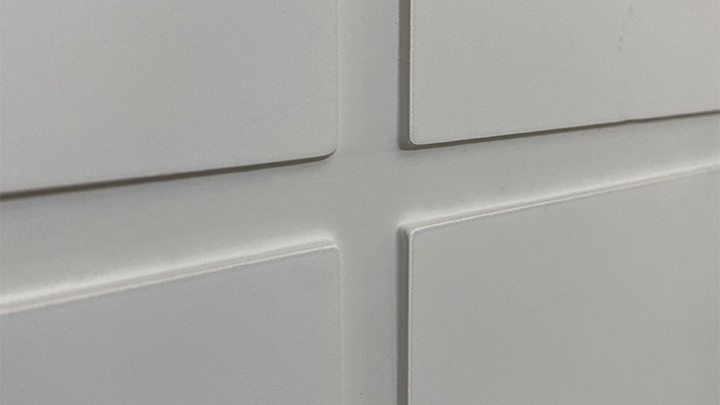
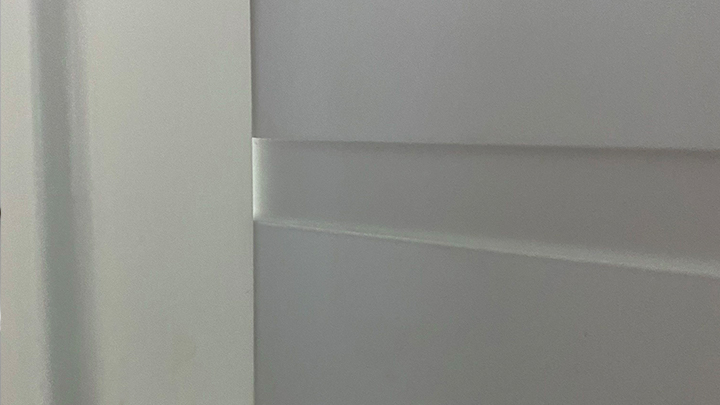
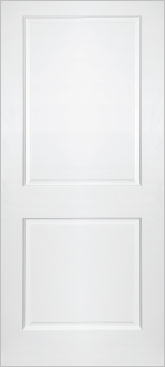
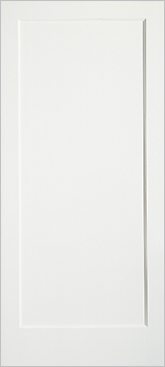
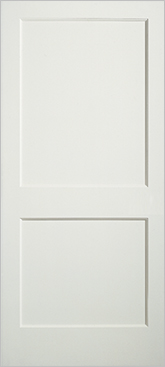
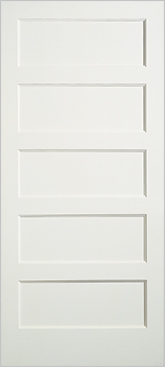
Contemporary doors are part of our the RSP offering. The skin of these doors is a 1/4″ hardboard skin and the styling found on the door is due to a 1/8″ deep groove that is carved into the skin. The doors come in full and square which means they are true size. Because of their contemporary look, they are a great fit for our EZY Jamb and are able to utilize a concealed or invisible hinge.

The doors have a wood lattice interior with a 4″ wood frame around the edges of the doors. There is a 5″ x 15″ lock block on the vertical stile line side of the door. These doors can have a 2-3/8″ or 2-3/4″ backset and will work with a standard mortise pockets, all of which will be machined on the stile line side of the door. Double bores are possible and other machining may be available depending on the template.

PRF2302

PRF2315

PRF2310


Close-up look at the groove details

Close-up look at where the door and stop meet

Primed 20 Minute Positive Pressure Fire Doors

The Primed 20 Minute Fire Doors are rated as Positive Pressure. They are 1-3/4″doors with a 20 minutes fire rated panel. To have the positive pressure rating, they must be used with an exterior 20 minute frame and they must have an intumescent strip applied to the frame after installation and finishing. The intumescent strip will be supplied along with installation instructions. To pass the fire inspection, the intumescent strip must be applied in the field.


20 Minute Rated Raised Panel with Ovolo Sticking

PR82RFR

PR82AFR

PR66FR


20 Minute Rated Flat Panel with Shaker Sticking

PR8720FR

PR8782FR

PR8760FR

PR8755FR


20 Minute Rated Flat Panel with Ovolo Sticking

PR8020FR

PR8082FR

PR8055FR

Masonry Opening (MO)

Masonry Opening Width

The MO width is the measurement of the opening from left masonry to right masonry. When determining the Masonry Opening, there is a 1/4″ adder to each piece of brickmould to account for the backer rod that is used.

Inswing

Outswing


Masonry Opening Height

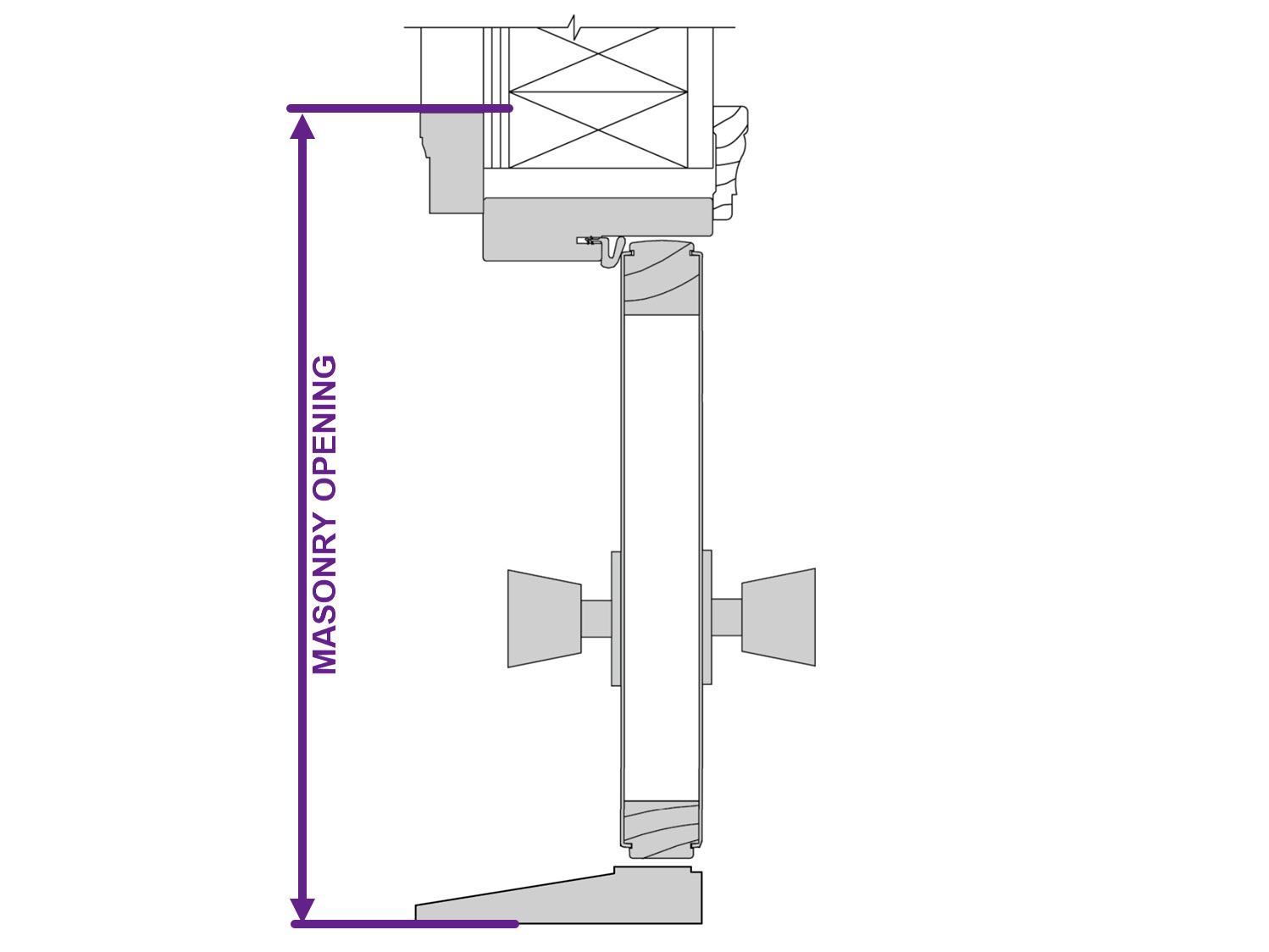
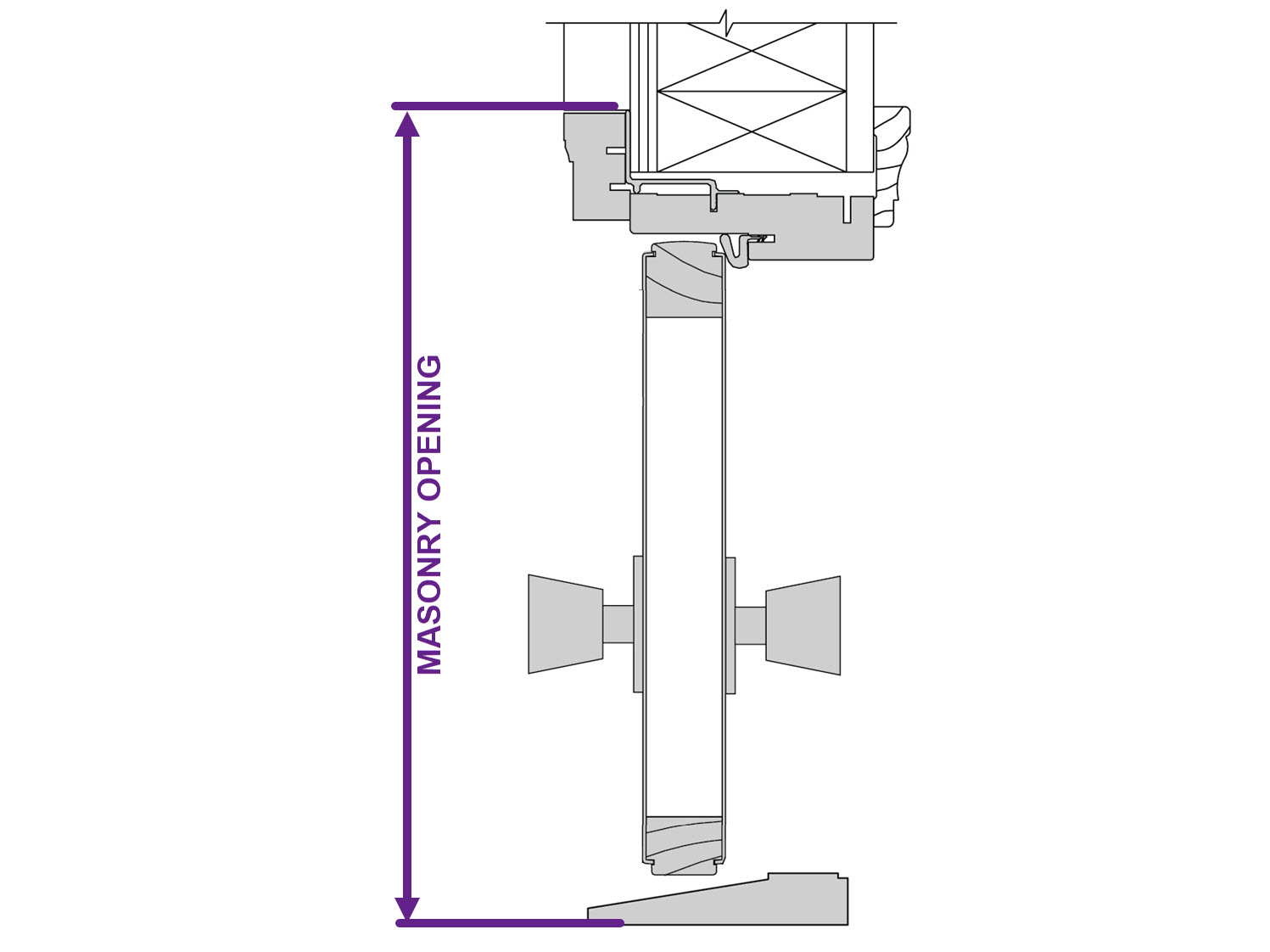
The MO height is the measurement of the opening from the header masonry to subfloor. When determining the Masonry Opening, there is a 1/4″ adder to each piece of brickmould to account for the backer rod that is used.

Inswing

Outswing


The unit sits in the Masonry Opening. Therefore the Brickmould Dimension and the Masonry Opening are related. If you are able to determine one, you are able to determine the other.

Inswing

Outswing

Inswing

Outswing

Rough Opening (RO)

Rough Opening Width

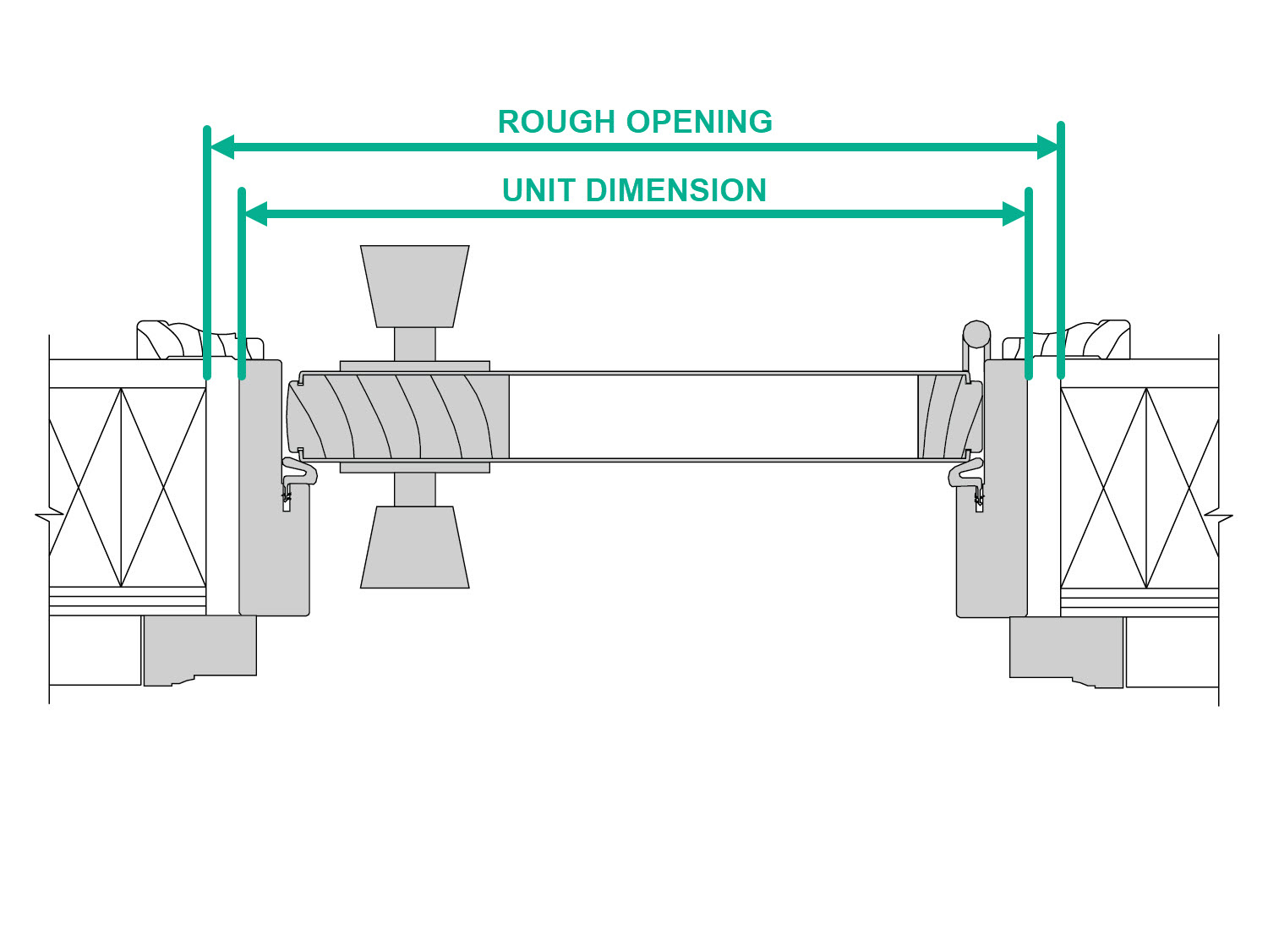
The RO width is the measurement of the opening from the left stud to right stud. When determining the RO Width, you will need to add 3/4″ to the UD Width.

Inswing

Outswing


Rough Opening Height

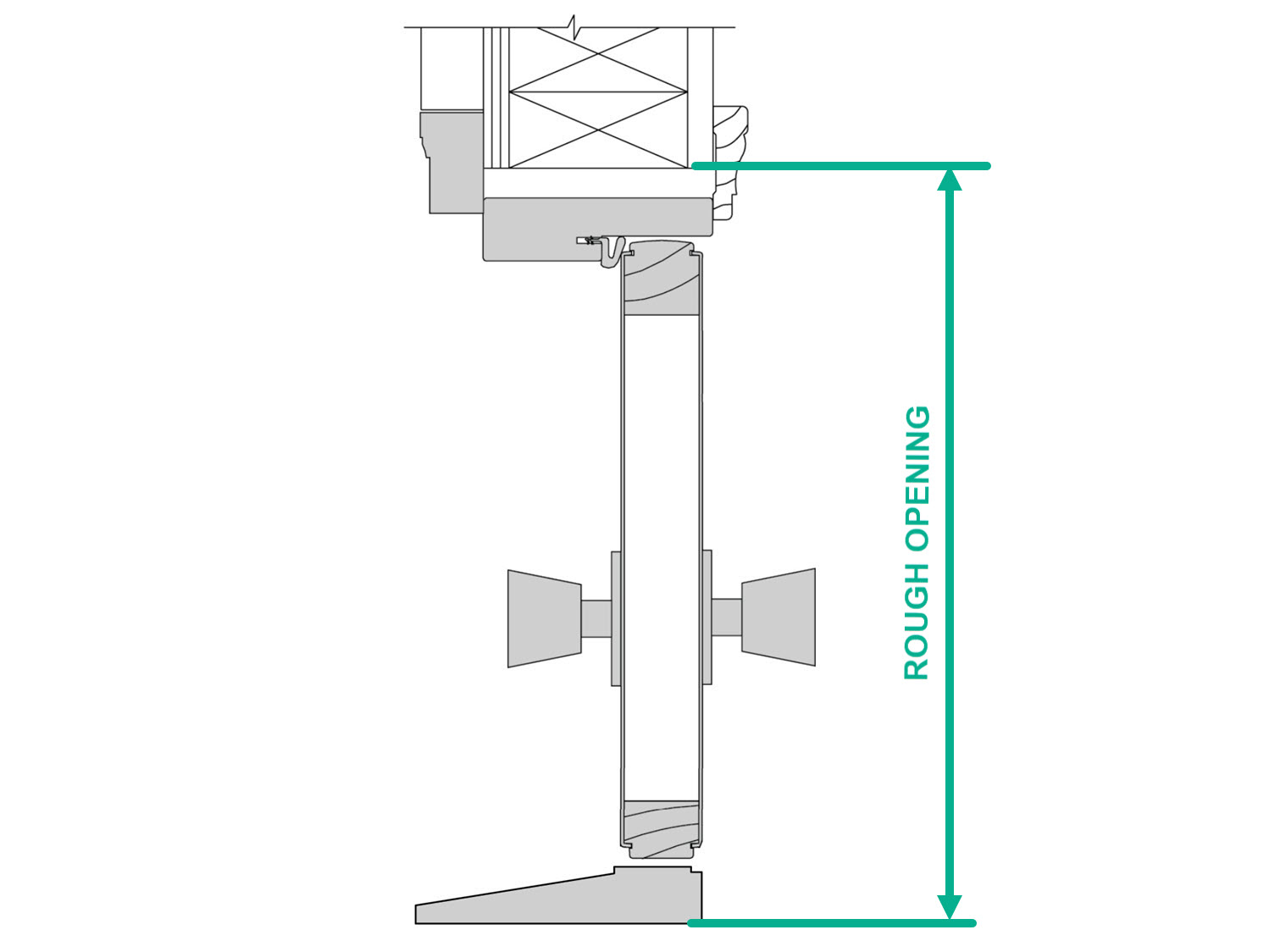
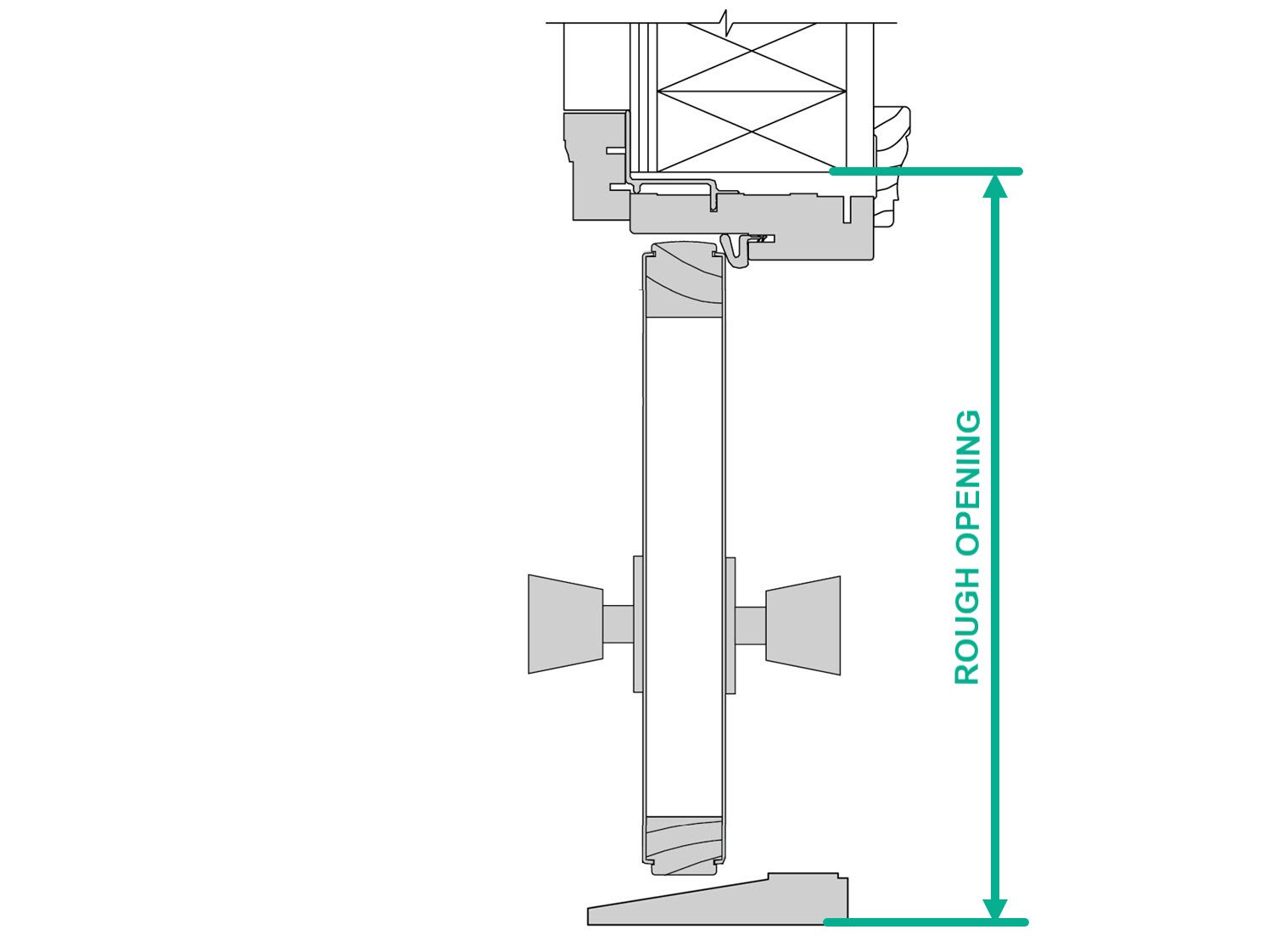
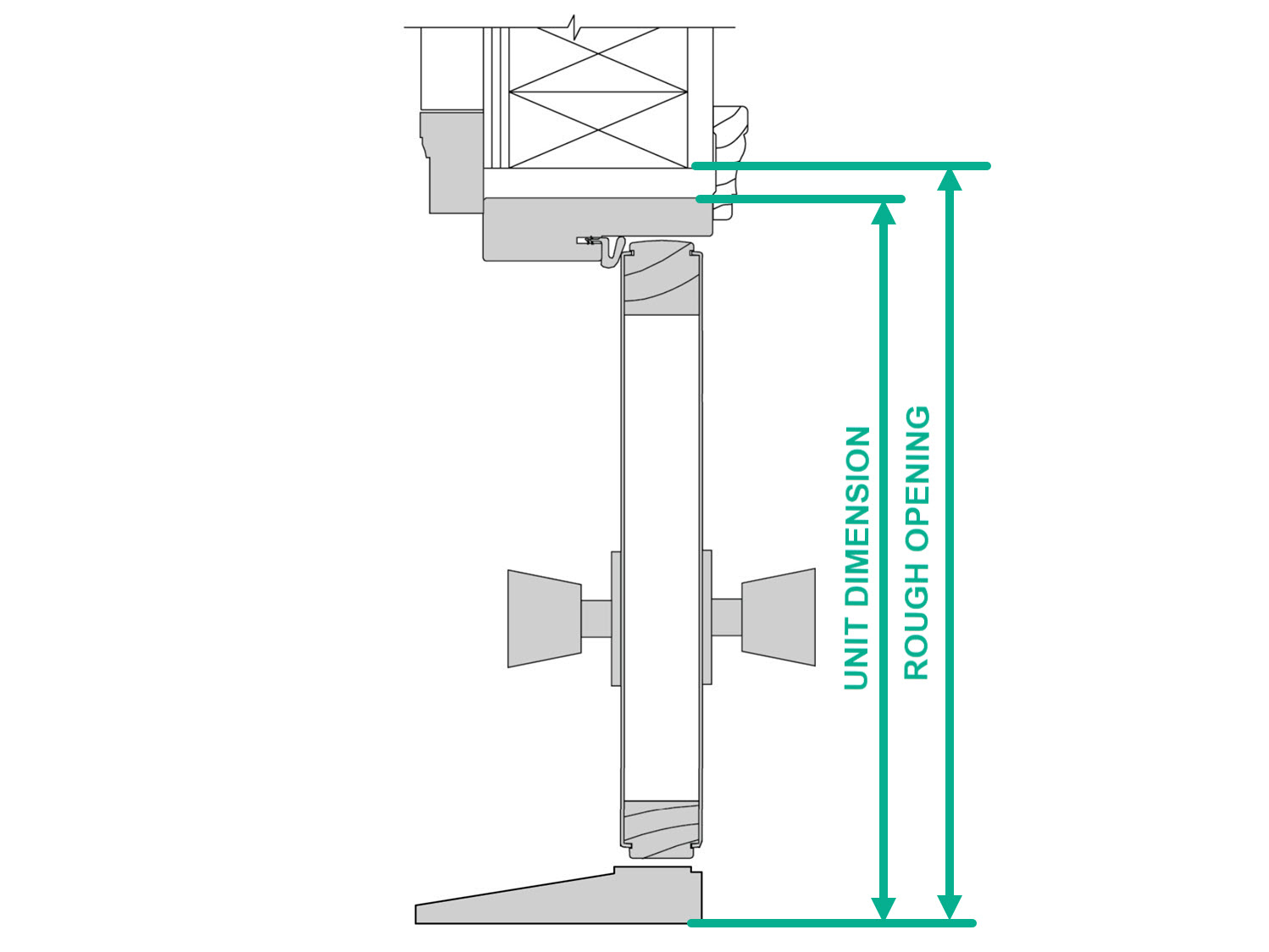
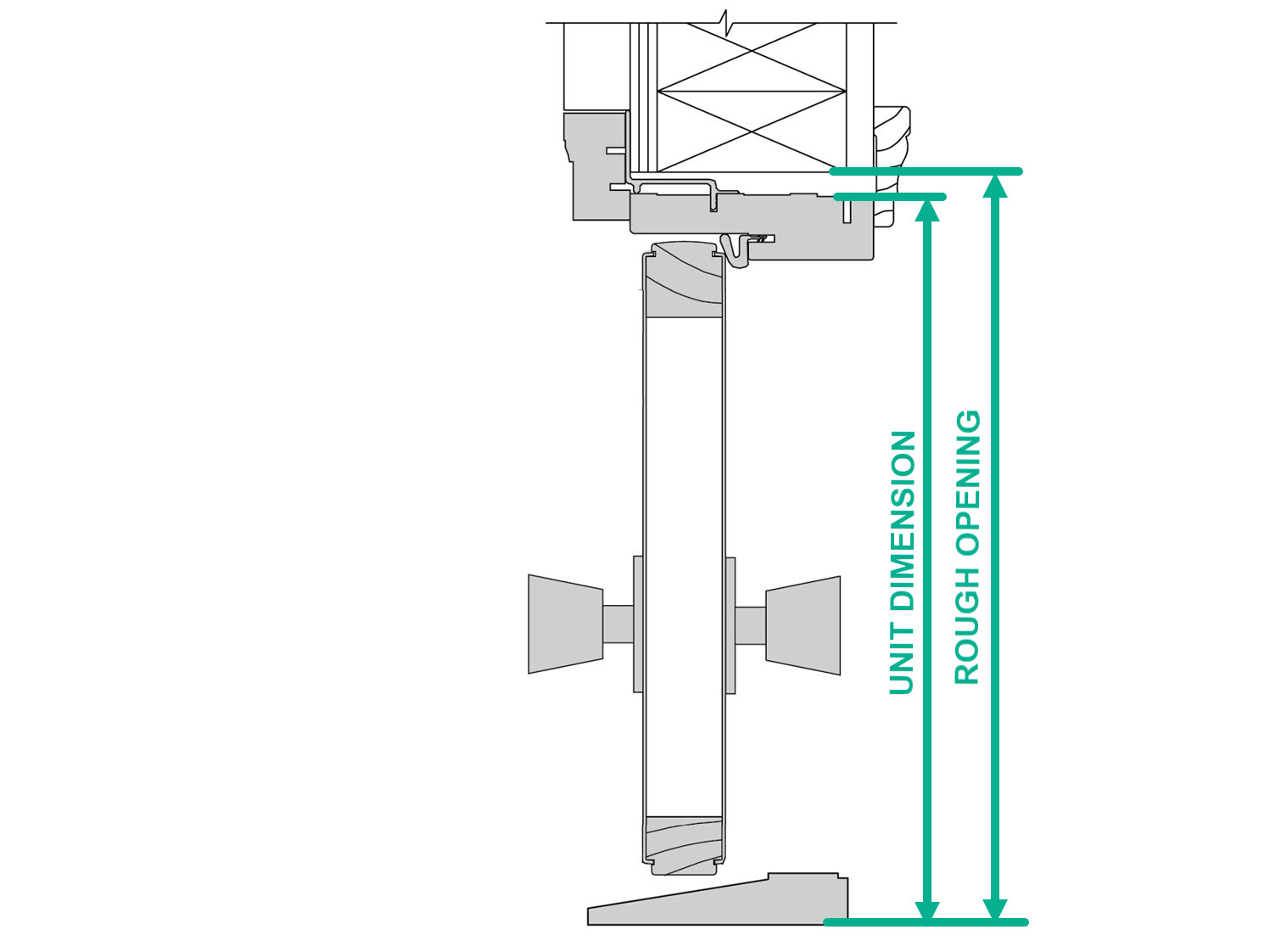
The RO height is the measurement of the opening from header stud to subfloor. When determining the RO Height, you will need to add 1/2″ to the UD Height.

Inswing

Outswing


The unit sits in the Rough Opening. Therefore the Unit Dimension and the Rough Opening are related. If you are able to determine one, you are able to determine the other.

Inswing

Outswing

Inswing

Outswing

Unit Dimension (UD)

Unit Dimension Width

The UD width is the measurement of a unit from the outside of the left jamb to the outside of the right jamb. When determining the Unit Dimensions Width, you must consider the unit configurations and the unit construction.

Inswing

Outswing


Unit Dimension Height

The UD height is the measurement of a unit from the top of the head jamb to the bottom of the sill. When determining the Unit Dimensions Height, you must consider the type of sill, if a transom is used, and the swing of the unit.
Inswing

Outswing


The opening that the unit sits in is called the Rough Opening. Therefore the Unit Dimension and the Rough Opening are related. If you are able to determine one, you are able to determine the other.

Inswing

Outswing

Inswing

Outswing

Fypon Pilaster

Pilasters finish off the side of the doors with a more refined and finished look. All pilasters come as a pair; one pilaster for each side of the door. Pilasters are available plain, fluted or with a double panel with a moulded plinth at the bottom.

Plain Pilaster Moulded with a Plinth

Fluted Pilaster Moulded with a Plinth

Double Panel Pilaster Moulded with a Plinth

The plain and fluted pilasters are also available as two pieces where the plinth is a separate piece that can be attached after the pilaster is field trimmed to fit.

Plain Pilaster with Adjustable Plinth

Fluted Pilaster with Adjustable Plinth

The fluted pilaster is also available in an economy option which has a smaller projection than a standard pilaster.

Standard Pilaster Projection

Economy Pilaster Projection


Backed by a lifetime limited warranty, Fypon products won’t warp, crack, rot or split, saving future replacement and maintenance. There is no stain or paint prep saving time and labor during installation. It is recommended to use Loctite PL Premium Adhesive (Part Number ADH1) as a bonding agent to the exterior or interior surface, followed by screwing or nailing to securely fasten for polyurethane products

For more information about Fypon’s products, please reference our in-stock catalog.

For additional information on adhesives, detailed installation instructions and finishing information, please reference Fypon’s website