How to Install Slip-On Drywall Frames

Below is a transcription of this video, which was created by the Steel Door Institute.

How to install slip-on drywall frames with compression anchors: In any building project, secure openings require the proper installation of a door frame. In this video, we’ll demonstrate how to install slip-on drywall frames with compression anchors.

Select the appropriate tools and materials for the project. Locate the correct frame by matching the opening number to the opening on the frame. Measure the width and height of the rough opening to ensure they meet the manufacturer’s recommendations. Then measure the thickness of the wall for the frame throat opening. Be sure to check where the vertical studs meet the head.

Slip the frame head over the rough opening header and center it in the opening. Install the hinge jamb by slipping it over the wall at an angle and engaging the jamb into the head. Finish straightening the jamb by slipping it over the wall, ensuring the drywall has entered the frame throat and opening on both faces of the wall. Install the strike jamb in the same way.

Insert a setting spreader at the floor of the opening. Make sure all four rabbets of the frame touch the spreader bar; this will prevent a twist in the frame. Snug the compression anchors evenly in each jamb. Use a level and a framing square to check for plumb, square, and twist. Anchor the base of the hinge jamb to both faces of the wall using the provided anchor system. Repeat the process for the strike jamb and remove the spreader bar. Your frame installation is complete and is now ready for the next phase of construction.

The procedures in this video are only guidelines. Please follow all applicable building codes, standards, and accepted practices specific to your geographic location.
How to Install a Commercial Steel Door

Below is a transcription of this video, which was created by the Steel Door Institute.

How to install a commercial steel door: In any building project, secure openings require proper door installation. This video will guide you through the key steps for the proper installation of a commercial steel door.

Step one: Preparation. Select the right materials and tools for this project. Locate the correct door by looking at the mark or opening number on the door. The mark number could be on a label written on the top or bottom channel or stamped into a hinge reinforcement. Unpack the door. Verify the door with the drawing and hardware schedule to ensure that you have the correct door, frame, and hardware set. Before starting door installation, make sure the frame opening is the correct width and is plumb, square, and level. If the opening is not true, it can cause issues with the door fit as well as hardware function. If required, verify that the door and frame have a fire label for the opening. Check the hardware schedule. Contact your distributor if the information does not match.

Step two: Hinge application and door installation. Locate the top of the door by comparing the hinge locations on the frame to the hinge locations on the door. Remember, the top hinge location will be 1/8 inch less to allow for clearance between the door and frame when installed. Check the screw holes and reinforcements in the door and frame to make sure they are clear of foreign matter. Remove any excess grout, filler, paint, or weld splatter from the reinforcement. Use a screw or tap to clear the threads on any screw holes that have foreign matter. Check the hardware schedule or submittals to verify if you are using standard or heavyweight hinges. For the application of standard weight hinges, simply attach the hinges to the door using the machine screws provided by the hinge manufacturer. Take care not to overtighten the machine screws.

Step three: Door installation. Stand the door up on end by resting the bottom of the door on the floor. Move the door close to the opening. Place a wood wedge or other support under the door to hold the weight. Align the top hinge on the door with the top hinge cut out on the frame. The top hinge is typically installed first to hold the weight of the door. Using the machine screws provided by the hinge manufacturer, install the hinges to the frame reinforcement at the top hinge location. Install the middle and bottom hinge. Remove wood wedge or other support from under the door. Close the door and verify there are proper clearances between the rabbet of the frame and the edge of the door. The door should swing freely. If the door does not swing freely, SDI 122 can be referenced to help troubleshoot installation issues such as bind or alignment. Install lockset, closer, and any other auxiliary hardware.After installing the lock set, open and close the door to ensure the latch is engaging properly in the strike.

Application of heavyweight hinges. Many manufacturers offers built-in features that allow hinge pockets on doors and frames to be modified from standard weight to heavyweight. There are a variety of methods which they can be modified, such as grinding or flattening down raised embossments in shin plates or reinforcements, removing or breaking off hinge filler shim plates, adjusting set screws, or removing wire shims.

These options all involve removing material from the pocket to allow for thicker heavier weight hinges to fit in the hinge pocket. Failure to do so may result in the door not swinging freely. Check with individual manufacturers to determine the type of modifications offered. Once the modification is complete, apply the hinges using the machine screws provided by the hinge manufacturer. Then, follow the same instructions previously given for installing and checking the door.

Application of hinges to a non-handed door: For non-handed doors, locate the non-handed filler plates and make sure you have the correct quantity. The handing or filler places may be supplied separately or attached to the hinge reinforcement with tape or a nylon plug. Remove and discard the plug. Install the handing or filler plates between the door hinge reinforcement and the hinge using machine screws provided by the hinge manufacturer. If using heavyweight hinges, check for the manufacturer’s recommended hinge reinforcement modification. After applying the handing or filler plate and hinge, check to be sure they are flush with the door edge or door face. After installing handing or filling plates, follow the previous instructions for installing the door.

The procedures in this video are only guidelines. Please follow all applicable building codes, standards, and accepted practices specific to your geographic location.

Wood Door Styles

When choosing a wood door, there are many considerations.

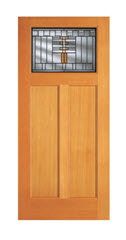
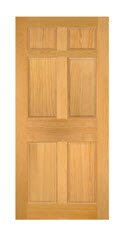
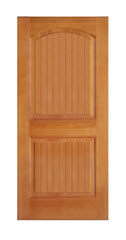
Panel Doors

For the highest level of privacy, you can get a panel door which has no glass.

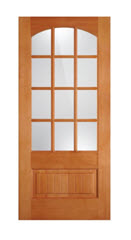
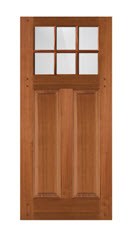
Sash Doors

If you want to bring light into your home you can get a sash door which pairs a piece of glass with panels.

French Doors

For the most natural light, you can get a french door.

Architecturally Correct

Architecturally correct doors have proportional stiles and rails.

Wide Layout

Wide layout doors have larger 5-1/2” stiles to accommodate certain locking mechanisms.

Reverse Layout

Reverse layout doors switch the intermediate and bottom panels, as well as lock rail and bottom rail, for a different look.

PanoLock Plus Options

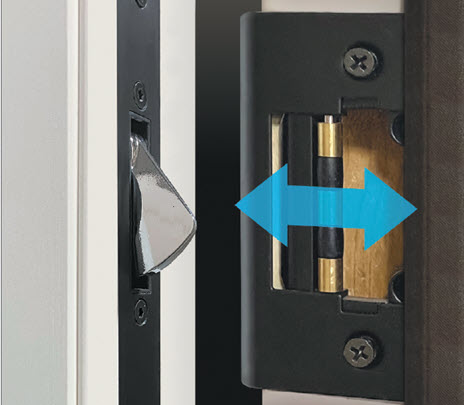
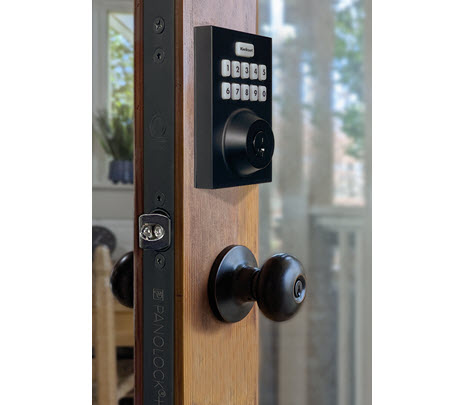
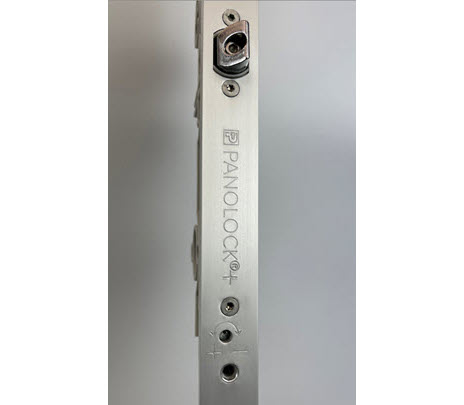
PanoLock Plus is a multi-point locking system that works with most lock hardware including electronic deadbolts.

The mechanism includes tapered bolts that tend to catch engage easily even when the door is out of alignment.

They insert into adjustable roller strikes which operate easiler and push the bolts gently against the weatherstrip.

A simple turn of the deadbolt operates both tapered bolts smoothly and the handle-set operates the handleset latch.

Faceplate Finishes

The mechanism faceplate is available in two finishes:

Bronze Anodized

Brushed Clear Anodized

Strike Plate Finishes

The choice of strike plate is linked to the faceplate finish

Victorian Bronze

The Victorian Bronze strike plate (right) pairs with the bronze anodized faceplate (left).

Flat Black

The Flat Black strike plate (right) pairs with the bronze anodized faceplate (left).

Stainless Steel

The Stainless Steel strike plate (right) pairs with the bronze anodized faceplate (left).

Satin Nickel

The Satin Nickel strike plate (right) pairs with the bronze anodized faceplate (left).

Astragal Materials

In a double door configuration, the mechanism is paired with the companion PanoLock astragal. It is available in five material options.

Bronze

The bronze astragal is an aluminum astragal.

White

The white astragal is an aluminum astragal.

Fir

The fir astragal is an aluminum astragal that is wrapped in a fir grained veneer.

Mahogany

The mahogany astragal is an aluminum astragal that is wrapped in a mahogany grained veneer.

Oak

The oak astragal is an aluminum astragal that is wrapped in a oak grained veneer.

PanoLock Plus works with standard hardware via an innovative plug-n-play handleset and deadbolt adapters that mate with multiple brands and styles. Current tested compatible brands include: Schlage, Kwikset, Emtek (Limited Options), Defiant, Reliabilt, and others being tested every day. Click here to view the compatibility lists from Endura.

PanoLock by Endura Products

Meet PanoLock: The new generation of multipoint locks. PanoLock is a one-of-a-kind multi-point lock that works with off-the-shelf hardware, supports a forgiving installation, and offers lasting performance, all at an affordable price point.

PanoLock Plus works with standard hardware via an innovative plug-n-play handleset and deadbolt adapters that mate with multiple brands and styles. Current tested compatible brands include: Schlage, Kwikset, Emtek (Limited Options), Defiant, Reliabilt, and others being tested every day. Click here to view the compatibility lists from Endura.

Reeb Bethlehem Facility Tour

Our Bethlehem facility is pretty amazing, and we always enjoy showing it off to our customers. But we know some of you are scattered up and down the east coast, and the drive can be a hassle. So, we’ve decided to make things easier for you and put together a video tour! Now, you can check out our digs from the comfort of your own office or home.

From our state-of-the-art tech to our top-notch management, our virtual tour gives you an inside look at everything we have to offer. It’s a pretty sweet experience if we do say so ourselves! Take a few minutes to check it out when you have a chance. We think you’ll be pretty impressed.

Click here to see an update about the facility including our newest equipment, the Barbaric.