Amanda Hergenreder reviews Therma-Tru’s Axis glass options and takes an in-depth look at the detail, transparency and available sizes.
Featured in this video:
- Axis glass
Amanda Hergenreder reviews Therma-Tru’s Axis glass options and takes an in-depth look at the detail, transparency and available sizes.
Featured in this video:
Note: Avonlea glass is no longer offered. This article will remain available as a reference.
Paul Ciccone reviews Therma-Tru’s Avonlea glass options and takes an in-depth look at the detail, transparency and available sizes.
Featured in this video:
Exterior wood doors are handcrafted to last for years to come, but, like any fine piece of furniture, its finish will require some simple, periodic maintenance to keep it looking great and provide proper protection against the elements. Regular finish maintenance is also a requirement of the warranty. Here are some signs to watch for. They indicate that it’s time for some simple, easy-to-perform maintenance:
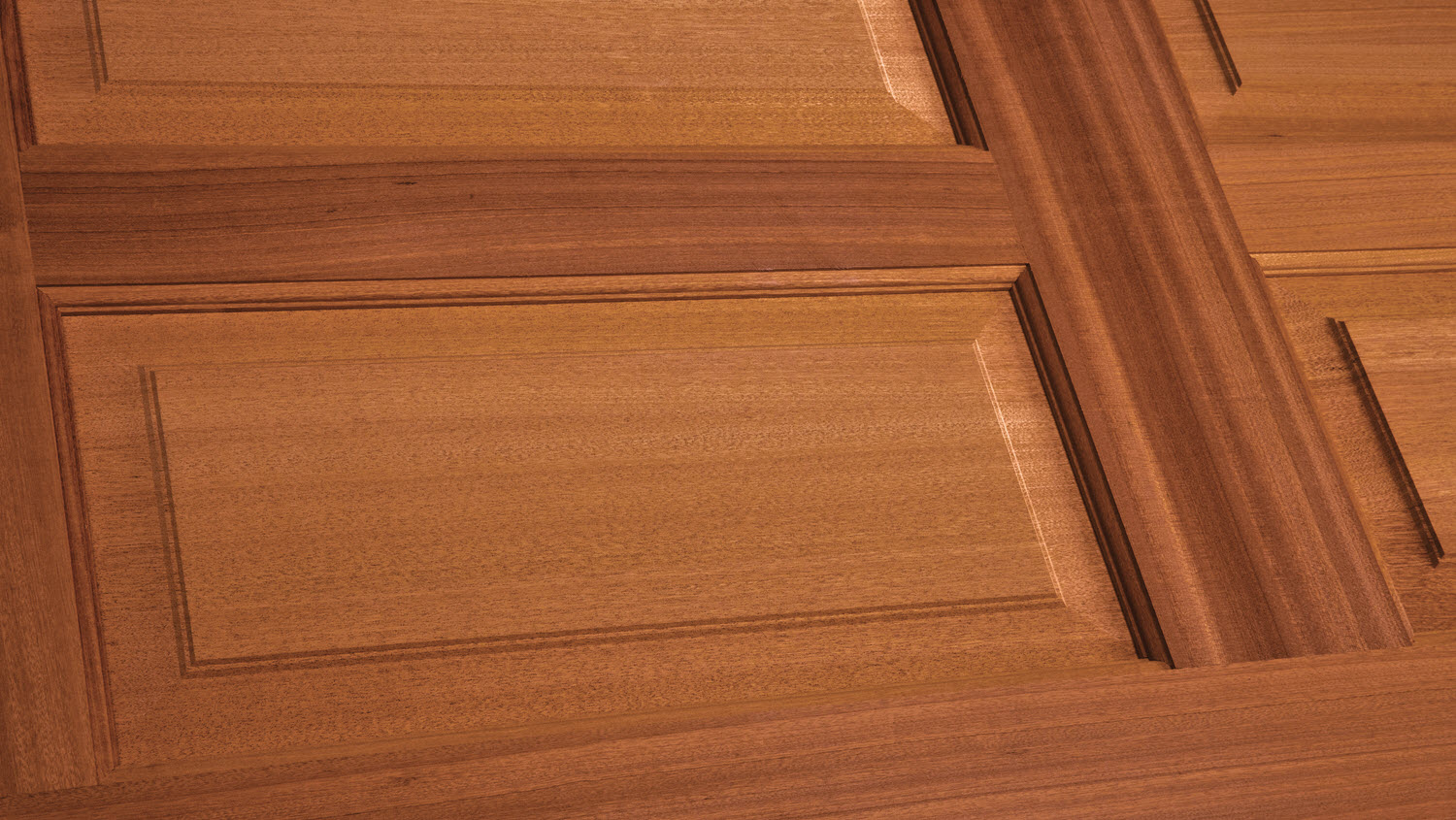
If you live in a severe climate or your entry receives a lot of direct sunlight from a southern or western exposure, you’ll want to examine your door’s finish often. Depending on the conditions, you may also need to maintain the door finish more frequently. It is important to note that wood has inherent dynamic qualities. Over time, small surface “imperfections” may appear, and the door may shrink or swell slightly as it “breathes” with climate changes. These characteristics are perfectly normal, reflecting the natural aging process of a wood door, and they should not be considered defects. To minimize these occurrences, protect your door with the right finish and an adequate overhang.
All surfaces of the door must be properly finished. The edges (top, bottom and sides) should be coated with each and every coat of finish that is applied to the exterior surface of the door. Doors must be dry before finishing. On doors that are glazed with clear glass, the finish used should be flowed from the wood slightly onto the glass. This will provide assurance against water leakage and protect the glazing compound “putty” from drying out. It is the finisher’s responsibility to protect glass prior to and during finishing. If using tape, conduct a test of the tape being used on a small area of the glass before applying to a large surface. After finishing, remove the tape as soon as possible.
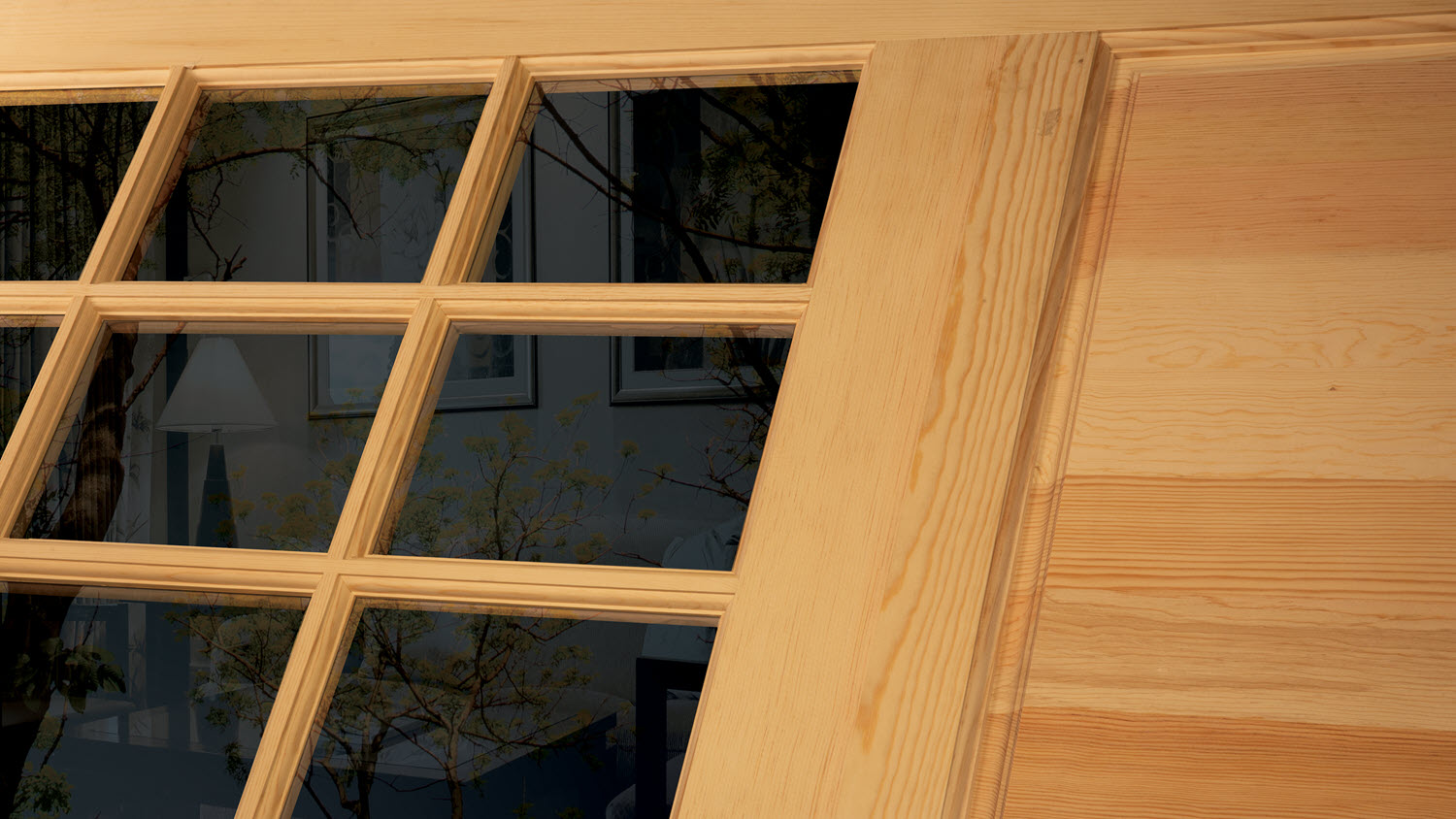
The recommended process for finishing wood doors is a 3-step process.
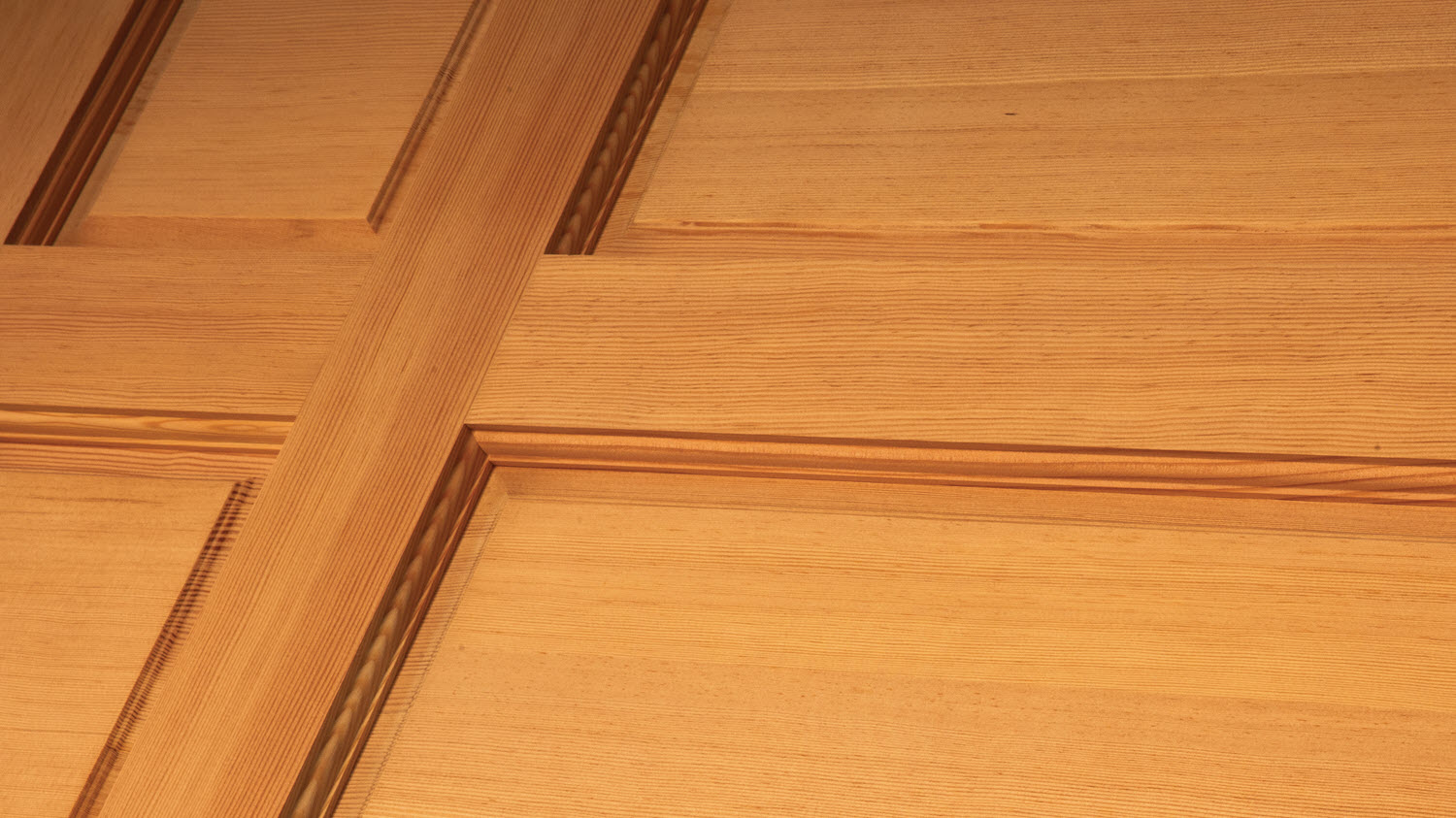
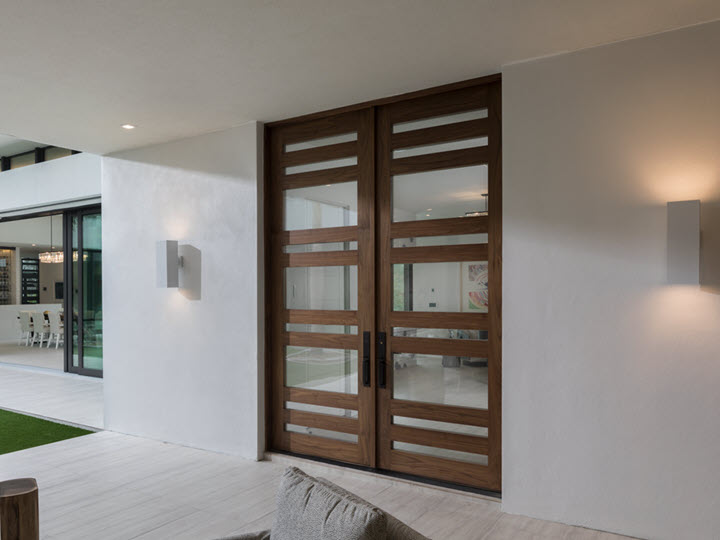
Wood doors have very little limitations when it comes to design options. Our catalogs are a great resource for our in-stock items, however sometimes a different look is desired. Whether it is a modified stock item or a completely custom design, the Custom Design Team can help to create your ideal entryway. Not only will they help with your order, they ask questions along the way to help ensure your door will last.
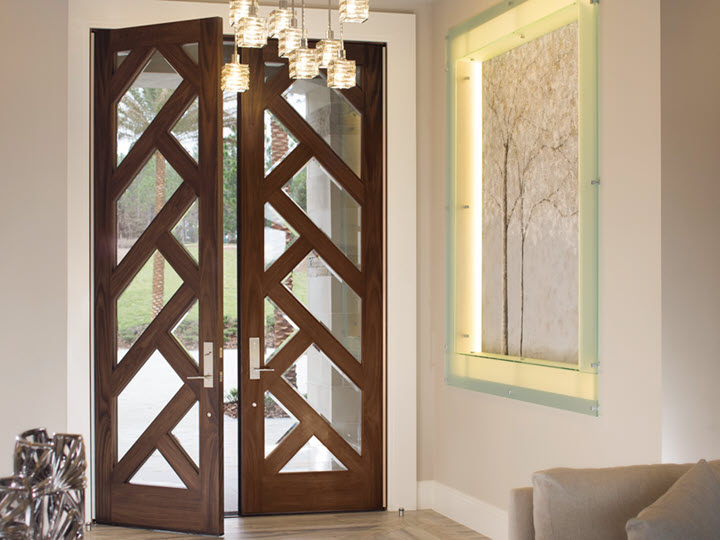
Designing a custom door starts with the customer. A drawing or sketch is the best way to start the process. After submitting a sketch, our Custom Team will begin to help guide you through the quoting and buying process by asking about the following options:
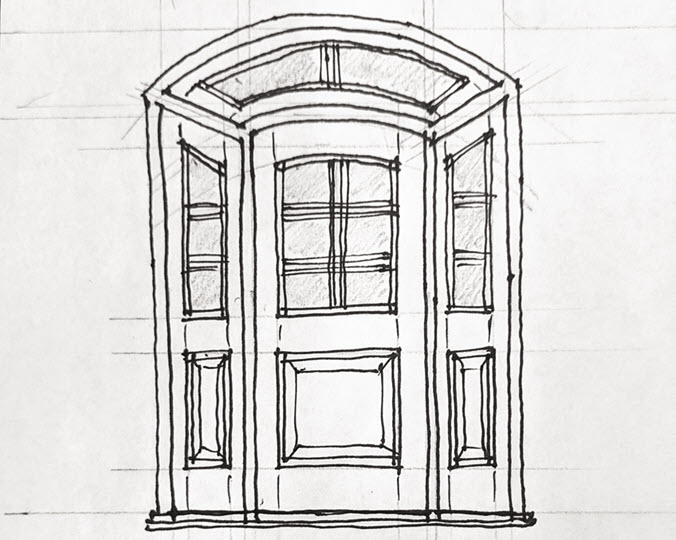
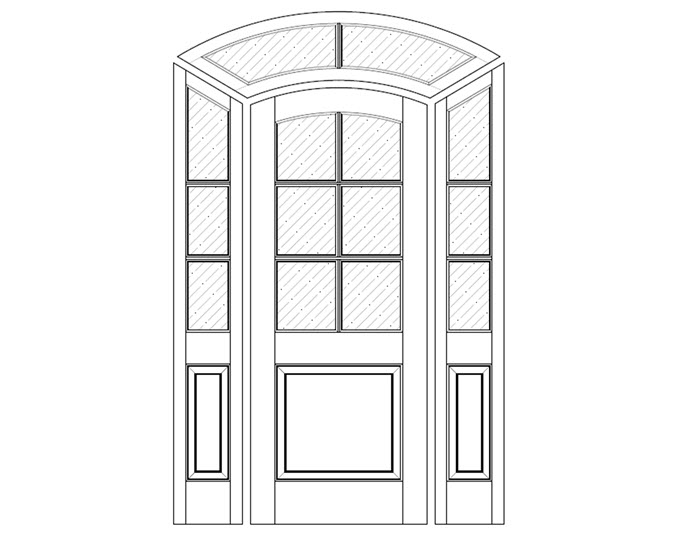
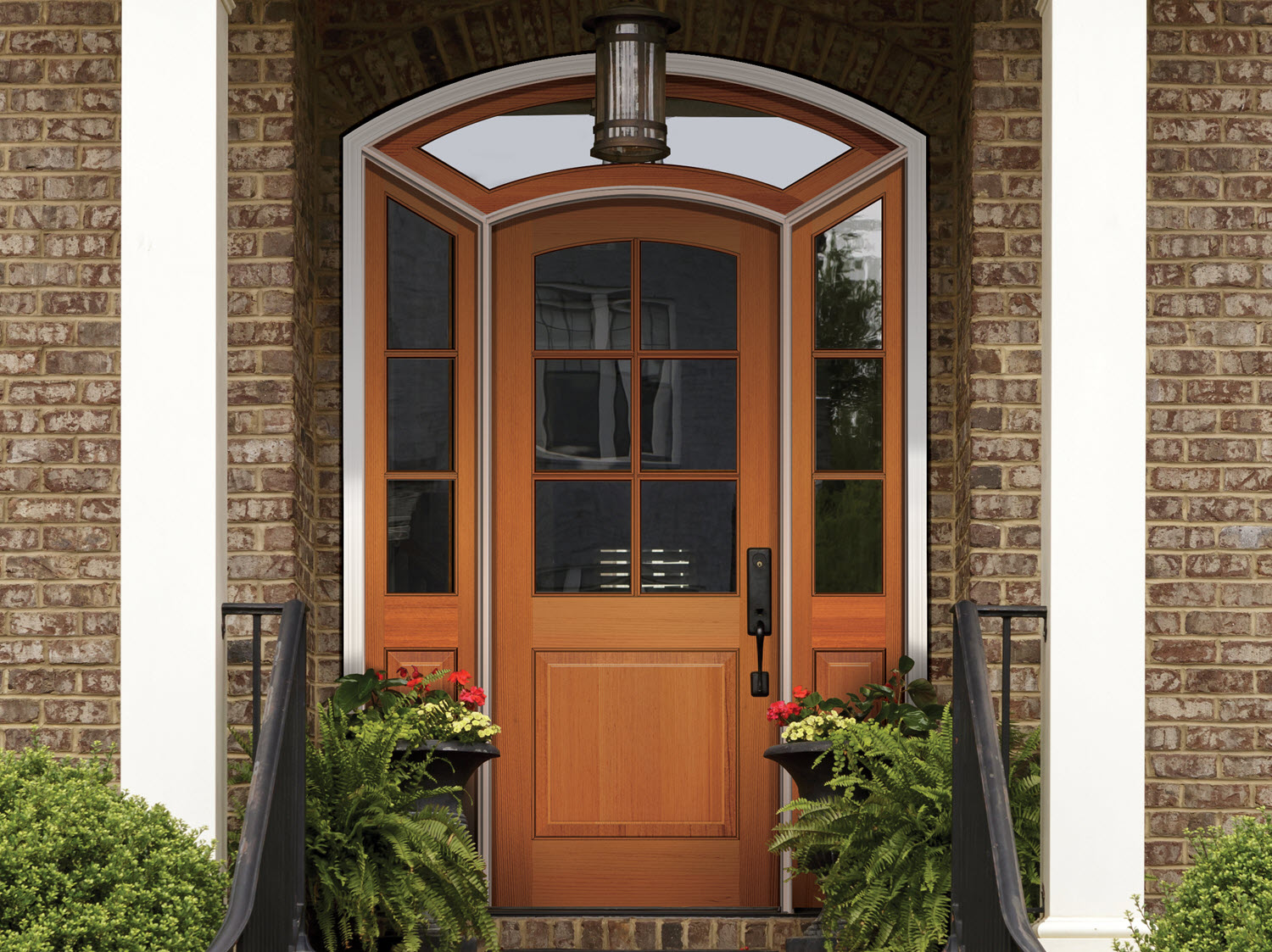
Once all the design decisions are picked, an initial CAD drawing is created based on the customer’s sketch. Not only does this help the customer visualise the final product, but also helps to ensure the end product is what the customer desires. The drawings are supplied to the customer for their review. Based on their needs, and the appearance of the door, the customer will then choose the layout and approve the purchase. The door is then ordered, and delivered to the customer.
Our field service technicians are well trained to complete the services required. Anytime they perform work, they need to take their safety into consideration. There are some basic requirements for site and building safety that our technicians need in place to properly perform the work.
Prior to a Reeb Field Service Technician arriving to complete an assessment, repair, replacement or other requested work, this non-comprehensive list of key requirements for basic site and building safety that must be achieved. All requirements are translated directly from OSHA 29 CFR 1910 Subpart D – Walking and Working Surfaces, which covers and protects all Reeb Millwork Inc. Employees. This list serves to highlight only the most frequently encountered walking and working surfaces hazards encountered by Service Technicians in the Field. Please refer to the regulation listed above for any specific hazards that may be present and direct other potential hazards to the Field Service Coordinator for your work request.
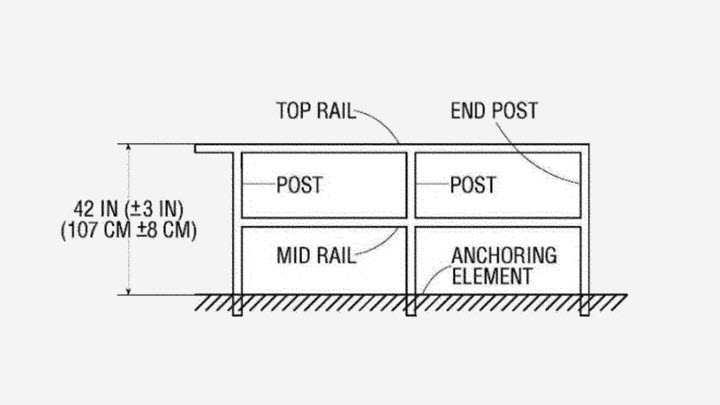
On-Guard Grained jambs are a full composite jamb that has a lifelike wood grain appearance and is ready for paint or stain on site. It is a great jamb for houses that are close to the shore or get excessive water infiltration. The frame itself is rot proof and works great with a Therma-Tru grained door units.
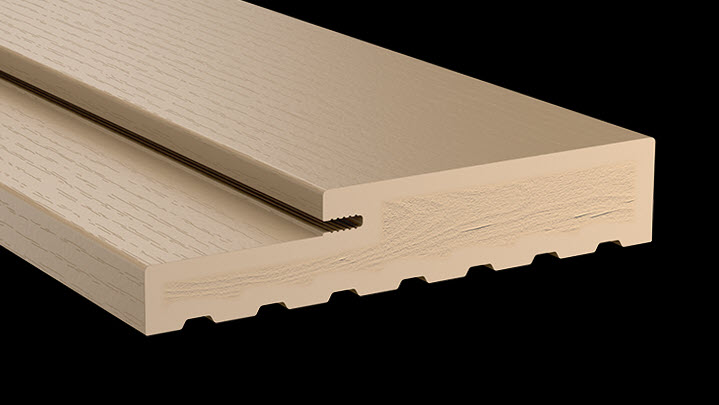
This jamb species cannot be finished by Reeb Finish.
On-Guard Grained jambs can be used with single doors, double doors, doors with one sidelite and doors with two sidelites.
The On-Guard Grained jamb is available in 4-9/16″, 5-1/4″, 6-9/16″, and 7-9/16” jamb depths. This jamb cannot be customized to other jamb depths. Transom sills are also available in standard 4-9/16” and 6-9/16” sizes.
All standard heights are available for this type of frame, along with some material available in 10’ pieces to accommodate larger width or taller units. The 10’ pieces are newer inventory and may not be ordered at this time.
Brickmould is available as an exterior trim in a matching woodgrain material and will be 2” in width.
On-Guard White Shield jambs, or frames, are a composite material with a matte finish and pleasant sheen. While it is pre-finished, if desired you can also finish it onsite with a good exterior paint. The frame itself is rot proof and works great with a Therma-Tru door unit.
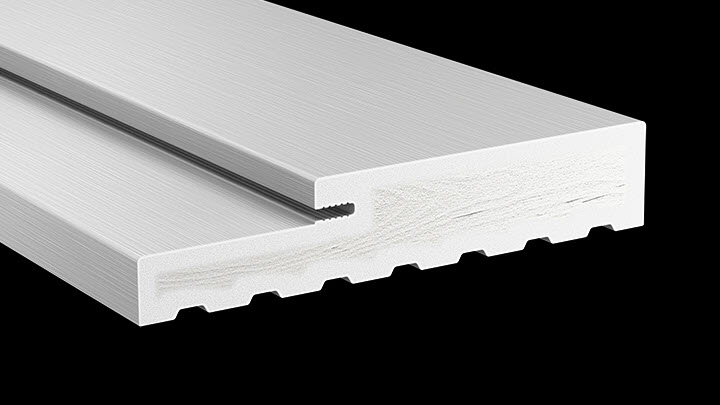
This jamb species cannot be finished by Reeb Finish.
On-Guard White Shield jambs can be used with single doors, double doors, doors with one sidelite and doors with two sidelites. Units with Mullposts can have FrameSaver Primed Mullposts.
The On-Guard White Shield jamb is available in 4-9/16″, 5-1/4″, 6-9/16″, and 7-9/16” jamb depths. This jamb cannot be customized to other jamb depths. Transom sills are also available in standard 4-9/16” and 6-9/16” sizes, with reinforced transom depth options of 4-9/16″, 6-9/16″, or 7-9/16″.
All standard heights are available for this type of frame, along with some material available in 10’ pieces to accommodate larger width or taller units. The 10’ pieces are newer inventory and may not be ordered at this time.
Brickmould is available as an exterior trim in a matching material and will be 2” in width.
Barn door hardware typically requires a track that is twice the size of the door opening so the doorway can be fully exposed. In some situations, there isn’t enough room for a conventional barn door. The Barnfold folding barn door hardware series tackles this problem by combining the J-strap hangers with the space saving convenience of bifold doors.
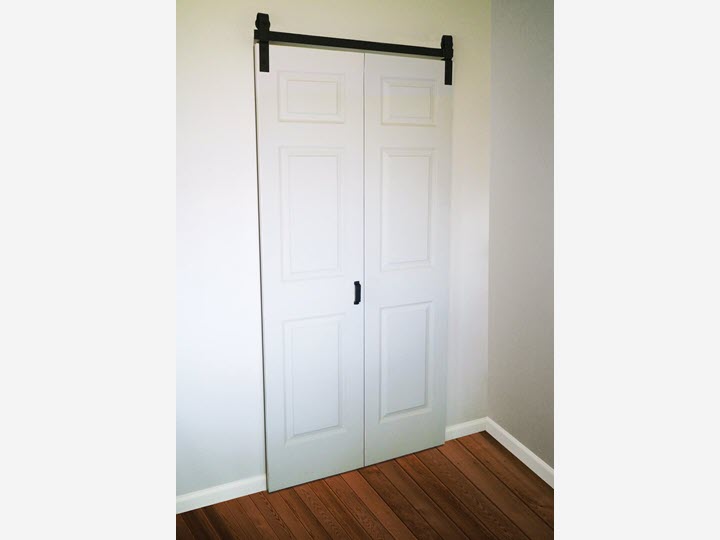
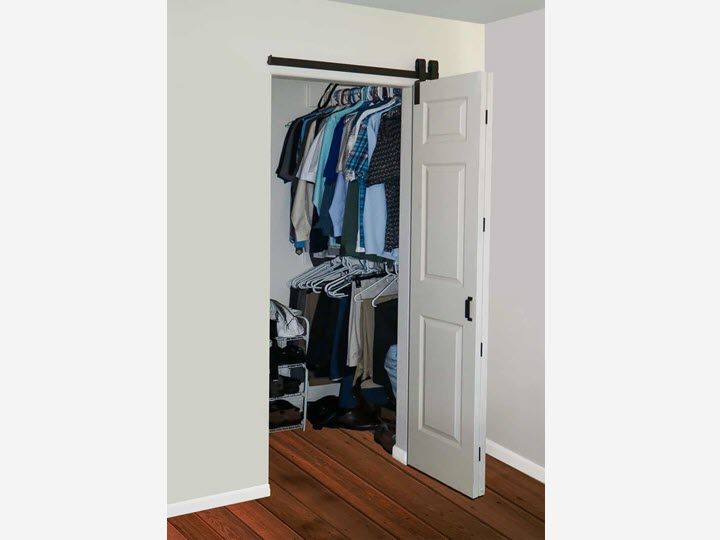
Barnfold mounted doors attach to the outside of the opening unlike bifolds that attach inside the opening. It only needs 5″ of adjacent wall space for a clear opening. The doors can be installed to open either to the left or to the right and all the of the doorway is accessible. This design does not need a floor guide for use. The hardware can hold 125 pounds for a 2-door setup or 250 pounds for a 4-door setup
The 2-door hardware set is for 2/6, 3/0, and 4/0 openings and the 4-door hardware set is for 5/0 and 6/0 openings. The hardware sets include one track. The 2-door set includes the items listed below while the 4-door set includes two sets of the items below.
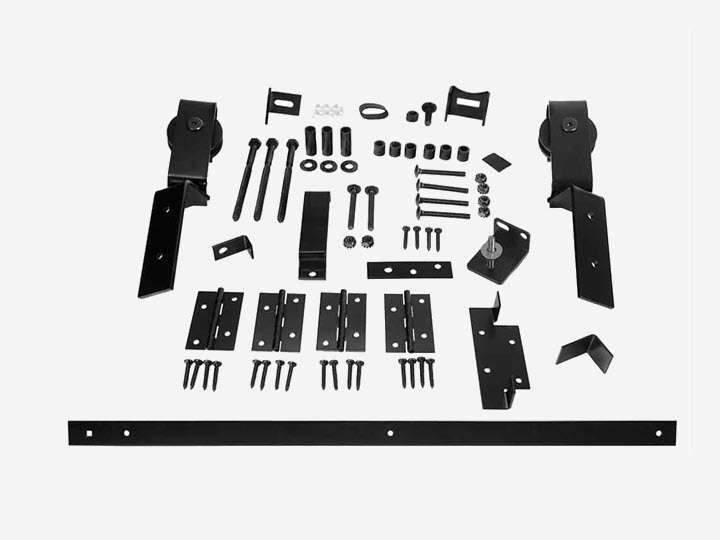
2-Door Hardware Set
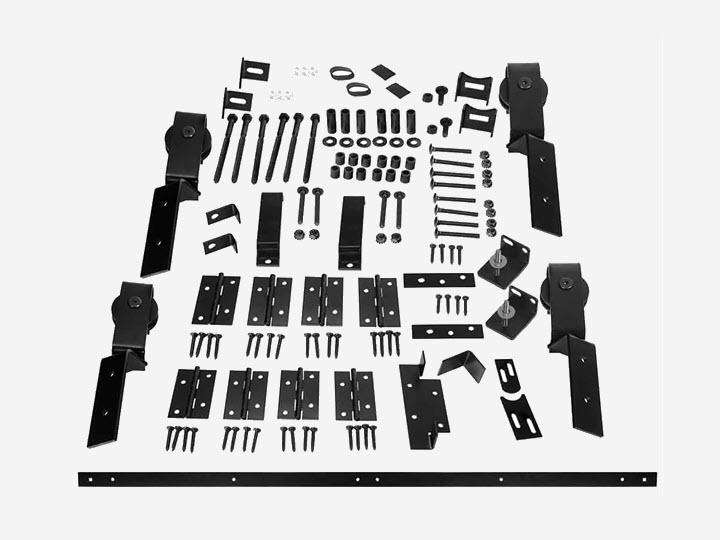
4-Door Hardware Set
In masonry construction, the standard height for blocks is typically 8 inches. This dimension becomes critically important when integrating a door into a masonry or block wall opening, as one must meticulously align the door’s height with the block dimensions.
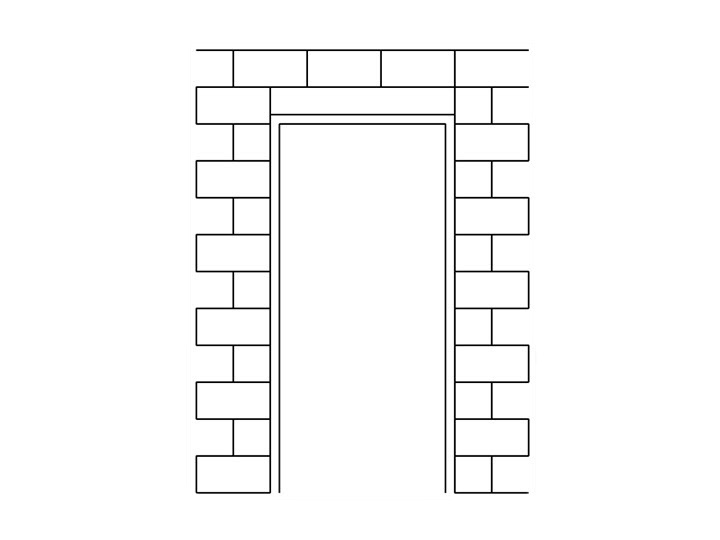
In the case of a 6/8 door, which stands at a height of 80 inches, it matches the height of 10 blocks. For a commercial door frame, the head jamb is typically 2 inches in height. This leaves a 6-inch space between the head jamb and the next block, allowing the use of a lintel for structural support. A lintel, serving as a horizontal support, can be crafted from diverse materials like timber, stone, concrete, or steel, and is placed atop a door or window.
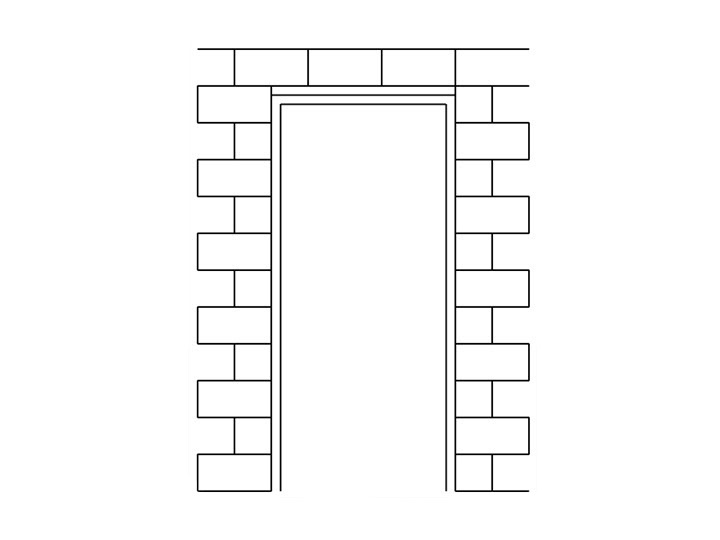
When dealing with a 7/0 door, the scenario alters slightly. This door, at 84 inches in height, corresponds to the height of 10.5 blocks. The lintel installation needs to align with the subsequent block layer. Utilizing a 2-inch head jamb results in a 2-inch gap between the top of the door frame and the lintel.
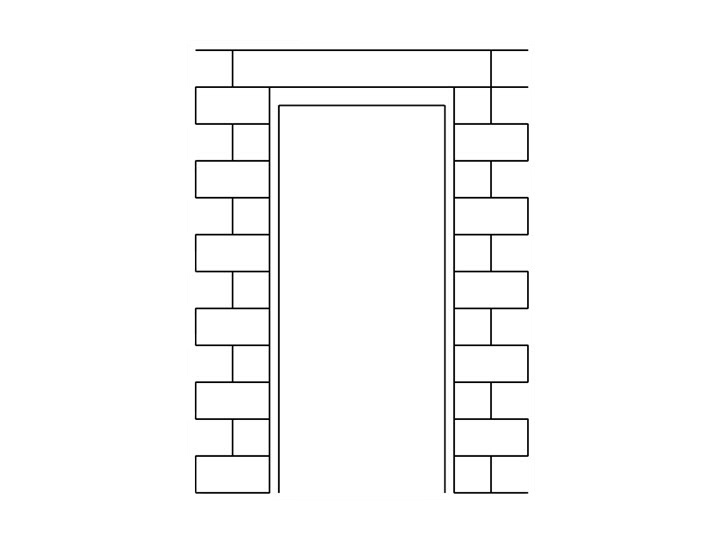
In an alternative approach with a 4-inch head jamb, the total height equates to that of 11 blocks. This configuration allows for the lintel to be positioned directly above the door unit, aligning seamlessly with the next layer of blocks. Opting for a 4-inch head jamb ensures an optimal fit between the door unit and the lintel.
Locks serve various purposes depending on their specific functions. They can either ensure a door always locks automatically when closed or prevent accidental lockouts from inside a room.

A Passage lock can be operated with the lever from either side at all times. It allows free movement through the door without the need for keys or locking mechanisms.

A Dummy lock can be pulled from one side to open the door, but it lacks mechanical operation. It is primarily used for aesthetic or non-functional purposes.

A Privacy latch can be operated with the lever from either side. The outside lever can be locked using a push button. It can be unlocked by an emergency release on the outside or with the interior lever. Importantly, closing the door does not release the push button.

An Entry latch can be operated with the lever from either side, except when the outside lever is locked by the push button on the inside. To unlock the device when the outside lever is locked, an operating key is inserted into the outside lever. The locking mechanism automatically releases when the interior lever is operated. Closing the door does not release the push button.

A Classroom latch can be operated with the lever from either side, except when the outside lever is locked from the outside using a key. When the outside lever is locked, the latchbolt can still be operated by the inside lever.

A Storeroom latch can be operated either by inserting a key into the outside lever or by using the inside lever. The outside lever remains locked at all times, while the inside lever remains unlocked.
Reeb stocks two series of locksets. The 3500 series is a heavy duty hardware meant for higher trafficed areas. The 3600 series is a medium duty hardware meant for lower trafficed areas.