Hanging Barn Doors

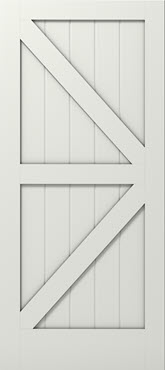
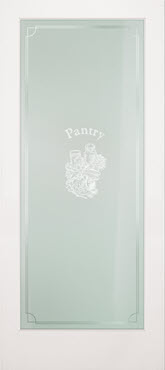
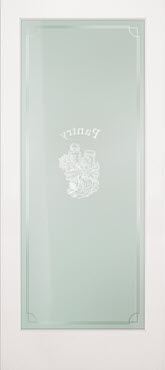
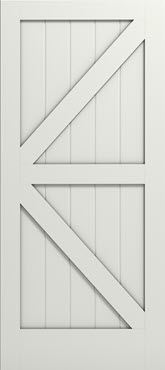
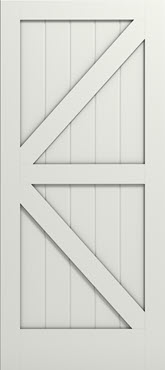
When hanging a barn door, we need to think which way we want the letter to be readable. This applies to both the K style and the Z style.

To understand the concept of the hinge and stop side, a video showcasing this concept was created.
Click here to view and learn more.


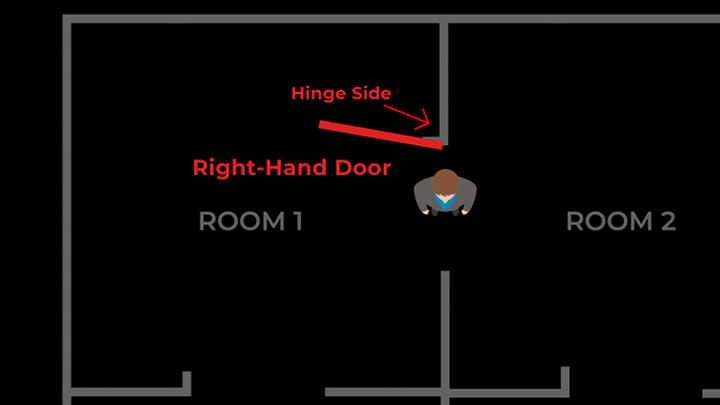
The door in this scenario is a right-hand door swinging into Room 1.

The hinges would be on seen in Room 1, while the stop would be seen in Room 2.

If we wanted to read the letter from Room 1, we would want the door readable from the hinge side. If it was readable from the stop side, the letter would be backwards in Room 1.

Letter Readable

Letter Backwards


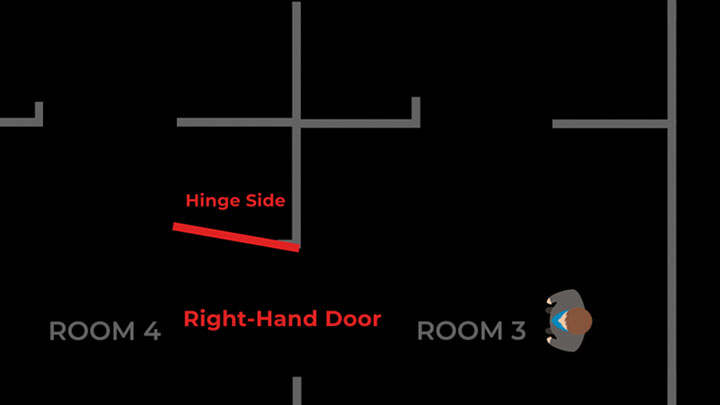
Here we have a right-hand door swinging into Room 4.

The hinges would be in Room 4 and the stop in Room 3.

If we wanted to read the letter from the Room 3, the door should be readable from the stop side.


Barn doors are not the only door type where the stop or hinge side must be specified.

Click here to view a video on hanging a door with readable glass.

Click here to view a video on hanging a door with louvers.

Click here to view a video on hanging a door with textured glass.

Hanging Louver Doors

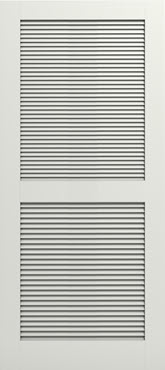
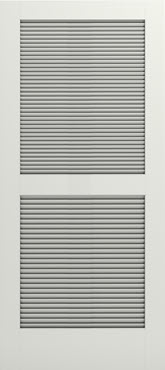
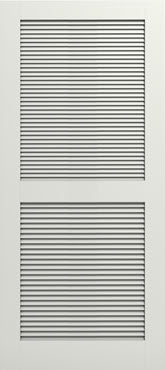
When hanging a door with louvers, we need to know if the blind side should be to the hinge or stop side. The blind side is the side where the louvers run down and you can’t see into the next room.

To understand the concept of the hinge and stop side, a video showcasing this concept was created.
Click here to view and learn more.


The door in this scenario is a right-hand door swinging into Room 1.

The hinges would be on seen in Room 1, while the stop would be seen in Room 2.

If we didn’t want to see into Room 2, we would want the blind side to the hinge side. If the blind side was to the stop side, the louvers would run up in Room 1, allowing you to see into Room 2– but not Room 1.

Blind Side

Non-Blind Side


Here we have a right-hand door swinging into Room 4.

The hinges would be in Room 4 and the stop in Room 3.

If we didn’t want to see into Room 4, we would want the blind side to the stop side.


Louvers doors are not the only door type where the stop or hinge side must be specified.

Click here to view a video on hanging a door with readable glass.

Click here to view a video on hanging a barn door.

Click here to view a video on hanging a door with textured glass.

Hanging Doors with Readable Glass

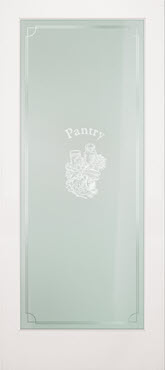
When hanging a door with readable text, we need to know if the word should be readable from the hinge or stop side.

To understand the concept of the hinge and stop side, a video showcasing this concept was created.
Click here to view and learn more.


The door in this scenario is a right-hand door swinging into Room 1.

The hinges would be on seen in Room 1, while the stop would be seen in Room 2.

If we wanted to read the text from Room 1, we would want the door readable from the hinge side. If it was readable from the stop side, the text would be backwards in Room 1.

Text Readable

Text Backwards


Here we have a right-hand door swinging into Room 4.

The hinges would be in Room 4 and the stop in Room 3.

If we wanted to read the text from the Room 3, the door should be readable from the stop side.


Doors with readable glass are not the only door type where the stop or hinge side must be specified.

Click here to view a video on hanging a door with louvers.

Click here to view a video on hanging a barn door.

Click here to view a video on hanging a door with textured glass.

Understanding the Stop and Hinge Sides

Louvers, barn doors, and readable glass are popular interior door options. When ordering them as a pre-hung unit, you need to identify the swing of the door and the direction of the design.

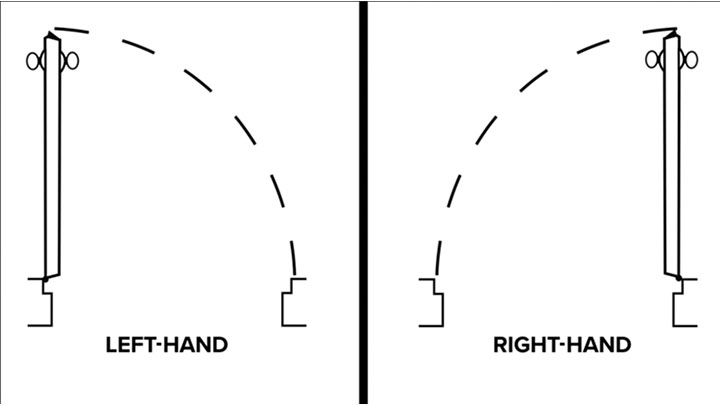
First, we need to know the swing, or the handling. Interior doors can have a left-hand or a right-hand swing.

This door swings into Room 1. If we put our back to the hinges, we can see it is right-handed.

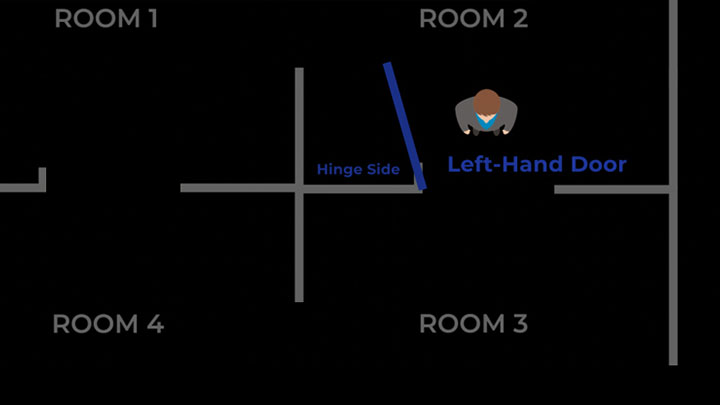
This door swings into Room 2. If we put our back to the hinges, we can see it is left-handed.

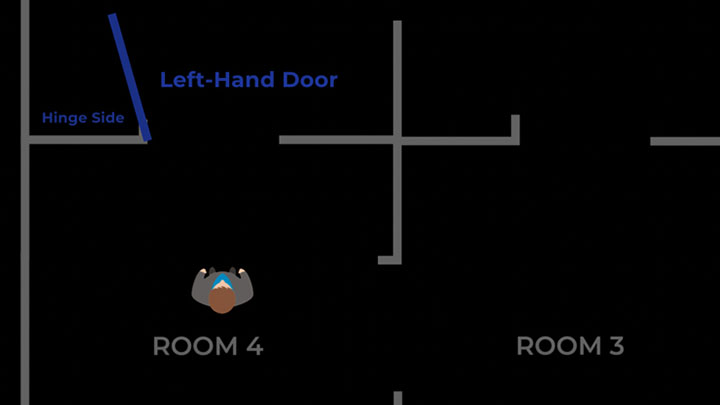
While this door swings out of the room the man is in, it is a right-handed door.

This door also swings out of the room the man is in but is a left-handed door.

Second, we need to know if the door should face the stop side or the hinge side.

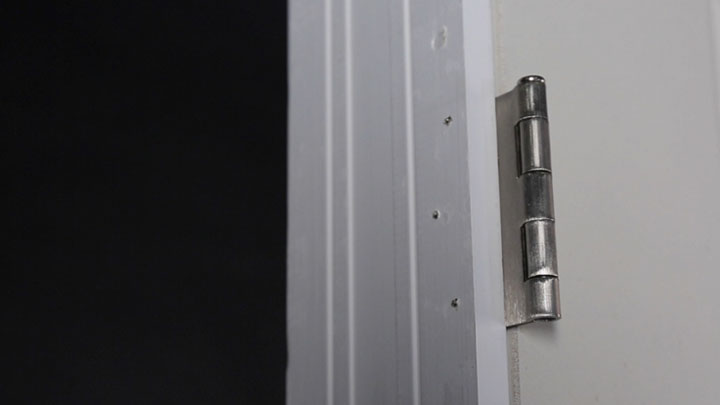
On one side of the door, we see the hinges sticking out. This makes this side of the unit called the hinge side.

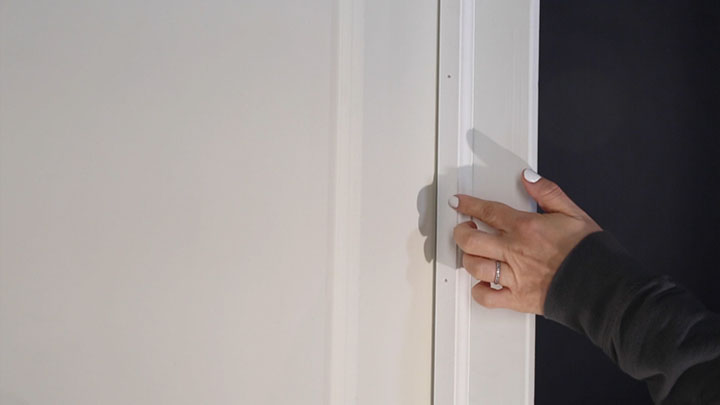
The other side is the stop side due to attachment down the middle of the flat jamb called a stop which keeps the door from swinging through.

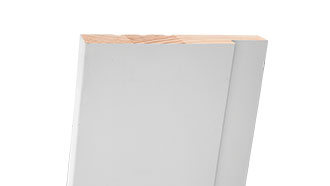
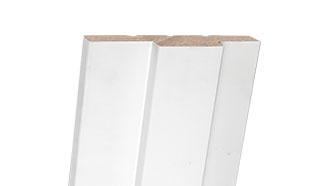
A single rabbeted jamb, double rabbeted jamb, and a split jamb also have a form of a stop, although theirs is part of the jamb.

For louvers doors, barn doors, and doors with readable glass, you need to identify whether the blind side, the design, or the readable text faces the hinge or stop side. To further visualize this concept, a video showcasing this concept was created for each door type.

Click here to view a video on hanging a door with readable glass.

Click here to view a video on hanging a door with louvers.

Click here to view a video on hanging a barn door.

Click here to view a video on hanging a door with textured glass.

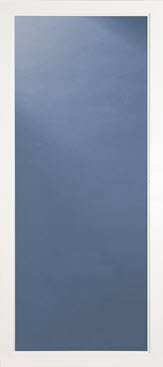
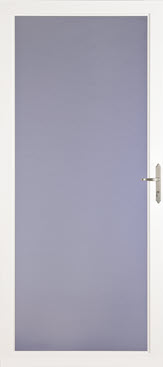
Larson Storm Door Options

Platinum

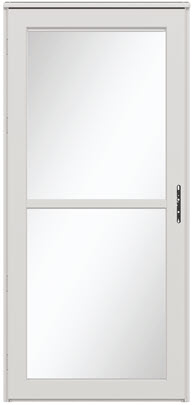
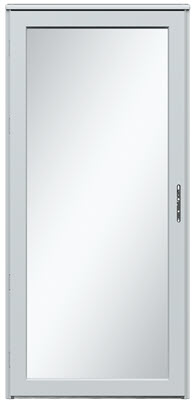
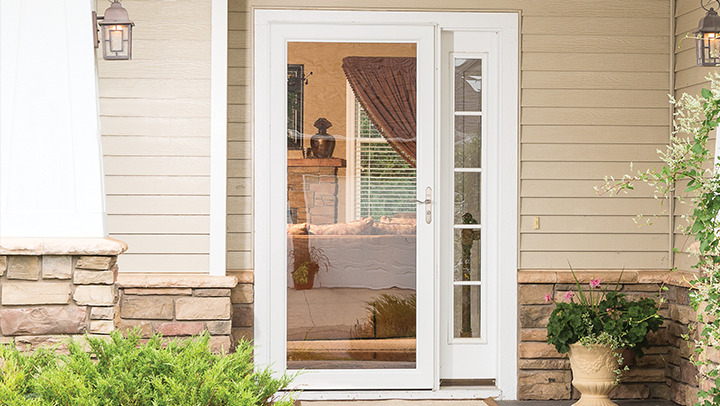
The Platinum Series, which is available in both Interchangeable Full Glass (Model 459) and Retractable Screen (Model 456), is the ultimate storm door with added safety lock, better operation, a modern look and an installation that takes only a few minutes, not hours. Features a vault-like multi-point locking system, which secures the door to the frame at three points, and is backed by a Limited Lifetime Warranty.

Click here for more information on the Platinum Collection storm doors.

Classic Elegance

The Classic Elegance® Retractable Screen collection (Models 146) represents the premium offering. They offer the convenience of Screen Away® technology and the widest variety of style, glass, color, hardware and finish options. The Classic Elegance® Interchangeable Screen collection (Models 149) is an excellent option for those seeking premium quality with seasonal ventilation control. These single-lite doors have no crossbar and feature multiple color and lockset hardware finish options. Each product in this line utilizes a keyed deadbolt lockset for enhanced security and is paired with a Limited Lifetime Warranty.

Click here for more information on Classic Elegance Retractable Screen storm doors.

Click here for more information on Classic Elegance Interchangeable Screen storm doors.

Classic-View

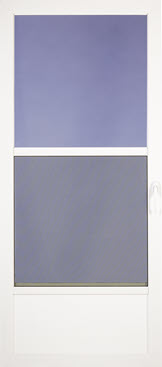
The Classic-View® Interchangeable Screen collection (Models 350) is an excellent option for anyone seeking a moderately priced Full-View storm door. This collection sports a slightly thinner construction, and will require extra storage for glass and screens when not in use. The Classic-View® Standard Screen collection (Models 660) is a great choice for those seeking a door with a reinforced kick-panel and a reversible screen which allows for top or bottom ventilation. These doors are available in your choice of white or brown with color-matching hardware.

Click here for more information on Classic-View Interchangeable Screen storm doors.

Click here for more information on Classic-View Standard Screen storm doors.

LifeStyle

The Lifestyle door (Models 830) is an economy wood core door that includes Screen Away® technology and decorative hardware options. These doors are available in white only and feature a mortise lock with inside locking hardware in two color choices and a 10 year warranty.
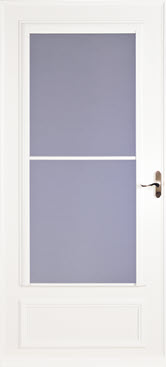
Click here for more information on Lifestyle Storm Doors

Life-Core

The Life-Core® collection (Models 370) is an economy wood core door with unique features that make it more durable in high traffic situations. This is the perfect choice for Landlords and Property Managers who need a door that will stand up well to excessive wear and tear. All Life-Core doors include a 10 year warranty.
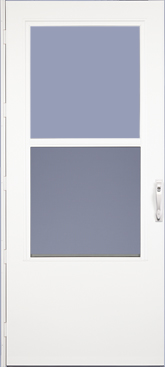
Click here for more information on Life-Core storm doors.

Vinyl-Clad

Our Vinyl-Clad offering (Models 298) is an economy wood core door that features standard ventilation and standard hardware. It is available in white only and includes a 5 year warranty.
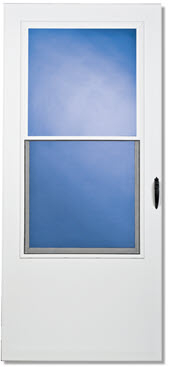
Click here for more information on Vinyl-Clad storm doors.
Product Categories

Exterior Doors

Fiberglass doors won’t dent, rot, or rust and withstand a wide range of temperature ranges. Stile and rail construction is architecturally correct and provides crisp shadow lines and highly defined panel details.Steel doors are an economical choice when a budget directs the buying process. They are manufactured with either a wood or steel edge.

Interior Doors

Authentic stile and rail doors offer a level of detail and definition that cannot be matched. Flush or molded doors are created by joining two skins to stile and rail components with either a hollow core, a solid particle core, or a solid wood core .

Accessories, Parts and Other

Not all interior doors must swing so using bifold, bypass or pocket door hardware can create a different type of unit. For the outside of the home, aluminum columns or vinyl shutters can complete the motif.

Storm and Screen Doors

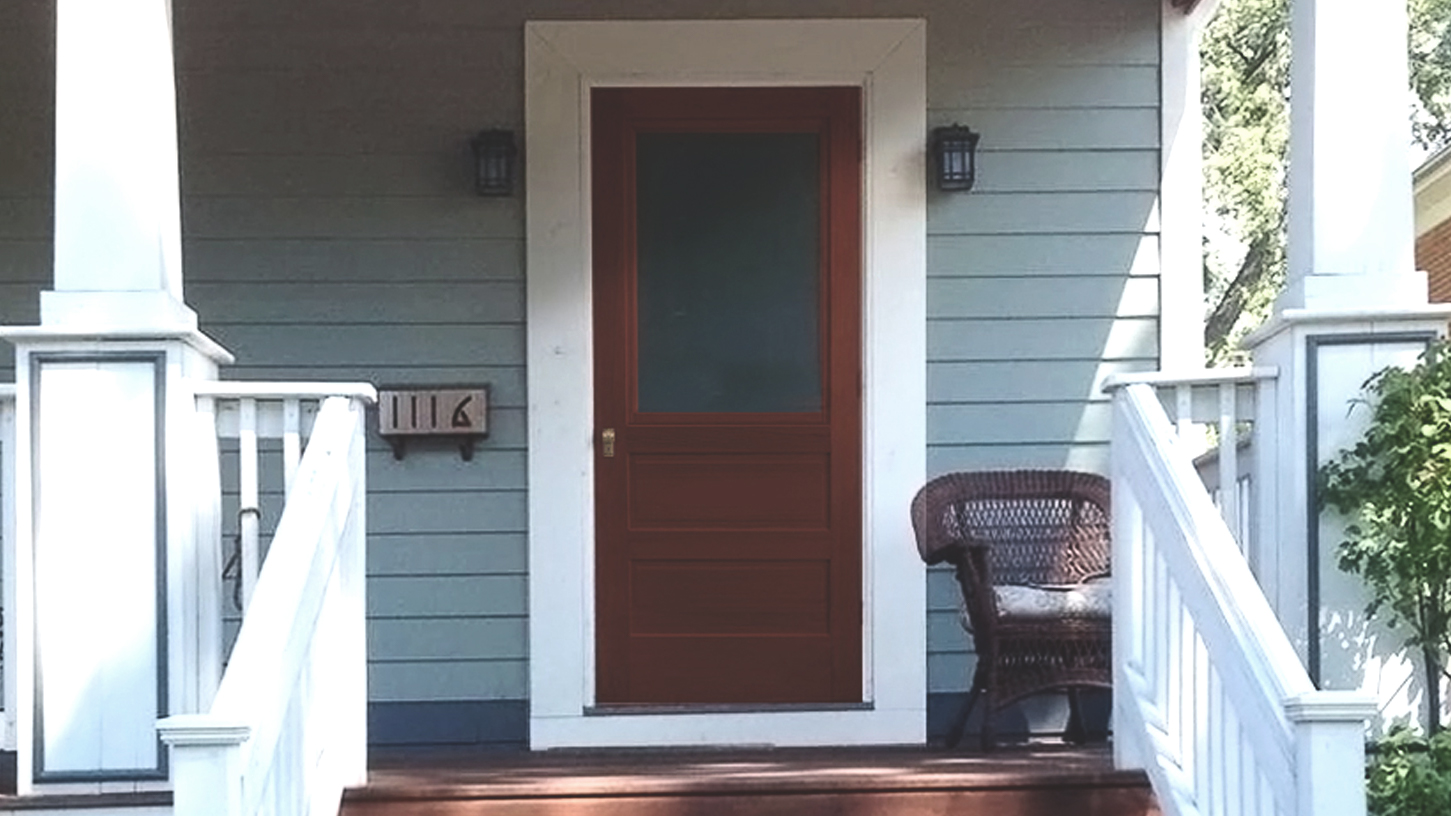
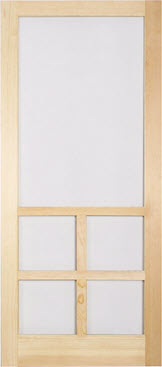
Screen door and storm door have long been used interchangeably, but there is a definite difference between screen doors and storm doors. Doors from The Combination Door Company may be either screen only doors or combination storm doors made of wood. Doors from Larson are considered storm doors and will either be aluminum or have a surface over a solid wood core.
Fypon Moulded Millwork

PVC products are intolerant to extreme temperatures and UV while also expanding and contracting. Fypon products are low-maintenance due to their closed-cell structure which resists moisture and insects. The can be cut, trimmed or shaped like wood using standard woodworking tools.

Residential Locks and Hardware

Sliding barn door units are continuing to be popular and for this the rollers and tracks are necessary. Adding a kickplate or changing the hinge, Barn door hardware can upgrade a current door unit. Locksets can have different functions and locking abilities but ultimately allow you to access each room in the home.

HBG Columns, Porch Post and Rail

HB&G has a full line of column options. There are the load-bearing options of PermaCast and PermaLite and the non-load bearing options of PermaWrap and PermaSnap. In addition, they offer a ceiling option, a railing option, and various brackets.

Rated Exterior Doors

Design Pressure (DP) is a numerical value rating which defines the structural wind loading requirements for a building, and components or cladding of a building, described in pounds per square foot. Essentially Design Pressure represents the wind load the door system can withstand.

Commercial Doors

Reeb’s Commercial Doors are stocked in Hollow Metal and Architectural Wood options. Both types can be fire rated up to 90 minutes in the proper frame; Architectural Wood doors are also available with a 20 minute rating.

Residential Fire Doors

RSP Series Doors are commonly referred to as the RF Series Steel Edge Fire Doors. These doors can withstand a 90 minute fire rating when hung in a split steel frame and are rated with a neutral pressure label.

Reinforced Light Commercial and Fire Doors

While some doors may be ok with just a bore, some may need a door closer or panic hardware. In order to use these, additional reinforcements are needed to ensure the door will stand up to the continual usage. This may include a non-rated or fire-rated Therma-Tru or RSP door.

Exterior Door Parts and Accessories

An exterior unit has many parts and pieces and sometimes these must be replaed. Items such as weatherstrip, corner pads, door bottoms, and rain deflectors can be ordered for when the current items wear down.

Special Order

Special Order is a great way to order completely custom products. By entering the details of the request, Reeb Customer Service will review the details then return the request for approval.

Larson Door Hardware

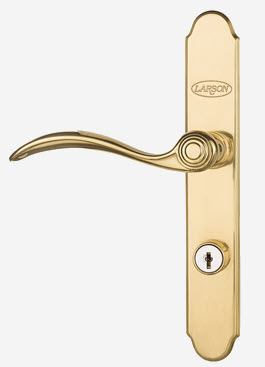
The door hardware that is used with a Larson storm door varies by the model. Some handlesets are an automatic option while other models allow a choice to fit the homeowners needs.

Quick Fit Handlesets

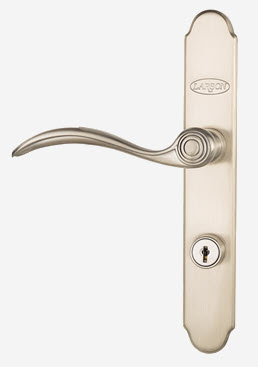
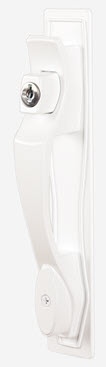
The QuickFit handlesets accompany the Platinum and Classic Elegance storm doors.
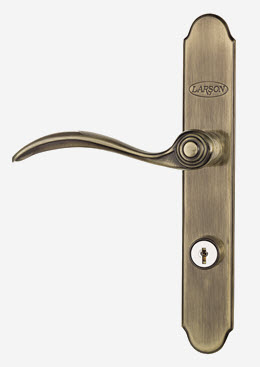
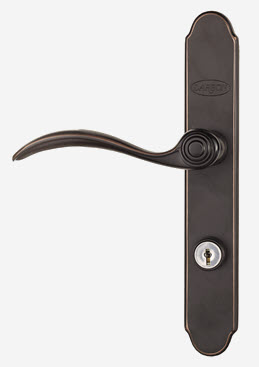
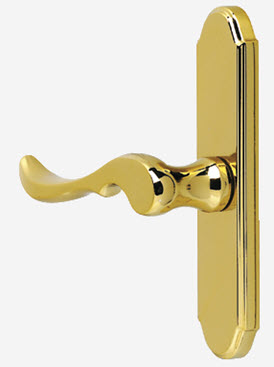
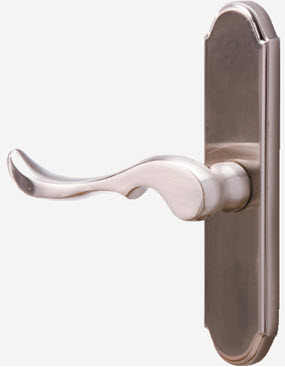
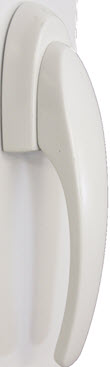
Curved Handles

Brass

Brushed Nickel

Antique Brass

Aged Bronze

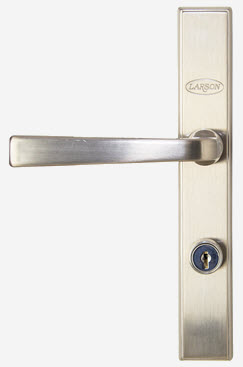
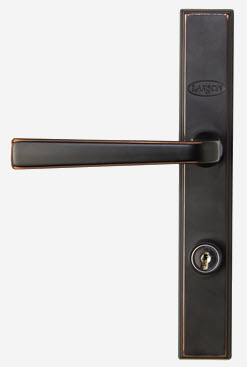
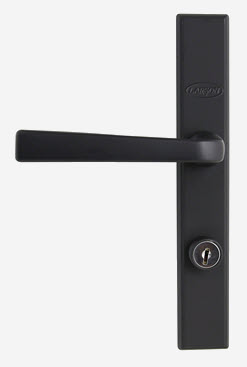
Straight Handles

Brushed Nickel

Aged Bronze

Matte Black

Decorative Handle

Both the Classic-View with Interchangeable screen and the Lifestyle with Retractable screen have the options of either a brass or brushed nickel decorative handle option.

Brass

Brushed Nickel

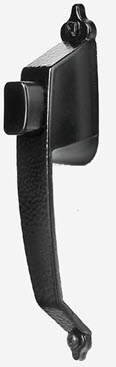
Black Handle

The black handle comes with the Vinyl-Clad Standard Screen.

Black

Color Matched Handle

The handleset of the Classic-View with standard screen and the Life-Core with standard screen match the color of the door but are different based on the model.

Classic-View
White

Life-Core
White

Screen vs Storm Doors

Note: Combination Door Company products are no longer offered. This article will remain available as a reference.

Screen door and storm door have long been used interchangeably, but there is a definite difference between screen doors and storm doors.
Doors from The Combination Door Company may be either screen only doors or combination storm doors made of wood.

Doors from Larson are considered storm doors and will either be aluminum or have a surface over a solid wood core.

Screen doors are exactly as the name says: a door with a screen.

While the frame can be made of a variety of materials, the most common types have wooden frames and very few components. They provide protection from pests and bugs while letting in air continuously.

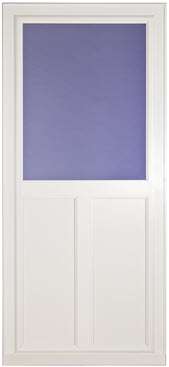
Storm doors have a few more parts and pieces to them with the major difference being the glass panel.

The glass panel comes in various sizes depending on the view type. The design allows for fresh air on-demand so homeowners can let in the fresh air when they want it and close it when the elements don’t allow for fresh air. Additionally, the glass keeps elements like rain and wind out.

Fiberglass Doors with Stile Lines

The traditional construction method for wood doors is to combine stiles (the vertical components) and rails (the horizontal components) to create a door style.

Fiberglass doors mimic this construction method by including stile and rail lines on the models.

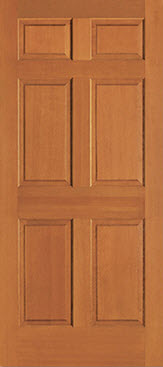
6-Panel Wood Door

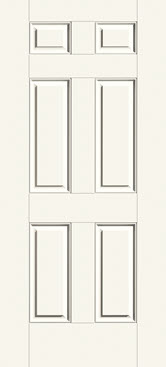
6-Panel Fiberglass Door

Doors with glass have a lite insert placed in the door. For example, a full lite can be created by taking a 6-panel door, cutting the panels out, then inserting the lite. This will create a door model with stile lines.

Fiberglass doors made without stile and rail lines are known as flush doors. The same process of adding a lite insert can happen meaning the door model will be without stile lines.
While having a lite in a flush door is a possibility, this door will look less like a wood door and be less architecturally correct.
Exterior Species Options

There are a variety of wood species to match any home’s design. Staining a door brings a layer of beauty and sophistication to an area. Each species of wood has different characteristics, colors, and grain patterns which affect the stain application. To help understand which doors stain well and which are better painted, refer to the stainability icons.


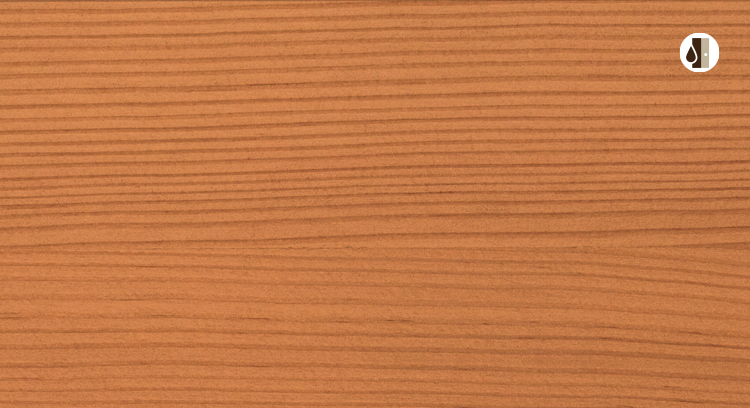
Fir – Simpson

Douglas Fir is a large, generally straight-grained tree characterized by exceptional natural strength, hardness and durability. The wood varies in color from yellowish tan to light, bright brown

Fir – Simpson


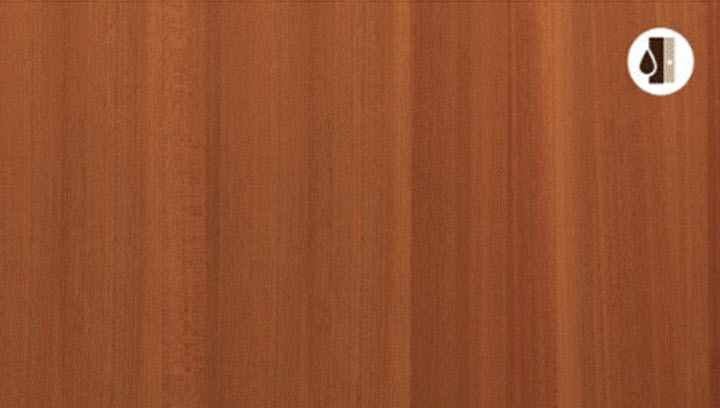
Sapele Mahogany – Simpson

Sapele Mahogany has a tight grain and reddish-brown color. The distinctive patterns created by the wood’s varied colors and graining make for an eye-catching door.

Sapele Mahogany – Simpson


Ponderosa Pine – Simpson

Ponderosa Pine is one of America’s most abundant tree species. It has straight, uniform grain with minimal amounts of reddish-brown heartwood. The sapwood has wide growth bands, which are honey-toned or straw-colored.

Ponderosa Pine – Woodgrain


Oak – Simpson

Oak has a coarse texture and a straight, prominent grain. It accepts a broad range of stains and finishes

Oak – Simpson