Searching...
 
  • Product Knowledge
    • Exterior Products
    • Reeb® Finish
    • Interior Products
    • Commercial Doors
    • General Millwork
  • Guided Learning
    • Learning Paths
      • Intro to Exterior Doors
      • Intro to Interior Doors
      • Guide to Reeb's Products
      • Fiberglass Door Options
    • New Courses
      • Exterior Door Unit Types
      • Selling an Exterior Door
      • Selling an Interior Door
  • LEARNING LOGIN
  • REEB.COM home
  •  
     
     
Learn
PRODUCT KNOWLEDGE
GUIDED LEARNING
 
Searching...
LOGIN
 
  • Exterior Door Products
  • Reeb Finish
  • Interior Door Products
  • Commercial Products
  • General Millwork
  • Exterior Door Products
  • Premium Fiberglass Doors
  • Standard Fiberglass Doors
  • Exterior Wood Doors
  • Exterior Frames
  • Storm and Screen Doors
  • More
  • Popular Articles
  • The Anatomy of an Exterior Door
  • How to Read a Tape Measure
  • Door Unit Construction
  • Measuring for a Larson Storm Door
  • Exterior Door Construction Materials – Wood vs Fiberglass vs Steel
 
  • Reeb Finish
  • Reeb Finish Stain
  • Reeb Finish Paint
  • General Information
  • Aluminum Clad
  • More
  • Popular Articles
  • Grain vs Stain
  • Reeb Finish Paint and Therma-Tru Paint Comparison
  • Reeb Finish Paint
  • Reeb Finish PrismaGuard
  • Therma-Tru Stain and Paint Finish
  • Interior Door Products
  • Wood Stile & Rail Doors
  • Primed Stile & Rail Doors
  • Flush and Molded Doors
  • Interior MDF Doors
  • Barn Door Hardware
  • More
  • Popular Articles
  • Bifold Finished Openings
  • Primed Stile and Rail Panel Types
  • Primed Stile and Rail Features
  • Panel Types
  • Interior Jamb Options
  • Commercial Products
  • Commercial Door Products
  • Light Commercial Door Products
  • Commercial Frames
  • Exit Devices and Closers
  • Commercial Locks
  • More
  • Popular Articles
  • Commercial Fire Door Requirements
  • Fire-Rated Unit
  • Architectural Wood Door Bore Options
  • SteelCraft Hinge and Bore Locations
  • 90-Minute RSP Series Fire Doors
  • General Millwork
  • Columns & Posts
  • Decorative Millwork
  • Shutters and Wood Blinds
  • Posts
  • Railing Systems
  • More
  • Popular Articles
  • Fypon Door Surround Kits
  • PermaLite Columns
  • HB&G Split Kits
  • Aluminum Square Columns
  • Fypon Mouldings
Learn More
Introduction to Exterior Doors
2.5 Hours of Training  |  Beginner
Learn More
Fiberglass Door Options
2 Hours of Training  |  Intermediate
Learn More
All Learning Paths
Learn More
New Courses
 

Syndication: Reeb Fire Doors

Understanding Fire Door Ratings

The most recent fire doors added to our offering are rated for Positive Pressure. Amanda Hergenreder explains a Neutral Pressure and a Positive Pressure rating for fire doors.

NOTE: It is important to check all local building codes before ordering and installing a fire door to make sure you are choosing the correct rating and options for your scenario.

Source: Fire Door Testing Clip

Source: Hose Stream Test Clip

20-Minute Fire Rated Units

Fire doors are tested by the Underwriters Laboratory (UL) and Warnock Hersey (Intertek Testing Services) to ensure they withstand the necessary temperatures. In order to properly rate the door, it must be tested as a full unit with hardware. This unit is installed on a wall with a test environment behind it where the fire will burn. After the allotted time, the door unit is subjected to a fire hose test to ensure the door will hold together and the hardware will keep the door closed. The main purpose of the test is to ensure the door is able to contain the spread of the fire.

Neutral Pressure Testing

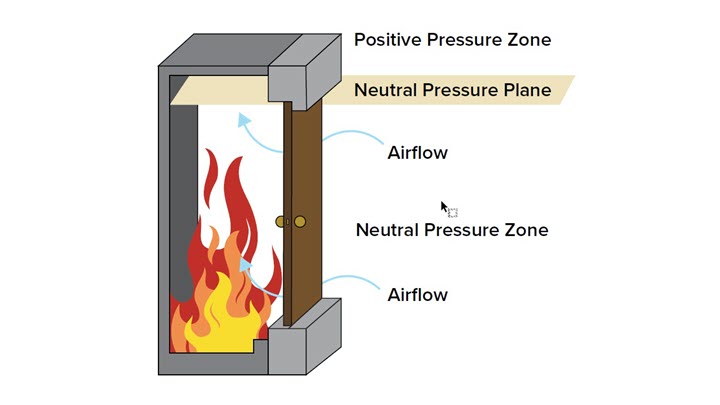
During a Neutral Pressure test, the door is installed on a rabbeted fire-rated jamb which is kerfed to hold a piece of weatherstrip. Neutral pressure assumes the pressure plane to be above the top of the door. It also assumes that pressure will not build up in the room/area containing the fire. Therefore, air from outside flows into the test room at the bottom and top of the door preventing the flames from spreading into the outside area. The use of a weather-strip/smoke seal helps to eliminate the smoke leaving the room.

Positive Pressure Testing

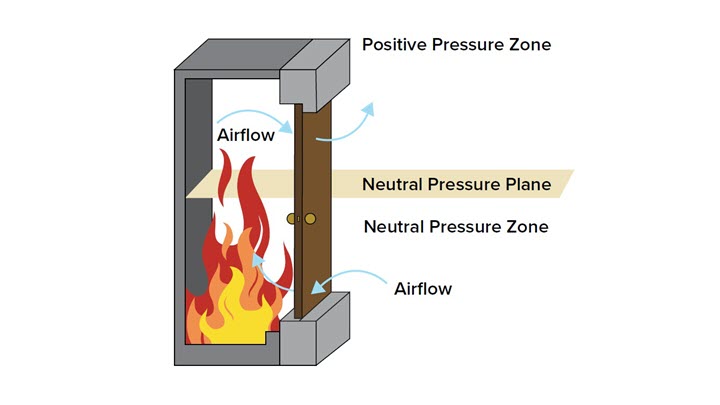
During a positive pressure test, the neutral pressure plane drops down to 40” from the bottom of the door with the neutral pressure area below 40 inches and the positive pressure area above 40 inches. Air from the outside still flows into the test room at the bottom of the door. However with the pressure plane moved, air will flow out of the test room at the top. Along with the circulating air, dangerous gases and/or flames may also escape around the perimeter of the door causing the face of the door to burn in the case of wood or composite doors.
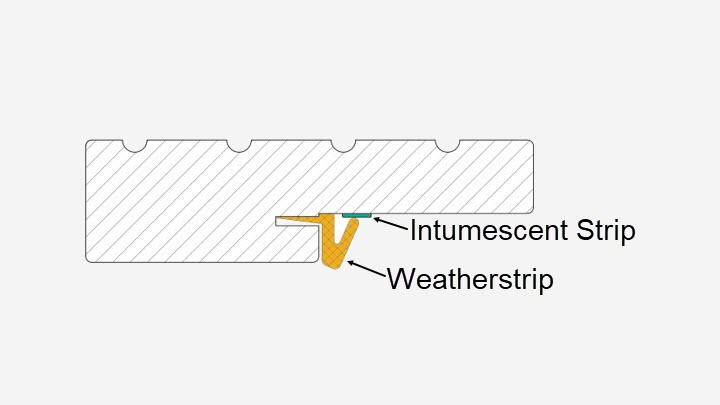
Positive pressure requires containing the hot gases and flame into the interior of the room. This is done by combining a seal such as weather-strip with an additional intumescent strip. The intumescent strip expands filling the gap at the top and sides of the door. This prevents hot gases and flames from spreading around the door. The intumescent material must be installed directly behind the weatherstrip on the head jamb as well as the side jambs. The weather-strip we install is also rated as a smoke seal.
90-Minute Fire Rated Frames

Certain frames have been tested and approved to carry a 90-minute fire rating. These frames, when used in connection with a 90-minute rated door and the appropriate hardware, can create a 90-minute fire-rated unit.

Below is a listing of the approved 90-minute fire-rated frames:

RSP Split Steel Frame

Commercial Split Steel Frame

Hollow Metal Masonry Frame

Hollow Metal Drywall Frame


Knowledge Base Main Categories

  • Reeb Finish
  • Systems
  • General Millwork
  • Commercial Products
  • Interior Products
  • Exterior Products

SUBSCRIBE FOR UPDATES

Subscribe today to receive updates as we release new Learning Center content.
 
Facebook Instagram Youtube LinkedIn
  • Terms of Use
  • Privacy Policy

All content © 2026-2027 REEB Millwork II, LLC. All rights reserved.