Searching...
 
  • Product Knowledge
    • Exterior Products
    • Reeb® Finish
    • Interior Products
    • Commercial Doors
    • General Millwork
  • Guided Learning
    • Learning Paths
      • Intro to Exterior Doors
      • Intro to Interior Doors
      • Guide to Reeb's Products
      • Fiberglass Door Options
    • New Courses
      • Exterior Door Unit Types
      • Selling an Exterior Door
      • Selling an Interior Door
  • LEARNING LOGIN
  • REEB.COM home
  •  
     
     
Learn
PRODUCT KNOWLEDGE
GUIDED LEARNING
 
Searching...
LOGIN
 
  • Exterior Door Products
  • Reeb Finish
  • Interior Door Products
  • Commercial Products
  • General Millwork
  • Exterior Door Products
  • Premium Fiberglass Doors
  • Standard Fiberglass Doors
  • Exterior Wood Doors
  • Exterior Frames
  • Storm and Screen Doors
  • More
  • Popular Articles
  • The Anatomy of an Exterior Door
  • How to Read a Tape Measure
  • Door Unit Construction
  • Measuring for a Larson Storm Door
  • Exterior Door Construction Materials – Wood vs Fiberglass vs Steel
 
  • Reeb Finish
  • Reeb Finish Stain
  • Reeb Finish Paint
  • General Information
  • Aluminum Clad
  • More
  • Popular Articles
  • Grain vs Stain
  • Reeb Finish Paint and Therma-Tru Paint Comparison
  • Reeb Finish Paint
  • Reeb Finish PrismaGuard
  • Therma-Tru Stain and Paint Finish
  • Interior Door Products
  • Wood Stile & Rail Doors
  • Primed Stile & Rail Doors
  • Flush and Molded Doors
  • Interior MDF Doors
  • Barn Door Hardware
  • More
  • Popular Articles
  • Bifold Finished Openings
  • Primed Stile and Rail Panel Types
  • Primed Stile and Rail Features
  • Panel Types
  • Glass Options
  • Commercial Products
  • Commercial Door Products
  • Light Commercial Door Products
  • Commercial Frames
  • Exit Devices and Closers
  • Commercial Locks
  • More
  • Popular Articles
  • Commercial Fire Door Requirements
  • Fire-Rated Unit
  • Architectural Wood Door Bore Options
  • SteelCraft Hinge and Bore Locations
  • 90-Minute RSP Series Fire Doors
  • General Millwork
  • Columns & Posts
  • Decorative Millwork
  • Shutters and Wood Blinds
  • Posts
  • Railing Systems
  • More
  • Popular Articles
  • Fypon Door Surround Kits
  • PermaLite Columns
  • HB&G Split Kits
  • Aluminum Square Columns
  • Fypon Mouldings
Learn More
Introduction to Exterior Doors
2.5 Hours of Training  |  Beginner
Learn More
Fiberglass Door Options
2 Hours of Training  |  Intermediate
Learn More
All Learning Paths
Learn More
New Courses
 

Syndication: Reeb Steel Doors

20-Minute Fire Rated Units

Fire doors are tested by the Underwriters Laboratory (UL) and Warnock Hersey (Intertek Testing Services) to ensure they withstand the necessary temperatures. In order to properly rate the door, it must be tested as a full unit with hardware. This unit is installed on a wall with a test environment behind it where the fire will burn. After the allotted time, the door unit is subjected to a fire hose test to ensure the door will hold together and the hardware will keep the door closed. The main purpose of the test is to ensure the door is able to contain the spread of the fire.

Neutral Pressure Testing

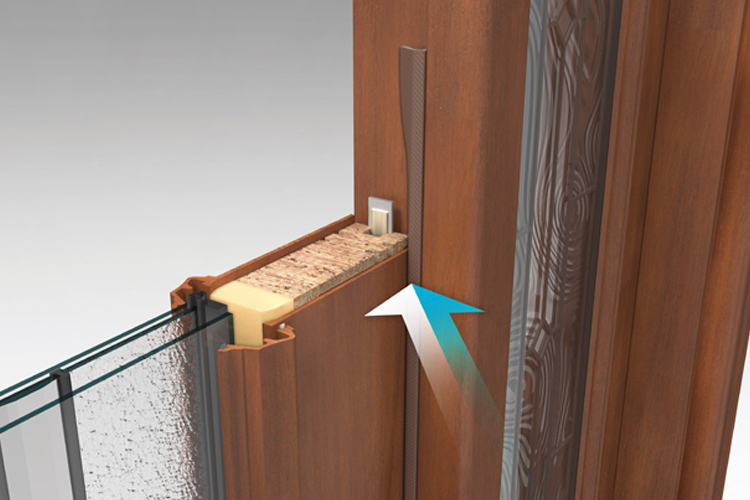
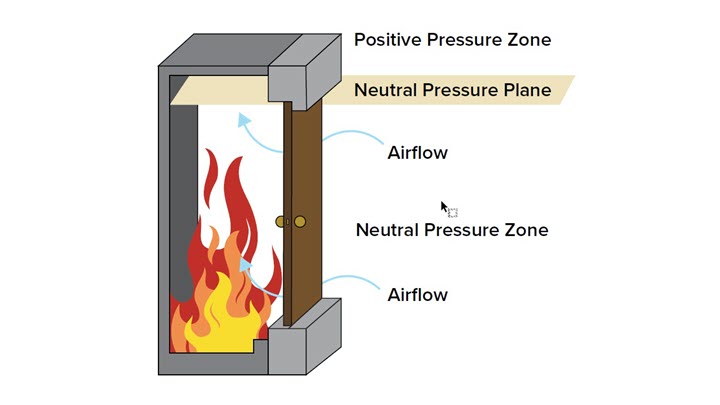
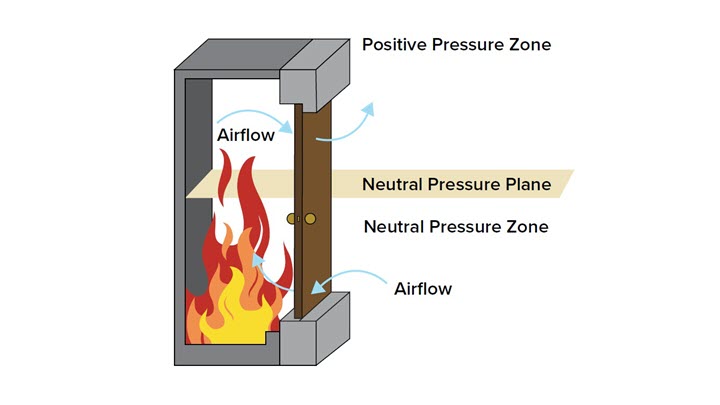
During a Neutral Pressure test, the door is installed on a rabbeted fire-rated jamb which is kerfed to hold a piece of weatherstrip. Neutral pressure assumes the pressure plane to be above the top of the door. It also assumes that pressure will not build up in the room/area containing the fire. Therefore, air from outside flows into the test room at the bottom and top of the door preventing the flames from spreading into the outside area. The use of a weather-strip/smoke seal helps to eliminate the smoke leaving the room.

Positive Pressure Testing

During a positive pressure test, the neutral pressure plane drops down to 40” from the bottom of the door with the neutral pressure area below 40 inches and the positive pressure area above 40 inches. Air from the outside still flows into the test room at the bottom of the door. However with the pressure plane moved, air will flow out of the test room at the top. Along with the circulating air, dangerous gases and/or flames may also escape around the perimeter of the door causing the face of the door to burn in the case of wood or composite doors.
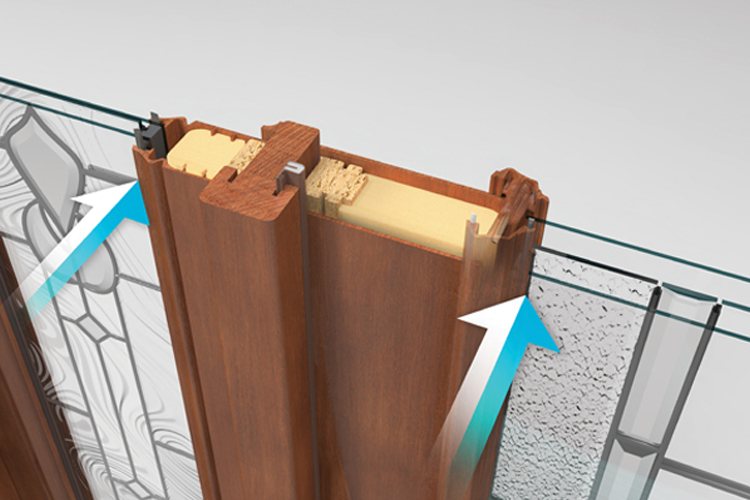
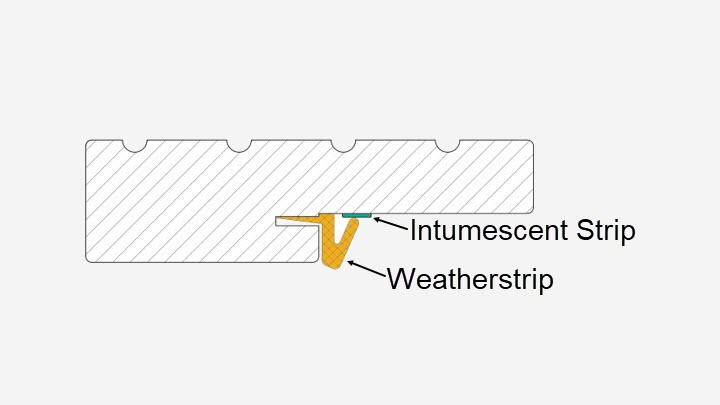
Positive pressure requires containing the hot gases and flame into the interior of the room. This is done by combining a seal such as weather-strip with an additional intumescent strip. The intumescent strip expands filling the gap at the top and sides of the door. This prevents hot gases and flames from spreading around the door. The intumescent material must be installed directly behind the weatherstrip on the head jamb as well as the side jambs. The weather-strip we install is also rated as a smoke seal.
Determine the Swing and Handing of an Exterior Door

Vanessa Reagle demonstrates how to determine the swing and handing of an exterior door.

Commodity Steel Door

The Traditions Collection is from Therma-Tru. Categorized as a Commodity Steel door, Traditions has a standard embossment on 25-gauge steel. 8’0” doors will be 24-gauge steel with standard embossment.


Construction

Steel Doors

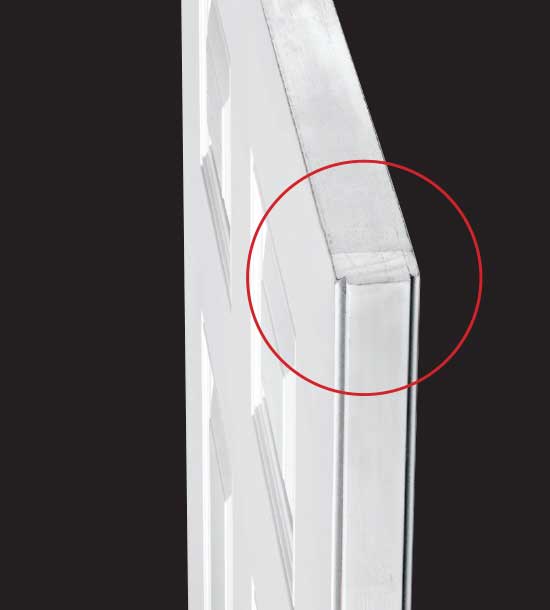
Steel doors are an economical choice when a budget directs the buying process. They are manufactured with either a wood or steel edge.

Wood Edge

Wood edge steel doors include the Profiles™ and Traditions lines from Therma-Tru®.
Wood Edge

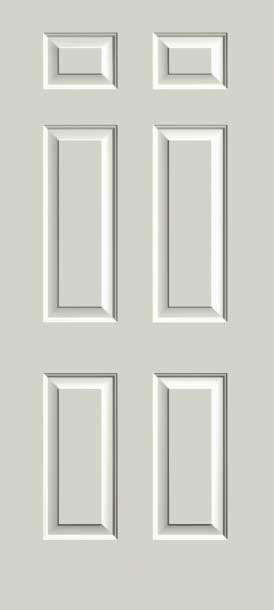
Profiles Steel Door

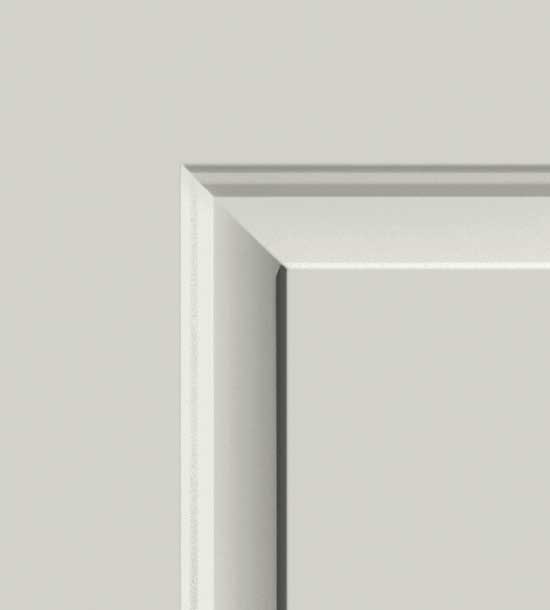
The Profiles collection is the standard steel door offering. It couples distinctive style with affordability. Its 24-gauge zinc-coated steel surface is smooth, primed, and ready for paint. The panel has a triple shadow embossment providing a high definition sticking.
Profiles Collection Door
Panel Detail – Profiles

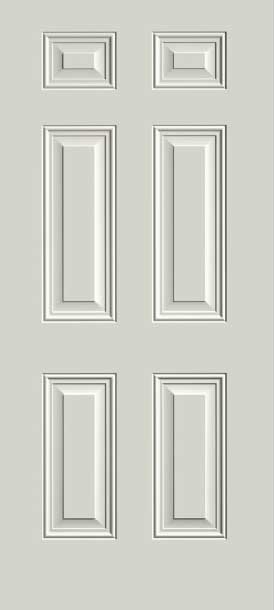
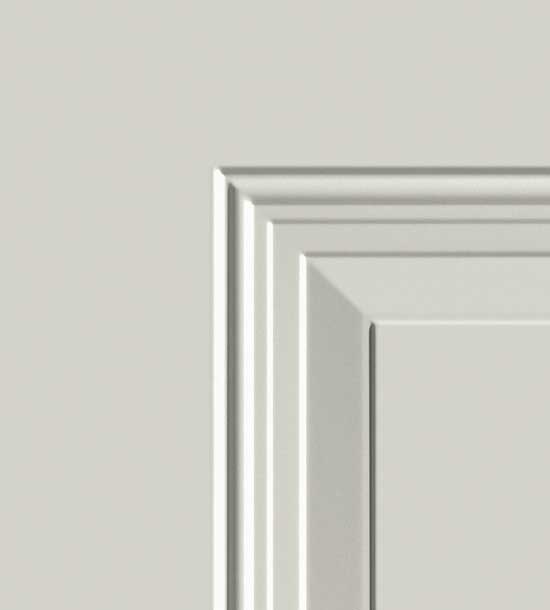
Traditions Steel Door

The Traditions collection is the commodity steel door option. It combines attractive designs and value-based options to create a great cost-conscious alternative. Its 25-gauge zinc-coated steel surface is smooth, primed, and ready for paint.
Traditions Collection Door
Panel Detail – Traditions

Details

When it comes to gauges, the lower the gauge, the thicker the steel. Therefore, the Profiles collection at 24-gauge is slightly thicker than the Traditions collection. Both of these collections include a polyurethane core for insulation and the lock area of the door slab is reinforced with solid blocking for application of the keylock and deadbolt locks. Glass is available for both the Profiles and Traditions steel doors, however decorative glass is only available for Profiles steel doors.

Steel Edge

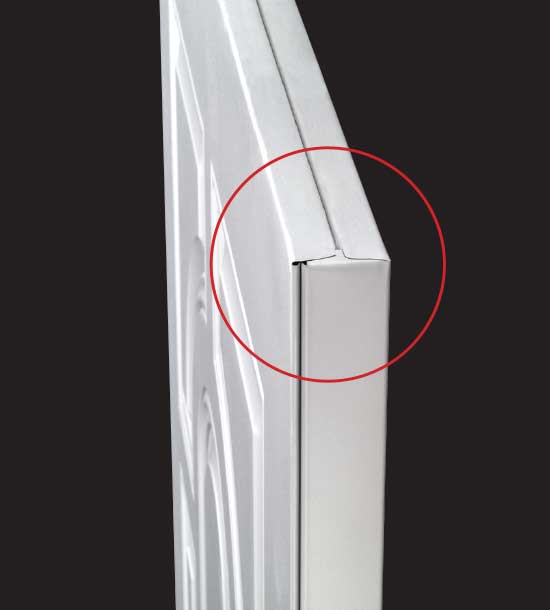
Steel edge steel doors are available in two options: Therma-Tru and RSP. They are both constructed of 24-gauge steel with a full steel-edge perimeter creating a sturdier steel door. The lock area is reinforced with a composite lock block for better structural integrity and security for door hardware. These doors are insulated with a polyurethane core and are available with a 90-minute fire rating when used with a 90-minute fire rated frame. Some people prefer the metal edge construction for extra strength and rigidity. Note: Therma-Tru steel-edge doors are no longer offered. This information will remain available as a reference.
Steel Edge

Considerations

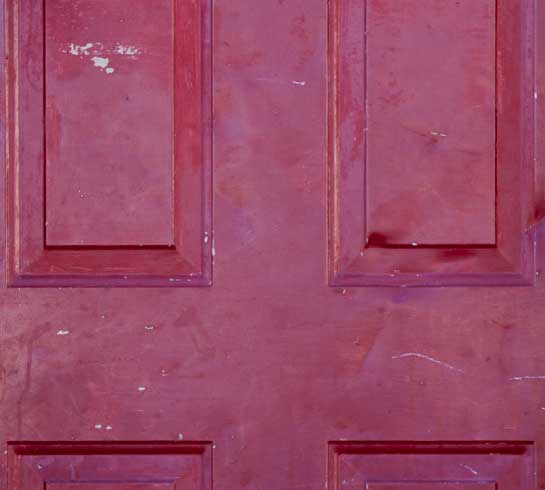
Steel doors are cost-effective and provide good insulation, however they can dent easily and are prone to rust in some exposures. Depending on the temperature outside, steel doors can be hot or cold to the touch.
Steel Door with Dent
Steel Door with Rust
They are a great choice for the house-to-garage door, especially if a fire rating is required. Check all local building codes to understand the fire ratings requirements.

Exterior Door Construction Materials – Wood vs Fiberglass vs Steel

In the world of entryways, there are three basic material types available for residential exterior doors.
Exterior Wood Door
Wood Door
Exterior Fiberglass Door
Fiberglass Door
Exterior Steel Door
Steel Door

Wood

Authentic wood doors use stile and rail construction by joining multiple components to create an overall design that is architecturally correct and features defined details in and around the panels. Wood doors can be stained to enhance their natural beauty. Standard sizes for wood doors typically are 2'-6", 2'-8" and 3'-0" wide by 6'-8", 7'-0" and sometimes 8'-0" high, however they can be special ordered to fit any size opening. Although wood doors are quite durable, they are not the most energy efficient. As with all exterior products, they require maintenance and should be refinished annually to retain their beauty and avoid issues caused by moisture. Nantucket and WaterBarrier doors are constructed to withstand the elements in any exposure type. Performance Series doors require a partial overhang due to the extra protection at the bottom of the door but not at the top. Standard construction doors can split and crack under high temperatures in addition to parts separating over time and should only be used when fully protected. However, when properly cared for, a wood door can last for many years.
Exterior Wood Door Unit
Exterior Wood Door Detail

Fiberglass

Fiberglass doors are two large molded skins with a polyurethane foam core between the skins which is a great insulator against heat and cold. The fiberglass sheets, along with the foam core, do not absorb moisture and therefore eliminate the rotting, warping, peeling, and bubbling that can affect other exterior doors. Fiberglass doors mimic the grain of real wood doors and can be painted or stained. They are popular for their high insulation values, low maintenance, and resistance to dents and scratches. Premium fiberglass doors are architecturally correct like wood doors.
Exterior Fiberglass Door Unit
Fiberglass Door Detail

Steel

If aesthetics are not a priority and a budget directs the buying process, a steel door is a great alternative. Steel doors can be painted and feature the same polyurethane foam core found in fiberglass doors, therefore offering the same insulating protection against cold and heat. Steel doors will either be hot or cold to the touch depending on exterior weather conditions. Home-to-garage entryways are a prime example of where a steel door is a popular option. Steel doors are economical and offer good insulation, require low maintenance if placed in a fully protected exposure, and won't rot. However, steel doors are highly susceptible to rust and can easily dent.
Steel Door Unit
Steel Door Detail
There are pros and cons to selecting a wood, fiberglass or steel door, however understanding their construction in relation to the concept of exposure will provide you with the knowledge needed to confidently choose the correct door type for your specific exposure.
View our PRODUCT RECOMMENDATION GUIDE to see which materials are best in each exposure type.
 

Sill Options for Exterior Doors

Gregg Hoyer walks you through the sill options available to you when building an exterior door unit and the pros and cons of each. If you want your door unit to last, make sure the subsill is made from a composite material.
Standard Steel Door

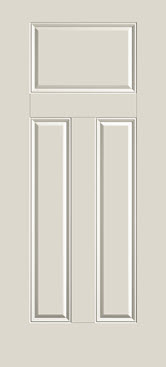
The Profiles Collection is the standard steel door offering from Therma-Tru. Profile doors have a triple-shadow embossment on 24-gauge steel. It utilizes a 12-1/2″ lock block along the strike side of the door. Without glass installed, these doors can be a good option for openings that need a fire rating.
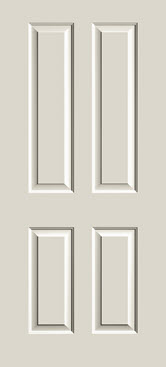
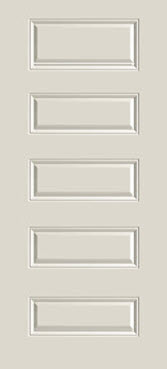

Construction

90-Minute Therma-Tru Steel Edge Doors

Note: Therma-Tru no longer offers steel-edge doors. This information will remain available as a reference.

Therma-Tru’s SE Series doors are Steel Edge (SE) 90-minute steel doors with specific hinge and strike locations. These doors can accommodate a double bore when necessary. These doors are constructed with 24-gauge steel edges and are tested to withstand at least 90 minutes of fire exposure at temperatures that reach more than 1,700 degrees Fahrenheit. They utilize a 1/4″ radius corner hinge with a c-hole pattern. These units are suitable for a minimum of 4” wall depth and up to 8-1/2″ and are hung on a split steel frame.


Panel Types

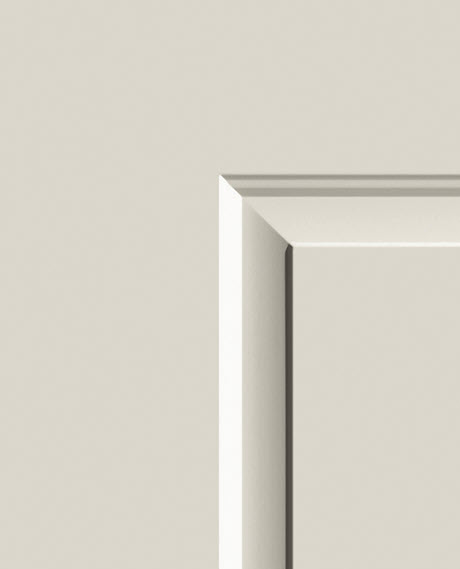
There are two panel types. First is a raised panel with a triple shadowed embossment around the panel referred to as High Definition. Next is a raised panel with a standard sticking around the panel referred to as Standard Definition.

High Definition Panel

Standard Definition Panel


Door Dimensions

SE series doors fit in Therma-Tru’s Split Steel Frame. These frames accomodate slightly undersized doors with hinge, strike, and deadbolt preps pre-machined with door heights of 78-15/16” and 82-15/16” before sweep. The deadbolt bore is 5-1/2″ on center as a standard. This fire door can be cut down up to 4” from the bottom only. If any door is cut down, the bore, deadbolt, and hinge locations will shift down with the cut and cannot be adjusted due to the steel skin and edge.

Door Height Top of Door to Top of Each Hinge Top of Door to Center of Bore
6/8 8-1/4” 38” 67-3/4” 43-31/32″
7/0 8-1/4” 40” 71-3/4” 47-31/32”

Measurements above are from top of door to Top of Hinges. 4” on-center double bore is available.


SE100
Flush Door

SE210HD
High Definition Panel

SE514
Standard Definition Panel

SE978HD
High Definition Panel

SE969HD
High Definition Panel

SE1005HD
High Definition Panel


Rough Openings

Rough openings vary depending on the sill type and the door width. Sill options include a standard sill, no sill, and a public access (ADA) sill for both inswing and outswing units. Ensure the closure package jamb depth and sill application match what is needed in the field. The below measurements are the standards based on Reeb’s stock of material.

Size Standard Sill No Sill ADA Sill
2668 31″ x 81-1/4″ N/A N/A
2868 33″ x 81-1/4″ 33″ x 80-1/8″ N/A
21068 35″ x 81-1/4″ N/A N/A
3068 37″ x 81-1/4″ 37″ x 80-1/8″ 37″ x 80-5/8″
2870 33″ x 85-1/4″ N/A N/A
3070 37″ x 85-1/4″ N/A 37″ x 84-5/8″
  • To view Frame and Closure Packages for SE Series, click here

90-Minute RSP Series Fire Doors

RSP Series Doors are commonly referred to as the RF Series Steel Edge Fire Doors. These doors can withstand a 90 minute fire rating when hung in a split steel frame and are rated with a neutral pressure label. The hinge and strike locations manufactured into the door match Therma-Tru’s standard Full Size, or Book Size, specifications. They utilize a 5/8″ radius corner hinge with a Z pattern. Fire doors should always be self-latching with either self-closing hinges or a reinforced door slab with a door closer.


Panel Types

There are three panel types. First is a raised panel with a triple shadowed embossment around the panel referred to as High Definition. Next is a raised panel with a standard sticking around the panel referred to as Standard Definition. Finally is a flat panel with shaker sticking around the panel.

High Definition Panel

Standard Definition Panel

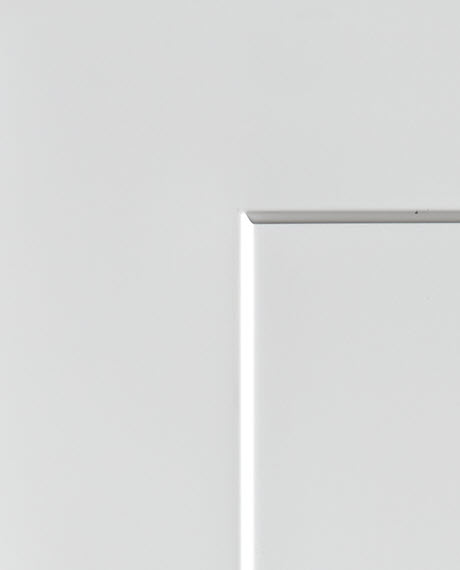
Shaker Style Flat Panel


Door Dimensions

RF series doors fit in the RSP Split Steel Frame. These frames accomodate full width doors with mortised hinge preps and door heights of 79-1/4”, 83-1/4” and 95-1/4” before sweep. This fire door can be cut down by Reeb up to 3”, from the bottom only. If any door is cut down, the bore and hinge locations will shift down with the cut and cannot be adjusted due to the steel skin and edge.

Door Height Top of Door to Top of Each Hinge Top of Door to Center of Bore
6/8 8-3/8” 37-5/8” 66-7/8” 44”
7/0 8-3/8” 37-5/8” 66-7/8” 48”
8/0 5 1/4” 30-3/4” 56-1/4” 81-3/4” 60″

Measurements above are from top of door to Top of Hinges. 4” on-center double bore is available.


Door Layouts

RF1
Flush
24-Gauge

RF11
High Definition Panel
24-Gauge

RF24
High Definition Panel
24-Gauge

RF29
High Definition Panel
24-Gauge

RF26
High Definition Panel
24-Gauge

RF31
High Definition Panel
24-Gauge

RF52
Standard Definition Panel
24-Gauge

RF55
Standard Definition Panel
24-Gauge

RF60
High Definition Panel
24-Gauge

RF11S
Shaker Style Panel
22-Gauge

RF24S
Shaker Style Panel
22-Gauge

RF31S
Shaker Style Panel
22-Gauge

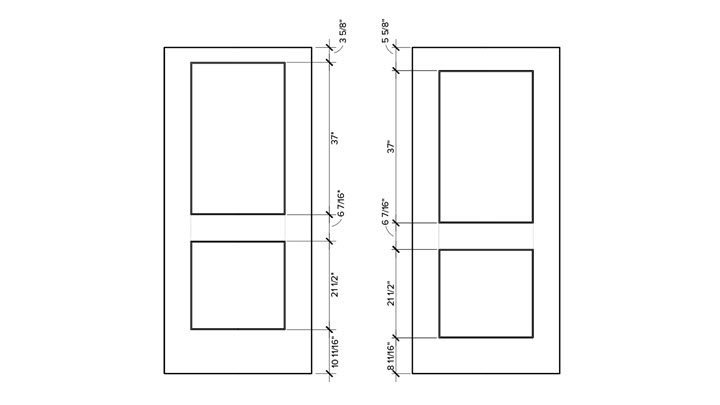
RF24ADAS

The RF24S and the RF24ADAS have the same size panels and the same sticking profile.

The top rail of the RF24ADAS is 2 inches smaller.

This moves the panels and intermediate rail up.

The result is that the bottom rail is 2 inches taller.

This gives the RF24ADAS an ADA compliant bottom rail.

Left – RF24ADAS | Right – RF24S


Rough Openings

Rough openings vary depending on the sill type and the door width. Sill options include a standard sill, no sill, and a public access (ADA) sill for both inswing and outswing units. Ensure the closure package jamb depth and sill application match what is needed in the field. Below are the minimum drywall rough openings. For 7′ doors, add 4″ to the height dimensions and for 8′ doors, add 16″ to the height dimension.

Size Standard Sill No Sill ADA Sill
2668 31-1/8″ x 81-21/32″ 31-1/8″ x 80-13/32″ N/A
2868 33-1/8″ x 81-21/32″ 33-1/8″ x 80-13/32″ N/A
21068 35-1/8″ x 81-21/32″ 35-1/8″ x 80-13/32″ 35-1/8″ x 80-29/32″
3068 37-1/8″ x 81-21/32″ 37-1/8″ x 80-13/32″ 37-1/8″ x 80-29/32″

Therma-Tru Complete Door System

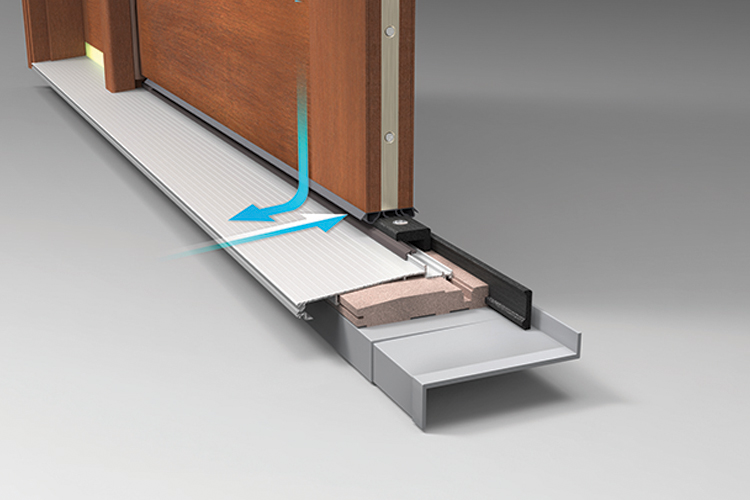
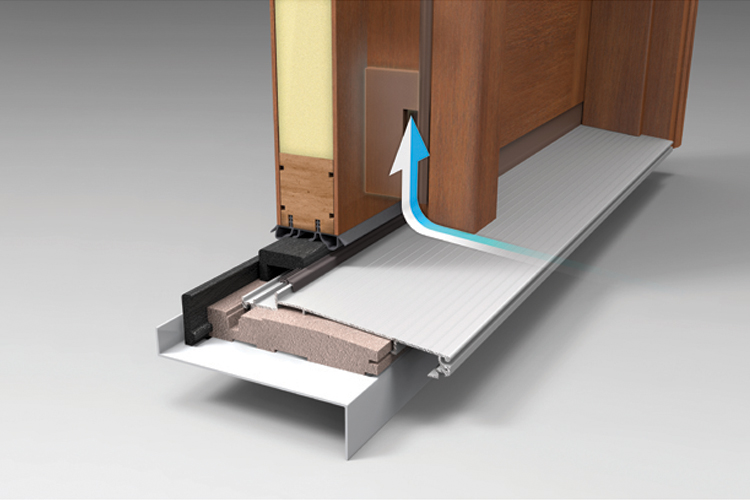
All Therma-Tru components are engineered to work together. A complete door system includes doors, glass, and components which work together to resist leaks and drafts, and help maintain energy efficiency and weather resistance.


  1. The sill and bottom sweep form a tight seal against wind-driven moisture infiltration at the bottom of the door system and help channel moisture away from the home. A sill pan (recommended) adds an extra layer of protection to help keep moisture away from the subfloor.

  2. Corner seal pads complete the seal between the sill cap, bottom sweep and weatherstrip to help block potential pathways where wind-driven moisture can infiltrate the bottom corner of the door system. These are only used with inswing units.

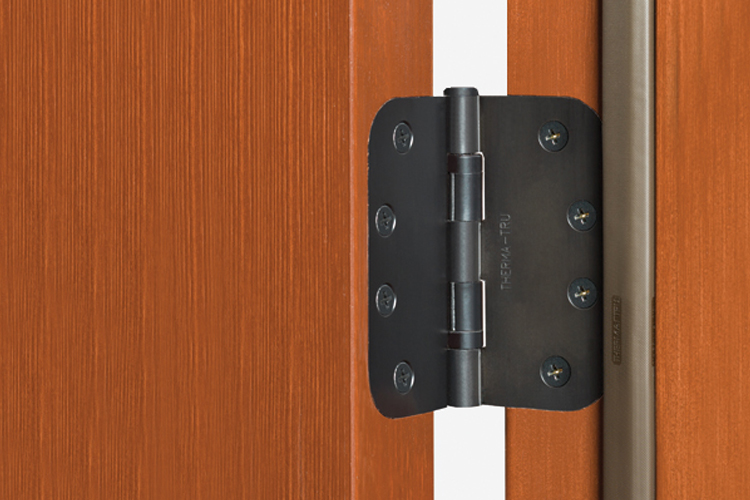
  3. The hinges position the door to properly compress the weatherstrip and help form a tight, even seal against air and moisture infiltration when the door closes.

  4. The weatherstrip is specifically engineered in a variety of profiles to provide the best possible fit with Therma-Tru door systems, helping to deliver a precise seal between the door and frame.

  5. A multi-point locking system engages the door and frame at three points from top to bottom, helping to preserve the weatherstrip’s seal even under wind pressure. A multi-point locking system is highly recommended for security and protection.

  6. A lip-lite frame (shown right) features a compression seal against weather on the outside of the door and an adhesive seal against weather on the outside of the glass. Flush-glazed glass (shown left) is built directly into the door without a Lip-lite frame, featuring a high-performance adhesive weather seal inside and out.


Knowledge Base Main Categories

  • Reeb Finish
  • Systems
  • General Millwork
  • Commercial Products
  • Interior Products
  • Exterior Products

SUBSCRIBE FOR UPDATES

Subscribe today to receive updates as we release new Learning Center content.
 
Facebook Instagram Youtube LinkedIn
  • Terms of Use
  • Privacy Policy

All content © 2026-2027 REEB Millwork II, LLC. All rights reserved.