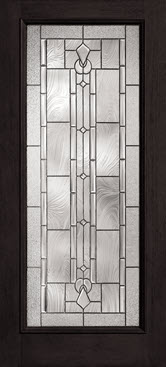
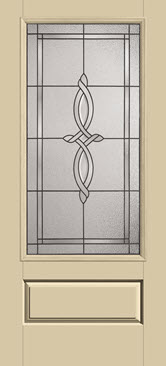
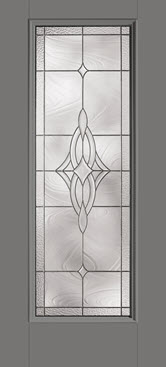
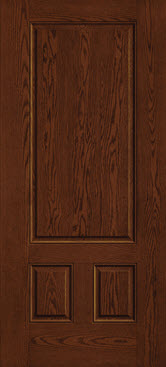
CAD Drawings

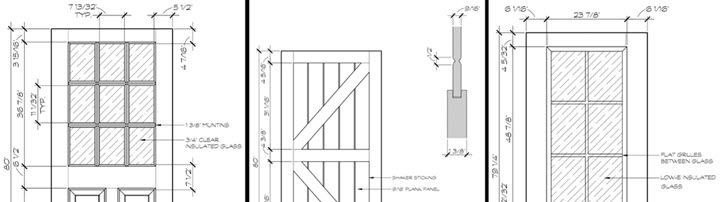
Over the years Reeb has amassed a database of drawings that provide technical information about our doors. Available through the Reeb website at reeb.com/catalogs, you can search for a specific door style to see the size of the stiles, rails, and panels amongst other things.


Navigation

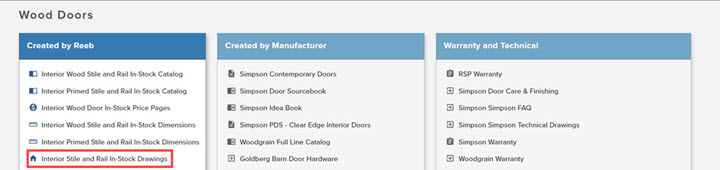
From the Resources page, you will need to scroll below the in-stock catalogs where you will find additional resources grouped first by the type of product (Exterior, Interior, etc.) and then the material (Fiberglass, Wood, Etc.).

Under each section the resources available include Reeb created information, manufacturer created information, and technical/warranty infromation. Within the Reeb created content section will be a link to the In-Stock Drawings.

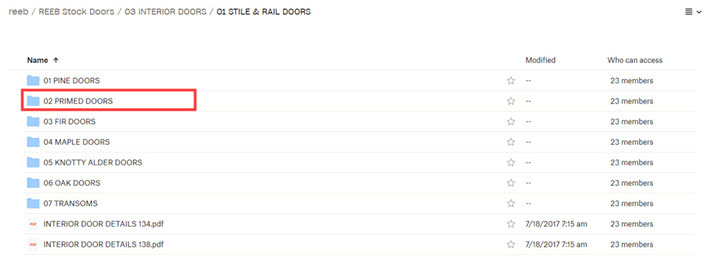
Each section is further organized by the content of that section.

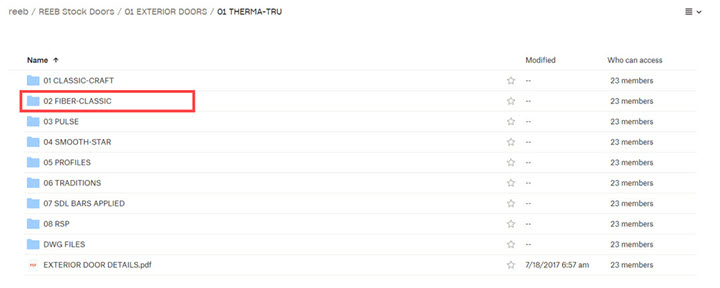
The fiberglass section is further organized by the different collection available from Therma-Tru.

If you were looking for the FCM32, you would need to click Fiber-Classic, then Mahogany, and then FCM32 to see the sizes available.

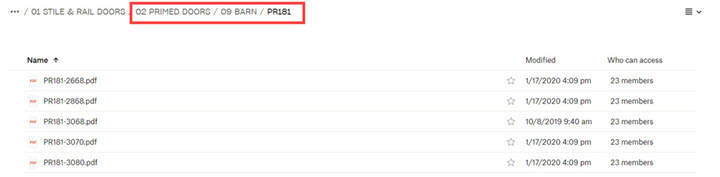
In a similar fashion, here is the progression from reeb.com/catalogs to the PR181 drawings page.


Missing Drawings

While our drawings database is impressive, it is not complete. Reeb is still taking the time to gather drawings for all door models and sizes. If you do not see the drawing you are looking for, please contact your local Customer Service Representative.

Reeb Finish Process

Follow along as Reeb Finish prepares, finishing, assembles, and packages a door unit. At the bottom of the screen is a color, below is a summary of the steps taken during that portion of the video.

Grey: Order Process

Reeb Finish manufactures door units to create a beautiful doorway from raw components. These door units are sent to dealers who work with homeowners. The dealers have displays and catalogs to assist during the selling process and then can use an online configuration software to configure the door unit.

Red: Prep Area

The parts and pieces are picked based on the order – no pre-made door units are maintained. Every unit is considered custom made for the order at hand. The door is first mortised for lockset and hinges and then paint is applied to edges to seal them. Glass built into the doors is covered. The door is wiped down to remove dust and dirt. The same process of taping the glass and cleaning is also performed on the sidelites. At the same time, the jambs are prepped for the strike and hinges. Metal bars are attached to the top and bottom of the door for the next portion of the process.

Orange: Stain/Paint Area

In the stain and paint area, the doors and sidelites are loaded on the finishing conveyor. A base coat is applied and then dried as the components travel through ovens. A stain coat is applied and brushed into the grain by the Reeb Finish artisans. They compare the finish to a standard to ensure a similar color every time and help in giving the final product the look of real wood. The components travel through another set of ovens and then receive two top coats. These provide additional durability and protection. All components can have a split finish so the workers tape the finished side to protect the color. The door travels through the same process again with the other color.

Blue: Automatic Paint Line

The newest item in Reeb Finish is the automated paint line. It is capable of painting full doors or components. The pieces are placed on a conveyor and sprayers move back and forth to paint the items. After the paint coat, the components travel through ovens and to the next part of the machine which provides two top coats for additional durability and protection.

Green: Assembly

The finished components must be cleaned before assembly and the protection on glass removed. The door bottom and hinges are applied and the glass is thoroughly cleaned so the SDL (simulated divided lite) bars can be applied to the glass surface. The multi-point locking mechanism is installed in the mortise along the side of the door. Final machining is performed on the jambs and the hinge side jamb is attached to the door. Weatherstrip is inserted into the kerf on the jamb and the remaining jambs and sill are assembled around the door like a frame.

The transom frame is assembled, the glass laid and stopped in. The entire transom set up is attached to the door frame then stood up. The sidelites are placed into the frame and stopped into place. The entire unit is quality inspected and minor touch-ups applied; the unit is packaged and loaded on truck. Finally, the truck drivers deliver the unit to the dealer.

Victorian Home Styles

Queen Anne | Romanesque | Gothic Revival

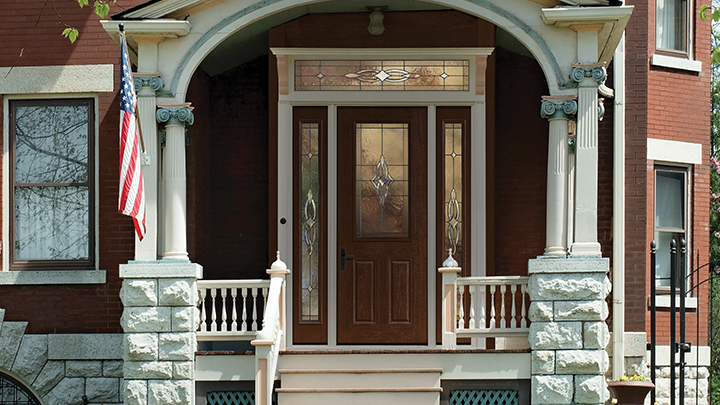
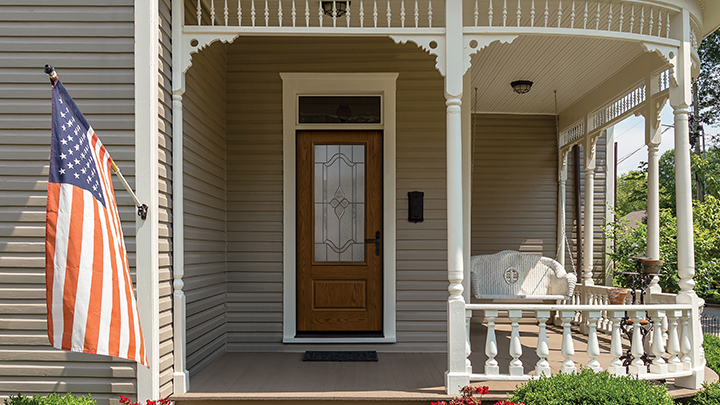
Marked by asymmetry and textured exteriors, Victorian homes reflect the style of this grand period with elaborate detail. You likely have a Victorian if you have an edged roof, ornate gables or one or more wide porches with spindlework.
  • Reflects the style of this grand period with elaborate detail.
  • Marked by its asymmetry and textured exteriors.
  • Common Victorian Style Elements:
    • Towers and Turrets
    • Steep, Multi-Faceted Rooflines
    • Bay Windows and Porches
    • Ornate Trim

Classic Craft Fir
CCA1166

Classic Craft Mahogany
CCM303RXN

Classic Craft Mahogany
CCR10022

Classic Craft Canvas
CCV05023

Smooth-Star
S155

Fiber-Classic Oak
FC31

Smooth-Star
S755

Home Styles

No matter the style of your home, there is a door that matches the architectural style. Not only does this help your design flow throughout the home, but it can help create a lasting first impression.


Colonial

This style, known for its refined design and symmetry, preserves the classic style of homes from America’s history. Colonial homes usually have two or three stories, fireplaces and brick or wood facades.

Click here to learn more about Colonial Style Homes.


Victorian

Marked by asymmetry and textured exteriors, Victorian homes reflect the style of this grand period with elaborate detail. You likely have a Victorian if you have an edged roof, ornate gables or one or more wide porches with spindlework.

Click here to learn more about Victorian Style Homes.


European

Inspired by the provincial style of countryside estates, European-style homes feature rich details with steep roofs and subtly flared curves at the eaves. Homes of this style are often faced with stucco or stone.

Click here to learn more about European Style Homes.


Craftsman

Showcasing the craft of building by hand, these homes emphasize the use of natural wood, stone and brick materials. Low pitched roof lines, tapered square columns and exposed rafters are typical of these “Arts and Crafts” beauties.

Click here to learn more about Craftsman Style Homes.


Southwest

With breezy spaces practical for warm climates, Southwest homes embody the exotic aesthetics of adobe homes. Look for stucco exteriors, stone accents and tile roofs to buffer the sun and heat.

Click here to learn more about Southwest Style Homes.


Coastal

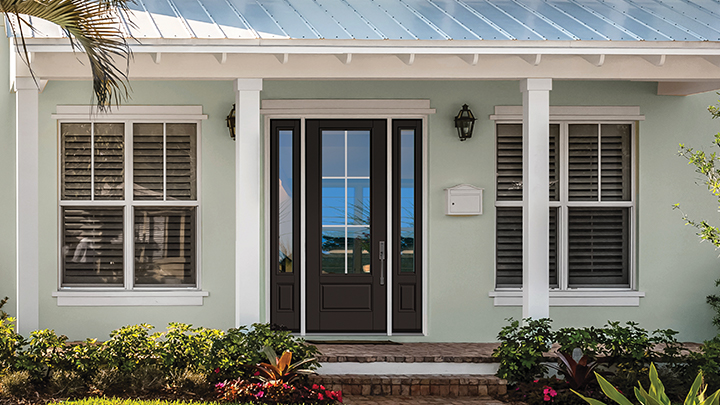
Coastal homes mix traditional details and clean lines for casual elegance. This style is about blending indoor and outdoor living with great views, and may be identified by ample windows or an abundance of porches that invite ocean breezes.

Click here to learn more about Coastal Style Homes.


Traditional

Combining practicality with classic looks in almost any form, Traditional homes borrow elements from a variety of styles, without being easily classified as any particular one. If it looks like a straightforward family home and doesn’t fall into any categories above, it’s probably traditional.

Click here to learn more about Traditional Style Homes.


Modern

Modern-style homes fuse industrial concrete, vinyl and glass materials to create a stunning effect. Look for strong right angles, minimal box-like designs and asymmetrical exteriors.

Click here to learn more about Modern Style Homes.

Traditional Home Styles

New American | Farmhouse | Hill Country

Combining practicality with classic looks in almost any form, Traditional homes borrow elements from a variety of styles, without being easily classified as any particular one. If it looks like a straightforward family home and doesn’t fall into any categories above, it’s probably traditional.

  • Combines practicality with classic looks in almost any form.
  • Represents elements from a variety of styles.
  • Common Traditional Style Elements:
    • Steep-Pitched Rooflines
    • Multi-Pane Windows
    • Modest Porches
    • Simple Columns

Classic Craft Mahogany
CCM204

Smooth-Star
S916

Classic Craft Fir
CCA1166

Smooth-Star
S2104

Smooth-Star
S2103

Smooth-Star
S120

Coastal Home Styles

Low Country | Cottage | Key West

Coastal homes mix traditional details and clean lines for casual elegance. This style is all about blending indoor and outdoor living with great views, and may be identified by their ample windows or an abundance of porches that invite ocean breezes.

  • Mixes traditional details and clean lines for casual elegance.
  • Blends indoor and outdoor living with great views.
  • Common Coastal Style Elements:
    • Multi-Peaked, Gabled Roofs
    • Impressive Windows
    • Many Patio Doors
    • Entry with Columns

Classic Craft Canvas
CCV9925

Classic Craft Canvas
CCV1418

Classic Craft Fir
CCA2730XE

Fiber-Classic Mahogany
FCM905

Smooth-Star
S2104XC

Smooth-Star
S5700

Smooth-Star
S5425

Smooth-Star
S1350

Modern Home Styles

Shed | Mid-Century | Contemporary

Modern-style homes fuse industrial concrete, vinyl and glass materials to create a stunning effect. Look for strong right angles, minimal box-like designs and asymmetrical exteriors.

  • Focuses on clean lines and asymmetrical exteriors.
  • Fuses together industrial concrete, vinyl and glass materials.
  • Common Modern Style Elements:
    • Flat or Shed Rooflines
    • Geometric or Angular Shapes
    • Expansive Windows
    • Minimal Decoration

Classic Craft Canvas
CCV1851

Fiber-Classic Oak
FC685LXK

Fiber-Classic Mahogany
FCM1652

Classic Craft Walnut
CCW903

Fiber-Classic Oak
FC4XN

Smooth-Star
S2XK

Southwest Home Styles

Mediterranean | Spanish Colonial | Mission

With breezy spaces practical for warm climates, Southwest homes embody the exotic aesthetics of adobe homes. Look for stucco exteriors, stone accents and tile roofs to buffer the sun and heat.

  • Includes breezy spaces practical for warm climates.
  • Feels exotic with stucco exteriors and stone accents.
  • Common Southwest Style Elements:
    • Low-Pitched Rooflines
    • Terracotta Roof Tiles
    • Arch Motifs and Mahogany Grain Details
    • Taller, Wider Doors

Classic Craft Mahogany
CCR30027

Classic Craft Canvas
CCV1519

Classic Craft Canvas
CCV1415

Fiber-Classic Mahogany
FCM574

Smooth-Star
S6051

Classic Craft Mahogany
CCR200

Fiber-Classic Mahogany
FCM220

Colonial Home Styles

Georgian | Dutch Colonial | Federal

This style, known for its refined design and symmetry, preserves the classic style of homes from America’s history. Colonial homes usually have two or three stories, fireplaces and brick or wood facades.

  • Preserves the classic style of homes from America’s history.
  • Known for its refined design and symmetry.
  • Common Colonial Style Elements:
    • Attic Dormers
    • Multi-Pane Windows
    • Balanced Windows and Shutters
    • Entry with Columns

Fiber-Classic Oak
FC770

Smooth-Star
S262

Fiber-Classic Mahogany
FCM912

Smooth-Star
S2250

Smooth-Star
S255

European Home Styles

Tudor | French Country | Tuscan Villa

Inspired by the provincial style of countryside estates, European-style homes feature rich details with steep roofs and subtly flared curves at the eaves. Homes of this style are often faced with stucco or stone.

  • Inspired by the provincial style of countryside estates.
  • Features rich details on brick, stone and stucco exteriors.
  • Common European Style Elements:
    • Multi-Peaked Rooflines
    • Shingles or Clay Roof Tiles
    • Romantic Decoration
    • Arched Windows and Entryways

Classic Craft Mahogany
CCR1528

Classic Craft Mahogany
CCM306CAL

Classic Craft Mahogany
CCM302R

Fiber-Classic Oak
FC529

Classic Craft Mahogany
CCR200

Classic Craft Mahogany
CCR100

Smooth-Star
S2104

Smooth-Star
S200